
 Version imprimable
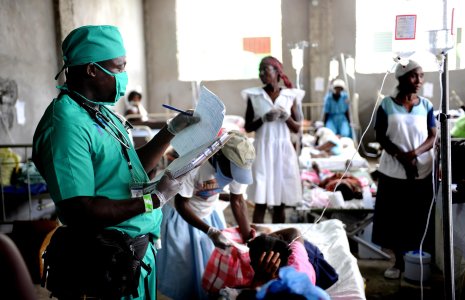
These new partnerships are part of the so-called America First Global Health strategy, which makes aid conditional on US priorities. In December, Washington signed memoranda with some fifteen countries setting specific objectives for epidemic surveillance, laboratory strengthening and health information system improvement. On the surface, Africa stands to gain: increased political visibility, financial flows, and the promise of modernising often fragile health systems.
Serving US corporations
But this rise in bilateral aid comes at a time when the United States is turning its back on the WHO, to which it was the main contributor. This withdrawal risks weakening the collective mechanisms for responding to health crises, which greatly benefit African countries. It deprives the Organisation of a decisive part of its budget and increases competition between multilateral and private frameworks, at a time when the fight against pandemics requires global coordination and data sharing. However, the new agreements concluded with African capitals provide Washington with privileged access to health information and pathogen samples, solely for the benefit of American pharmaceutical companies. As is often the case, public money is spent on aid, but the “return on investment” benefits private companies. As for African governments, they are caught in a blackmail situation where funding for their health policies means giving up their sovereignty.
Worrying abuses
Abuses are already being observed. In Zambia, access to aid funds has been made conditional on an agreement allowing US companies to exploit the country’s rare earth resources. In the United States, the strategy of Robert F. Kennedy Jr., Secretary of Health, aims to discredit vaccination policy and sow doubt. This allows him to justify questioning American recommendations and reducing funding to the Global Alliance for Vaccines and Immunisation (Gavi).
In early January, he withdrew the recommendation for universal vaccination of newborns against hepatitis B, citing the precautionary principle despite its widely demonstrated efficacy and safety. At the same time, he funded a study in Guinea-Bissau to examine the so-called consequences on neurodevelopment. This study is unethical: it deliberately deprives some infants of immediate vaccination, even though the prevalence of hepatitis B in this West African country is very high and the vaccine is a safe and vital intervention for preventing cirrhosis and liver cancer. In the face of public outcry, this study should be abandoned.
5 February 2026
Translated by International Viewpoint from l’Anticapitaliste.