
 Version imprimable
In 2020, a deadly war broke out in Ethiopia between the Tigray People’s Liberation Front (TPLF), which ruled the country for decades, and the federal government led by Abiy Ahmed. A conflict that ended two years later with the Pretoria agreements, the provisions of which both parties accuse each other of violating.
The 2020 war
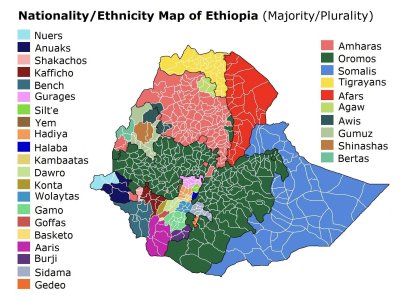
Abiy Ahmed came to power in April 2018 against a backdrop of popular mobilization challenging the TPLF’s regime, in particular its lack of a representative nature, with Tigrayans representing only 10% of the population. Since then, tensions between the federal government and the TPLF have only increased, culminating in the 2020 war. In this conflict, federal forces have allied themselves with Amhara and Afar communal militias, and especially with the Eritrean army, with whom they had been at war six years earlier.
Defeated militarily, the TPLF had to sign the Pretoria Accords, stipulating among other things the establishment of a consensual regional government in Tigray between the two parties. The current tensions are exacerbated around this issue.
New alliances
Immediately after the peace, oppositions emerged between Ethiopia and Eritrea, which deepened with Abiy Ahmed’s declarations. He believes that his country must have access to the sea by all means, reviving the historical dispute over the port of Assab, located in Eritrean territory.
In Tigray, the radical wing of the TPLF led a coup against regional governor Tadesse Werede, accused of being too conciliatory with Abiy Ahmed. The TPLF also criticised the occupation by Amhara militias of part of its territory and the impossibility of Tigrayan refugees returning to their lands. The federal government considers the coup against Tadesse to be the end of the peace agreement. It also tried to undermine the TPLF’s activity by promoting political and military forces favourable to its policies. In addition, there is a reversal of the situation that the country is accustomed to: yesterday’s enemies become today’s allies through an alliance between the TPLF and Eritrean forces.
The stakes of these struggles between the different Ethiopian factions are only power issues, because all these forces are neoliberal, with the aim of integrating the country into capitalist globalization by imposing social constraints on their population.
Peace on borrowed time
The risk of a new war exists, but it is not certain. Elections are due to be held in June and Abiy Ahmed may not want to spoil an election that he knows he will win because of a lack of opposition. Ethiopia, like most African countries, is experiencing fuel shortages linked to the blockade of the Strait of Hormuz, which would pose logistical problems for the federal army in the event of an offensive. Finally, an open war would be an opportunity for countries other than Eritrea to support Tigray, such as Egypt, which has a strong dispute with Ethiopia over the management of the Nile, or the Sudanese Armed Forces.
Abiy Ahmed could therefore choose another option: that of strengthening the economic blockade. In any case, it would be the civilian population, already severely affected, who would pay the price. As a result, many young men are trying to flee the region to avoid being involved in a possible conflict.
26 May 2026
Translated by International Viewpoint from l’Anticapitaliste.