Antonio Moscato, a long-standing member and activist of our organisation since the 1950s, passed away on the night of 24 October. He was 88 years old. A lifelong commitment, from agitation at the factory gates to the university, within our organisation and in the battle of ideas
read article...
Home > Features
Features
Latest update : 25 October.
This section contains articles on theoretical, analytical and historical themes usually longer than articles published in the news magazine section.
Articles in this section
-
Obituary
A life as a revolutionary Marxist - Farewell, Antonio
25 October, by -
Climate
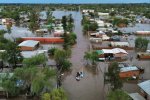
El Niño, La Niña, and a collapse that is not natural
23 October, byA critical reading of climate and its social impacts.
read article... -
Niclear weapons
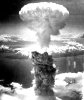
The Growing Risk of Nuclear War
20 October, by“That potential for instant destruction has become more imminent, with the most militarily powerful countries adding fuel to an already overheated arms race and engaging in wars with each other, indirectly if not directly. Making the situation more perilous is the introduction of Artificial Intelligence-powered tools into warfare.”
read article... -
Climate

Sitting on a time bomb
20 October, by“In his infamous United Nations speech a year ago, Trump denounced global heating as the “biggest scam in world history.” Since his re-election, Trump has withdrawn the US from the Paris Accords, closed offices and programs dealing with climate change, terminated dozens of experts working on global heating and, crucially, withdrawn billions of dollars aimed at mitigating the effects of climate change.”
read article... -
Environment

Between floods and droughts – towards an ecosocial transformation of the landscape
20 October, byThe summer of 2026 broke all heat records. We have witnessed unprecedented forest fires in Europe and droughts in regions that, until now, had been largely spared. In this context, it is interesting to examine landscapes and society from the perspective of water.
read article... -
Obituary

A Working-Class Marxist Who Faced the Apocalypse
11 October, by“Alan Thornett, who has died aged 89, was the best-known militant in the British car industry during the decade when the industry settled the fate of British trade unionism.”
read article... -
Strategy

Workers will fight for their self-interest
7 October, by“Socialism is the rule of the working class. Planning is an instrument of the democratic workers’ state for organizing production for human need under its collective political and social rule and the transition to a classless society.”
read article... -
Latin America

The governments of the new right and Trumpism in Latin America
7 October, byPerhaps paraphrasing Marx and Engels in the Communist Manifesto, when they described the revolutionary process that swept through Europe at the end of the 1940s as a spectre, we could describe the counter-revolutionary cycle that is sweeping through Our America in these 2020s as a phantom, albeit of the opposite kind .
read article... -
Strategy

The Left: a fundamental historical ambiguity
5 October, byThe notion of the Left contains a dual dimension. For more than a century, both its opponents and its supporters have agreed in describing the Left as the “party of movement,” the natural gathering place of “all progressive forces” and all advocates of “change.”
read article... -
Germany

To what extent is the AfD fascist?
5 October, byThe attempt to ostracise the AfD has failed.
read article...