
 Version imprimable
The liberal view of international economic relations rests on the idea that deeper economic interdependence between nations is both inevitable and desirable. Similarly, critical readings of this phenomenon share a set of fundamental concepts and theories. The central idea is that of an expansive dynamic of capital as a social relation, seeking to encompass ever more spaces and spheres of social life. This idea, which originated with Karl Marx, was developed by Rosa Luxemburg and Lenin and, more recently, by Giovanni Arrighi and David Harvey. Whether it involves access to new raw materials, new labour reserves, new opportunities for realizing surplus value, or new spaces—or all of these at once—this expansion plays a fundamental role: it stabilizes, at least temporarily, the capitalist system and helps explain imperialist and sub-imperialist dynamics, at least in the capitalist era.
Another pillar of these theories rests on the effects of this expansion on the trajectory of spaces and social formations, their links, and the hierarchical relationships that are established between them. It is within this framework that uneven and combined development is situated – a fundamental concept for Trotsky that has been taken up and developed in various ways by many . authors , especially those working within the traditions of dependency theory [1] and world-systems analysis.
Viewed from this perspective, critical readings of globalization converge with liberal interpretations on one point: its historical necessity. However, they diverge decisively in their political assessment of its effects. From this perspective, globalization is merely another name for imperialism; free trade is nothing more than the protectionism of the powerful—an idea also found among non-Marxist political economy theorists . The concrete forms of centrifugal capital expansion combine, to varying degrees, ordinary economic accumulation and exploitation on the one hand, and violent accumulation through extra-economic expropriation on the other, the latter being characteristic of peripheral contexts. Its results in terms of improving the human condition are highly contrasting and profoundly asymmetrical between the centre and the periphery.
From a Marxist perspective, globalization—understood broadly as the integration of new geographical areas into the circuit of capital accumulation—is a movement stemming from the attempt to resolve the internal contradictions of capitalism. It constitutes capital’s response to the decline in its own profitability and the exhaustion of investment opportunities in a given space, which determines its expansion into other territories, generally those where the organic composition of capital is lower and the rate of surplus value higher. [2]
This phenomenon is as old as capitalism itself. The current wave—which can be described as hyperglobalisation or neoliberal globalisation—has unfolded over a long period, while possessing its own characteristics that give it its historicity. [3] Initiated in the context of the neoliberal counter-revolution of the early 1980s in response to the profit rate crisis of the previous decade, it adopted a specific institutional framework: free trade agreements, tariff reductions, exchange rate liberalization, the establishment of the dollar as the global currency, free movement of capital, financial deregulation, and a decline in state intervention. This framework was shaped by an ideological consensus itself championed by the dominant factions of capitalist monopolies.
This framework formed the cornerstone of what is known as the post-war liberal international order, globalized after the end of the Cold War, articulating trade liberalization, selective application of international law, multilateralism, liberal ideological hegemony, and Pax Americana. It can be seen as a concrete articulation of the (economic) infrastructure and the (political, legal, and ideological) superstructure inherent in this global expansion of the frontiers of capital, underpinned by US imperial power and the sub-imperialisms associated with it.
Until recently, it was difficult to find authors—whether Marxist or liberal—who had anticipated or theorised the slowdown, or even the reversal, of globalization. However, several events over the past 15 years pose a significant analytical challenge, both empirical—precisely identifying the processes at work—and theoretical—uncovering their determining factors. The remainder of this article is structured around certain elements of this challenge: to what extent has there been a slowdown or reversal of hyperglobalisation ? What explanations can a Marxist perspective offer? And what kind of new order is emerging from the ruins of neoliberal globalization?
The end of hyperglobalisation
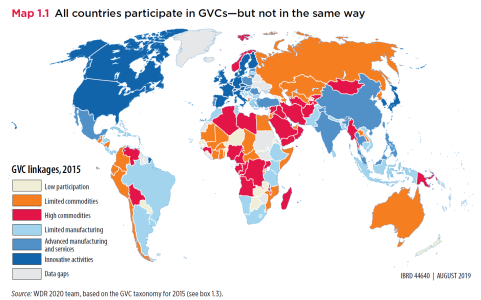
The realization that international integration—productive, commercial, and financial—was, if not declining, at least stagnating in the period following the 2007–2008 crisis, began to be openly expressed in public debate during the following decade. The liberal magazine The Economist, for example, popularized the term “slowbalisation ,” borrowed from the Dutch author Adjiedj Bakas, in a January 2019 article. [4] References to deglobalisation had begun to appear at the start of the millennium but have multiplied considerably over the last decade. Similarly, from 2010 onward, expressions such as “reshoring ,” “near-shoring,” and “friend-shoring” became widespread, specifically referring to the reversal of globalization in the case of the fragmentation of international production chains. [5]
Looking back at the decades since World War II, there is no doubt that something fundamental changed as a result of the international financial crisis and the 2007-2008 recession. For example, as a percentage of global GDP, the importance of international trade increased almost linearly, from about 25 per cent in 1970 to 61 per cent in 2008 — attesting to an increasing and undeniable trade interdependence — before stabilizing (57 per cent in 2024 [6]). Annual foreign direct investment (FDI) flows, for their part, have not simply stagnated since 2007, but have undergone a genuine reversal of the trend: fluctuating between 0.5 and one per cent of global GDP in the 1970s and 1980s, FDI grew exponentially in the 1990s, reaching historic highs in 2000 (4.6 per cent) and 2007 (5.3 per cent), before declining more or less continuously, eventually settling at 0.9 per cent in 2023 and 1.3 per cent in 2024. [7] Taking as a reference the total of international financial flows in gross value – encompassing, in addition to FDI, portfolio investments [8], bank loans, and other flows – a considerable decrease is observed since 2007, including in absolute terms: these flows have fallen from approximately $12.4 trillion in 2007 to some 4,200 billion per year in 2022-2023. [9] Finally, the share of value added to exports in total exports – an indicator commonly used to measure the degree of integration in global value chains – also stabilized from 2007 for the entire OECD area, after sustained growth throughout the 1990s and 2000s.
This type of data is subject to numerous circumstantial factors, not to mention measurement errors and biases of all kinds; it is neither exact nor precise, but rather the result of numerous assessments. This is why Marxist approaches tend not to place too much importance on this positivist data. [10] Nevertheless, these elements paint a relatively clear picture: the deepening of international economic interdependence underwent a notable shift starting in the late 2000s. This shift manifested itself, depending on the dimensions considered, sometimes as stagnation, sometimes as a genuine reversal of the trend, sometimes in relative terms, sometimes in absolute terms. In all cases, this constitutes an undeniable break with the decades of hyperglobalisation that preceded it.
From the highest point to decline: the determining factors of the end of an era
Hyperglobalisation , as we have seen, constituted an attempt by capital to restore the rate of profit. It was made possible by the context of US hegemony and aimed at maintaining the hegemony of the United States and its allies. The network of institutions and norms built during this period, under the aegis of the liberal international order, served to institutionalise and deepen the asymmetries between centre and periphery, while facilitating the export of surplus Western capital.
While it initially allowed for a slight recovery in the profit rate and international trade stimulated global economic growth, hyperglobalisation has, in the long term, failed to reverse the downward trend in the profit rate [11] or to extricate capitalism from the secular stagnation characteristic of its fourth long wave of development—characterized by low levels of growth and investment, a high weight of fictitious capital, and a context of technological innovation and increased wealth concentration. Following the failure of the attempts at fiscal and monetary activism that followed the 2008 crisis, the accumulation crisis of late capitalism has become increasingly acute. The capacities of globalization and financialization appear to have run their course: we are facing a capitalism in marked slowdown.
From this arise new tensions and reactions from capital. Neoliberal globalization was based on indifference to the origin of capital, favouring the relocation of production and the international proliferation of long value chains in the name of efficiency in resource allocation —optimizing costs and maximizing profits. While it exacerbated inequalities between and within countries [12], it also resulted in a transfer of wealth from the Global North to the Global South—albeit a very limited one—particularly to China and other Asian countries.
Thus, India now has a GDP higher than that of France and Germany combined; China has already overtaken the United States in purchasing power parity (PPP, adjusted to take into account price levels in each context); and Western Europe and North America, which represented nearly 60 per cent of world GDP in PPP in 1980, will account for little more than 30 per cent in 2025, surpassed by a few percentage points by Southeast Asia. [13]
This posed little problem as long as the so-called advanced and emerging economies maintained a complementary relationship: the former exported their capital surpluses, benefiting from lower production costs abroad, as well as highly sophisticated, high-value-added goods and services, while the latter exported raw materials and cheap, low-technology manufactured goods. Some countries, however, were not content with this specialization and launched public policy programmes aimed at developing more advanced industrial sectors, with, in some cases, notable success: this is the case with the automotive and electronics sectors in Japan and the so-called "Asian Tigers," abd with an increasingly broad and diversified range of productive sectors in China.
Many of these countries now have large, domestically owned companies that directly compete with Western firms in advanced technology segments—a direct threat to the dominant sectors of their bourgeoisie. A recent study by the Federal Reserve Bank of St. Louis documents the convergence of China’s production structure with that of the United States and certain eurozone economies [14]: China now produces almost as many high-quality patents (IP5) as these two groups, and the similarity in export structures has increased considerably in recent years—evidence of direct competition in sectors such as machinery and equipment, transportation equipment, and even semiconductors. For example, between 2013 and 2021, the export similarity index with Germany rose from 65 per cent to 80 per cent, reflecting a strong convergence in technological specialisation.
For its part, the United States is alarmed by Chinese competition in software and hardware, artificial intelligence, and semiconductors, which they consider critical to national security. China has made significant efforts to develop these sectors and has achieved considerable progress, with leading companies such as Huawei, Alibaba, Baidu, and Tencent . According to Bloomberg [15], it is already the world leader in industries such as solar panel production, electric vehicles, lithium batteries, high-speed trains, and drones, and has established itself as a highly competitive player in more traditional sectors such as pharmaceuticals, chemicals, robotics, and machine tools.
This phenomenon is a major factor explaining the gradual abandonment of international free trade by successive US administrations since Trump’s election in 2016—consider the tariffs maintained by Biden, or the export bans on semiconductor-related technologies to Chinese companies. As Cédric Durand [16] argues:
These measures aim to prevent China from taking the long-term lead in productive capacity, particular attention must be paid to advanced technologies and the strength of the broader material base of the economy, including heavy industry and access to natural resources. For decades, the two countries were largely complementary, which generally benefited their respective capitalists, but the narrowing gap created by the Chinese economy has put them on a dangerous path toward confrontation.
From this perspective, the explanation for the end of hyperglobalisation offered by The Economist and other liberal analyses remains superficial: it merely invokes the exhaustion of gains linked to lower transport and communication costs, as well as the depletion of opportunities associated with the increasing fragmentation of international production chains. What is at stake, more fundamentally, is, on the one hand, the progressive exhaustion of possibilities for arbitration in labour law at the international level, and on the other, a profound transformation of the relationship between the advanced and emerging sectors of global capitalism—which have gradually shifted from a logic of complementarity to one of competition.
The emerging new order
What will happen after hyperglobalisation ? It is undoubtedly too early to draw definitive conclusions, but some significant developments and underlying trends are already perceptible. First, a series of major shocks and events—from the election of Trump and Brexit to the Covid-19 pandemic and the war in Ukraine—have highlighted the vulnerability of long value chains: disruption of a strategic link can have global repercussions, interrupting the supply of certain essential goods. This has led to a political climate of growing distrust of international trade and of commercial dependence on other countries, prompting several states to seek strategic autonomy in sectors deemed critical.
National security considerations now permeate trade policy, fuelling what Colantone calls the "protectionist turn." [17] He shows that the use of such tools—anti-dumping measures, tariffs, countervailing duties—has increased significantly since the 2008 crisis, particularly in the post-Covid era. As a result, value chains are shortening, becoming less trade-intensive, and are being reoriented along geopolitical lines. The concepts of reshoring , near-shoring , and friend-shoring are increasingly present in the justification of economic policies. Since the war in Ukraine, in particular, several indicators suggest that countries are tending to reduce their trade with the states fromwhich they are most politically distant, in favour of those with which they are more aligned. [18]
At the same time, IMF data [19] reveals a significant increase in the use of industrial policy measures since the financial crisis. According to the authors of this study, the end of 2019 marked a turning point from which this phenomenon intensified sharply. The main reasons cited are the climate transition and the competitiveness of strategic sectors, but since the pandemic, justifications related to national security and the resilience of supply chains have become increasingly important. The use of these instruments is deeply uneven: advanced economies use them disproportionately. The preferred measures vary across regions, but include direct subsidies or state loans to businesses, tax exemptions, export or import aid, government procurement, and, of course, tariffs and anti-dumping measures. It is hardly surprising that more than 50 per cent of these measures are the work of China, the United States and the European Union – which illustrates how easily the supposed guarantors of the international order subvert its rules as soon as they cease to be profitable to them.
This movement, while posing challenges to the structure of international trade—sometimes described as neo-mercantilism, neo-statism, or new state capitalism [20]—does not constitute a complete break with the neoliberal paradigm. Rather, it is an adaptation, driven by elites, to the negative redistributive effects of hyper-globalisation : in practice, an alliance between the state and the national bourgeoisie to protect the dominant fractions of capital, guaranteeing them higher profit rates while pursuing the neoliberal project on a national scale. [21]
From this perspective, it is a response to the crisis of accumulation. When the spontaneous functioning of the market no longer guarantees the expected profit rates, the state intervenes forcefully to remedy the situation—even if it means abandoning its adherence to neoliberal economic orthodoxy overnight. The consequence is oligarchisation . In other words, "the lack of opportunities for productive investment makes the seizure of political power the most effective means of guaranteeing the profitability of capital." [22]
Finally, there is militarism. The accumulation crisis exacerbates conflicts between powers on a global scale. Trump’s tariffs, quickly followed by retaliatory measures, are a prime example. Each power seeks to develop its strategic sectors and protect its national bourgeoisie, which fuels economic conflicts that can rapidly escalate into political and military confrontations.
The war industry is increasingly conceived as a solution for restoring the productive capacity of the capitalist core—a vision shared by NATO, the European Commission, the United States, and the major powers of the Old Continent, each of which is announcing vast public investment programmes in armaments. The IMF study mentioned earlier confirms this: the military industry is the sector that has benefited most from industrial policy measures since the crisis. Interstate conflicts are thus intensifying, along with episodes of occupation and interventionism—as in Ukraine and Palestine. The Venezuelan crisis threatens to deliver the final blow to a bankrupt liberal international order and reveals with stark clarity the nature of the emerging world order.
Hyperglobalisation has not succeeded in extricating late capitalism from its long period of stagnation. The world certainly remains interdependent, and international trade is far from having disappeared. The emerging new order inherits these characteristics, as well as tendencies toward stagnation, oligarchy, and inequality —both between and within nations. It will nevertheless be distinguished by states that are less dependent and more interventionist, determined to promote their national strategic sectors and to engage in more cautious international trade with closer partners, as well as by increased economic, political , and military conflict.
February 2026
Translated by International Viewpoint from Inprecor, summer 2026. Originally published in Viento Sur No 200.