
 Version imprimable
There is a photograph I keep returning to. Livio in a meeting room somewhere in Rome, probably the 1980s, looking precisely as the veteran Spanish revolutionary Pepe described him: not at all the classic image we carry of revolutionaries. He looks like a patient man. Like someone who has been in many meetings and intends to be in many more. Which is, of course, exactly what he was.
I am speaking from Borneo. My times, bookended by struggle, have deposited me here, working on a dictionary for a critically endangered indigenous language in a long house: a project, like so many worth doing, that seems never-ending. I am sorry I cannot be with you in person.
Let me explain how my life meshed with Livio’s. Because the two trajectories converge in ways that still surprise me.
Livio joined the revolution by choice. When war reached Italy he joined the resistance, was arrested, fled to Switzerland to escape the fascists and the cold. In 1945 he returned. He became national secretary for socialist youth. By 1947 he had joined the Trotskyists: a conscious decision, reasoned, irreversible.
My background was different. Deep red, but differently red. Dad worked on the buses. He was an International Brigader, then a party organiser in Luton and Southampton. In 1959 I joined the Young Communist League, encouraged by dad, who also pushed me toward languages at grammar school. In 1962 I went to Turin and joined the Italian Communist Party: the party Livio had entered specifically to subvert, which tells you something about the difference in our political formation. I knew vaguely about his group. Vaguely. Later I went to East Berlin to work on the project to translate Marx’s writings into English. Then to Cambridge, to study Italian and Spanish, and to work for the party.
In 1964 I was arrested for daubing slogans around Cambridge calling for the release of Mandela, then on trial for his life. Suspended for a year. I returned to Italy to work on a farm.
Vietnam was the issue that cracked everything open. The war escalated and we longed for action. Back in Cambridge after my suspension, together with my friend Paul Kay, I wrote to the Vietnamese embassy in Paris asking their permission to set up a new International Brigade. They replied, with more sense than we had shown, that we should work in our own country instead, raising medical funds for the Vietnamese Revolution. Which we did. I went further. I gave up modern languages entirely and switched to Oriental Studies to learn Vietnamese. But there was no one qualified to teach it. I had to choose from among classical Arabic, Biblical Hebrew, classical Japanese and classical Chinese. I chose classical Chinese. I graduated able to read Mencius and Confucius but unable to ask for a cup of tea in the modern language. That is the kind of revolutionary I was.
Alienated by the party line on Vietnam, I joined the Vietnamese Solidarity Campaign, became a Trotskyist, and was expelled. At that point I discovered Livio properly.
In the late 1960s Trotskyism was thriving in the Italian youth movement, chiefly through Livio’s influence. The Trotskyist wave was met by a countering wave, and during the debate that ensued Livio wrote his book on China: Party, Army and the Masses in the Chinese Cultural Revolution. As a young revolutionary, as a young psychologist trying to make sense of the world, it deeply influenced me. And I translated it. My first book translation.
What he achieved in that book was genuinely difficult. He combined criticism of the Chinese Revolution with support for it: committed but scholarly, unflinching but not hostile. He didn’t know Chinese. He worked from sources published daily by Beijing’s English-language Xinhua news agency, and he used them with rigour. But he could have used that same scholarly apparatus differently. He could have taken the easier path. He could have been a top professor at a leading university, enjoyed a stellar academic career, the conferences, the royalties, the security. Instead, apart from a spell lecturing, he worked on a shoestring, for decades, to overthrow capitalism. That choice was not incidental to his intellectual work. It was the condition of it.
By 1989 the Italian Trotskyists had joined Democrazia Proletaria, and in 1991 this regroupment launched the Communist Refoundation Party, within which the Fourth Internationalists persevered as the movement’s Italian section. It seemed, for a moment, like a real opening. Then came the D’Alema government, and Rifondazione’s wrongheaded decision to maintain its support despite the bombing of Yugoslavia. Crisis. Split. The opening closed. Livio’s response, characteristically, was not despair but black comedy. All my life, he said, I have been longing to overthrow a bourgeois government. Finally I had one.
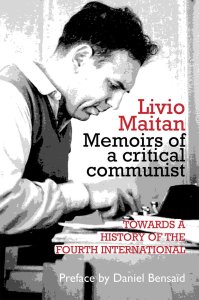
In 2002 Livio completed his history of the Fourth International, published in Rome in 2006. He traces the early years: Tito’s break, the Chinese Revolution, the Soviet invasion of Hungary, the wars of liberation in Algeria and Vietnam, the Cuban Revolution, May 1968, the long fight for socialist democracy within the movement itself. He lived within that history. It was not reconstructed from archives. It was recovered from memory and cross-checked with argument. The two things are not interchangeable, and the difference shows on every page.
Livio died in Rome in 2004, shortly after a council meeting he had been due to address. He was ill and he went anyway. It was not a surprise to anyone who knew him.
Pepe, writing his tribute in the months that followed, caught something essential. He looked normal, Pepe wrote: not at all the classic image we carry of revolutionaries. The closest thing to a trade union worker, patiently handling all the problems of someone overwhelmed by the state or by the brutal machine of a regime that seemed to have few fissures. In 1992 Livio underwent heart surgery. He stuck to his rhythm. He still had time to join the new movements: not, as he put it, to put the old workers’ movement to light, but to make a new one.
His legacy had none of the sectarian certainty that poisons so many currents of the revolutionary left. No conviction that his tendency represented the true transmission belt, the chief meaning of the classics, the only legitimate continuity. His canon was a point of departure, not of arrival. As a thinker, Pepe said, he was no exegete but an inventor of big things. A living embodiment of communist integrity and ardent internationalism. A Marxist for whom theory is valid only to the extent that it helps us understand the reality with which we wish to engage.
And a lover of football. A comrade of the sort who feels like a friend the moment you meet him.
Penelope Duggan was keen to publish a translation of Livio’s memoir, and I volunteered. Which means I have lived Livio’s words twice: at the start of my life as a revolutionary, and again now as an old man. From his book on China I first learned what engaged scholarship could look like. From his memoir I relearned it. Translating both was, I should say, a bittersweet experience: not quite sad and not quite joyful. Something in between that I don’t have a word for, in English or in classical Chinese.
We had much in common, Livio and I. Both members of the Italian Communist Party at one point, both eventually Trotskyists, both fascinated by China. Livio published three books on China across a lifetime of writing. Each of us, translator and author, has translated roughly as much as we have written. Working through his memoir I was able to relive, chapter by chapter, a wild political youth and a difficult middle age, most of which, if I am honest, came to nothing. Or so it seemed in the living.
Enzo Traverso, in his Left-Wing Melancholia, chronicles how youthful certainties become the defeats of later life. That is part of our story too. The Vietnamese embassy was right. The Cambridge slogans were daubed on walls that no longer stand. The parties we built fractured or were absorbed. But Livio’s indomitable spirit, his capacity for self-sacrifice, his zest for life and his fantastical commitment to politics, lifts his story from a catalogue of false starts into something else entirely: a chronicle of heroism, and of joyous, incorrigible optimism.
He died before Black Lives Matter, before the MeToo upsurge, before Corbyn’s moment in Britain, before Extinction Rebellion and the new wave of struggles. But he paved the way for all of it. Not as an architect. As someone who kept the road open when most people had given up on its existence.
His book shows the road to socialism. Not as a completed map. As a working instrument.
November 2019