
 Version imprimable
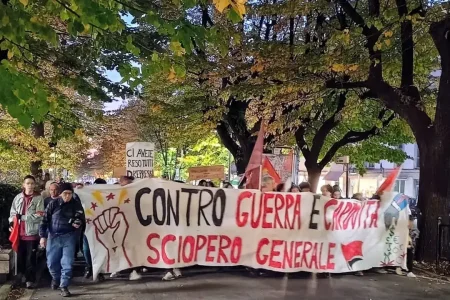
Right from the start of the school year, in early October, occupations began at dozens of schools in Rome and Turin, and then in many other cities. Many of these are still ongoing or are just getting under way at this very moment. The students are protesting against the deterioration of state schools, dilapidated buildings, staff shortages, the reform that devalues technical education, the government’s racist decree imposing a cap on the number of foreign pupils in classes, and the ban on wearing the burqa and niqab. But from the very outset, the youth protests have also targeted broader issues such as the high cost of living and warmongering and rearmament policies. Solidarity with Palestine remains one of the defining features of the growing awareness among the younger generations, who already made their voices heard on the streets and through strikes last autumn.
The general strike called by USB and other grassroots trade unions, and the demonstrations on 30 October brought around a million people onto the streets in 70 cities. It also drew in many members of the CGIL and other workers, and was openly supported by the ‘Le radici del sindacato’ [roots of the trade union-Tr] faction within the CGIL. The initiative began with workers at European ports, who decided to strike against the arms trade, and was then extended to all categories of workers under the slogan: ‘Lay down your arms, raise our wages!’. Many teachers took to the streets alongside their pupils, as did firefighters, metalworkers, workers from the former ILVA [iron/steel], employees from numerous companies in crisis, and transport workers – despite attempts to compel them to work on the public holiday of 1 November. The strike on 30 October succeeded in uniting the student protest with that of the working class, as well as linking demands against war and rearmament with concerns over the rising cost of living and the loss of purchasing power of wages.
On the 30 October , the Meloni Government presented its draft budget bill to Parliament, which provides for a massive investment in defence, bringing Italy ever closer to NATO’s target of spending 5 per cent of GDP on armaments. So much for listening to the people on the streets and the younger generations! The Government is pressing ahead with its anti-people policies, allocating insufficient resources to the health service. It is making further cuts to education funding, and planning a further reduction in staff numbers of around 5,000 teachers and 2,000 school support staff, technical and administrative assistants. It is not setting aside the resources needed to bring public sector salaries into line with the cost of living. Furthermore, it plans to raise funds by cutting the inflation-linked adjustment of pensions.
On the other hand, the only response the Government has given to social mobilisation has been to intensify repression, by enacting yet another ‘security’ decree that criminalises minors by providing for preventive police detention and gives the police and the army free rein.
The right-wing parties in government seem convinced they can win the elections again thanks to the unconstitutional reform of the electoral system which they managed to push through in recent weeks. This system allocates 55 per cent of seats to the coalition that manages to secure 42 per cent of the vote, retains the 3 per cent threshold for entry into Parliament, and quadruples the number of signatures required to submit a list.
They have not reckoned with the exasperation of the people and the possible emergence of a united mass movement of the working class and the younger generations. This movement will continue to make its voice heard in the coming weeks and will reach a key milestone on 20 November: the international student strike called by numerous European organisations. On the same day there will be the general strike called by the CGIL and the strike by public sector and education workers called by the USB.
2 November 2026
Translated by International Viewpoint.