
 Version imprimable
Elected with the support of some former Movimiento al Socialismo (MAS) voters, around a program of "modernization" and "efficiency", Paz, in office since 8 November 2025, quickly adopted austerity measures, betting on the sluggishness of the social movement after the collapse of the left in the elections.
A plan of anti-social measures
As of 17 December 2025, a decree abolished subsidies for petrol and diesel, causing tariffs to rise by 86% and 160% respectively, with the immediate consequence of an increase in all consumer prices. This text also facilitated the establishment of multinationals in the exploitation of mineral resources, agro-industry and infrastructure. A first mobilization allowed a partial retreat. Then the law of 10 April 2026 was adopted, which, by reversing the 1953 agrarian reform, encouraged the grabbing of small farmers’ land by large landowners.
The largest social movement of the 21st century
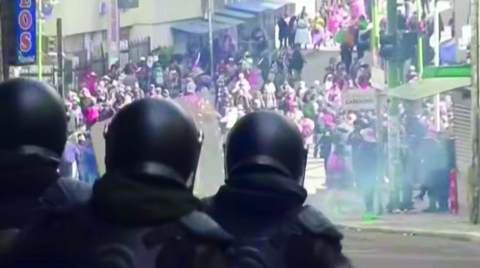
The COB trade union federation, together with the Tupac Katari federation and the indigenous women’s organization Bartolina Sisa, resumed the mobilization at the end of April and called for the blocking of roads, thus isolating the country’s main cities, and multiplied calls for strikes. Faced with the vigour of this second movement, Paz revived the classic rhetoric by criminalizing social organizations, calling them terrorists, denouncing a pseudo-conspiracy instigated by Evo Morales, and issuing arrest warrants for the main leaders.
This social movement, uninterrupted since the end of April, is demanding wage increases to compensate for soaring prices, and the end of the country’s opening up to multinationals, under the slogan “Bolivia is not for sale”. Despite the repression, with at least seven deaths and many arrests, the movement is still holding. However, a law establishing a state of emergency has been passed, ensuring total impunity for the armed and repressive forces.
An uncertain outcome
The COB is divided between an executive secretary who called for Paz’s resignation while several CODs (departmental branches of the COB) rejected this slogan (such as the one in Santa Cruz). But for a few days now, the COB has presented an 8-point plan to the government as part of the opening of the “dialogue”. As for the Tupac Katari federation, which is very powerful in El Alto, and the Bartolina Sisa organization, they have taken the lead in mobilizing indigenous peoples and peasants.
The Paz government, divided on what to do, with a vice-president who has condemned the measures it has taken, is wielding the carrot by demanding to negotiate while repressing, imprisoning demonstrators and forcing the lifting of roadblocks. In order to divide the movement, it has succeeded in signing a number of separate agreements with a few local unions, such as on 18 June with the Colquiri miners’ union, or with transport companies in La Paz two days before.
The traditional right, taking advantage of the crisis, is raising the ante. Former president Jorge Quiroga called for the arrest of the movement’s leaders and activists, who were described as terrorists and even drug traffickers, and demanded the effective and immediate establishment of a state of emergency to “free the Bolivian people taken hostage”.
Solidarity is urgent
If the government is staking its survival on this social struggle, it benefits from a favourable international environment, supported by Trump and the far-right leaders of the continent who are pushing Paz to put down the revolt in order to turn the page on the years of the MAS. Moreover, as a sign of the United States’ interference, an agreement to combat delinquency and drug trafficking was signed between Bolivia and the United States on 16 April.
Our solidarity is all the more important because a social victory in Bolivia would be an encouragement to the struggle for the peoples and workers of the Latin American states, especially the neighbouring ones, plunged into the "libertarian" night.
23 June 2026
Translated by International Viewpoint from l’Anticapitaliste.