The July 2026 issue spans 37 pieces across five continents, with US politics and a summer of climate breakdown dominating the main news section.

The murderous state, presumed innocent
31 July, byThe death of Abderrahim Fakir in a working-class neighborhood of Bologna on Sunday, July 20, sparked outrage, leading thousands of people to demonstrate to demand “Truth and Justice”; this death is reminiscent of that of George Floyd in Minneapolis in 2020…
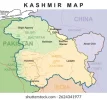
Deaths in Pakistani controlled Kashmir
30 July, by ,Farooq Sulehria made this podcast for Struggle TV about events in Kashmir. International Viewpoint brings you the transcript. Farooq Tariq wrote on the same subject, his article follows. An appeal for solidarity has already been published “Jammu-Kashmir progressive organisations call for global solidarity”.
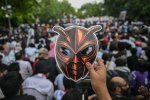
The Cockroach Protests Are Reviving India’s Ailing Democracy
29 July, byIndia’s “Cockroach” youth movement has now forced the resignation of the country’s education minister. What began as a single-issue protest mobilization has broadened into one of the biggest challenges Narendra Modi has faced in power.
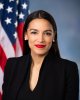
AOC for President? Will She Run? Could She Win?
28 July, by“An ally of Senator Bernie Sanders, whom she accompanied on his “Fighting Oligarchy” national tour, and of Zohran Mamdani, the DSA member who is now mayor of New York City, she has become the standard-bearer of progressives. So now everyone left of center asks: Will she run? Could she win?”
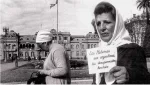
The Malvinas and the National Question
27 July, byA banner at the World Cup reopened a debate that goes beyond the Malvinas/Falklands issue. Faced with an internationalism that underestimates imperial hierarchies and an anti-imperialism that erases the class struggle, the left needs to recover a democratic conception of nation, sovereignty, and internationalism.
Heatwaves & strategy
26 July, by“Whilst ecosocialism has made great strides in its ability to offer a comprehensive alternative for society, its supporters must still prove that they are capable of engaging in politics – that is, of fighting for power.”
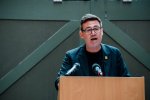
King of north crowned Prime Minister
26 July, byAndy Burnham became British Prime Minister on 20 July 2026. The former Mayor of Manchester had served in the Labour governments of Tony Blair and of Gordon Brown and in the opposition teams of Ed Milliband and Jeremy Corbyn. He stood twice previously to be Labour leader but this time was the only candidate with active support from people earlier expected to stand themselves. His predecessor Keir Starmer was forced to resign on 22 June after Burnham won an impressive by-election victory in Makerfielld inthe north west of England where Nigel Farage’s far right party Reform had hoped the prize might be theirs. This was in stark contrast to Labour - and Starmer’s - disastrous showing in elections in May. It was clear that Burnham’s success partly came from people supporting him precisely to get rid of Starmer.
Since the article below was written Burnham has appointed his Cabinet retaining many of those who served with Starmer and made a number of announcements of policies to assist with the biting cost of living crisis, while sticking to the fiscal rules. Only 5 days in, it is too early to draw a substantive balance sheet, On the other hand there is no doubt that Burnham is opening up a number of key political discussions - on devolution, on electoral reform and on reindustrialisation, for example, which it will be essential for the radical left to engage with.[TC]

The Streets Are Asking Questions the Leaders Cannot Answer in Ukraine
24 July, byThe mobilisation in the streets forced a backdown on Zelensky.

China Hit by “Deadly Weather Events”
23 July, byDuring the first ten days of July, cyclones (typhoons), tornadoes, storms, severe weather, floods, and landslides wreaked havoc in the central and southern parts of the country—and beyond. China is facing extreme weather events intensified by the climate crisis.