Benjamin B analyses The imperialism of our time while Amir Kianpour & Morteza Samanpour deliver “Many Shades of Campism: An Internationalist Critique”. Swiss activists advocate a “Feminist strike for the socialisation of reproductive labour!”. Diogo Machado and Alexandre Abreu analyse “After hyperglobalisation: the capitalist reconfiguration”. Eric Toussaint presents “An important contribution by Ernest Mandel to the debate on the transition to socialism”.

International Viewpoint - online socialist magazine
International Viewpoint, the monthly English-language magazine of the Fourth International, is a window to radical alternatives world-wide, carrying reports, analysis and debates from all corners of the globe. Correspondents in over 50 countries report on popular struggles, and the debates that are shaping the left of tomorrow.
-
United States
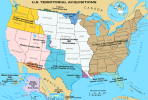
Colonialism, conquest, extermination, white supremacy, the roots of Trump’s policy
3 August, by“When in the course of human events it becomes necessary for one people to dissolve the political bands which have connected them with another, and to assume among the powers of the earth the separate & equal station to which the laws of nature and of nature’s God entitle them, a decent respect to the opinions of mankind requires that they should declare the causes which impel them to the separation.”
Thomas Jefferson, July 4, 1776.
read article... -
Climate
Climate events provoke tensions in the Arab world
2 August, byThe countries of the Arabic-speaking region experienced floods last winter (Morocco, Algeria, Tunisia, Egypt, Jordan, Syria, Iraq, Yemen, Oman, Saudi Arabia). Six months later, the region is experiencing extreme temperatures: from 40° to 50° in the Maghreb and 50° and more in Iraq and the Arabian Peninsula, with an average of 35° in Gaza (meaning 50° in tents). Deaths due to the heatwave are estimated to be in the hundreds in Tunisia.
read article... -
South Africa
The 1976 Uprising and its enduring significance
1 August, by“The youth of 1976 understood that freedom is indivisible. They risked everything, not for statues or hollow commemorations, but for a world in which human beings are no longer reduced to commodities, ethnic labels or disposable labour. Their legacy demands nothing less from us today: to see our struggles as linked, to reject the divisions that power imposes, and to build a genuine liberation for all.”
read article... -
Italy

The murderous state, presumed innocent
31 July, byThe death of Abderrahim Fakir in a working-class neighborhood of Bologna on Sunday, July 20, sparked outrage, leading thousands of people to demonstrate to demand “Truth and Justice”; this death is reminiscent of that of George Floyd in Minneapolis in 2020…
read article... -
Pakistan
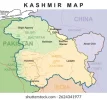
Deaths in Pakistani controlled Kashmir
30 July, by ,Farooq Sulehria made this podcast for Struggle TV about events in Kashmir. International Viewpoint brings you the transcript. Farooq Tariq wrote on the same subject, his article follows. An appeal for solidarity has already been published “Jammu-Kashmir progressive organisations call for global solidarity”.
read article...