
 Version imprimable
The reasons for the anger are many and deep-seated. The economic situation, with rising costs (electricity) and insufficient and delayed subsidies. Meanwhile, Mitsotakis’ right-wing government is trying to stifle the scandal of an agricultural office that embezzled a billion euros in European funds to serve its clientele!
At the same time, the farmers of Thessaly remain destitute, two years after the terrible storm Daniel. Another cause is sheep pox, which has already led to the slaughter of 500,000 animals since August 2024 and is intensifying. However, the government refuses to vaccinate and offers no solution to combat the disease, with risks for dairy exports.
Mitsotakis has not criticized the Mercosur agreement, which is disastrous for this agricultural country with no efficient industrial network, and his MEPs voted in favor of the agreement despite protests from farmers in his own camp!
In general, the farming community has noted the right wing’s total indifference to the real risk of the sector’s disappearance.
A popular mobilization
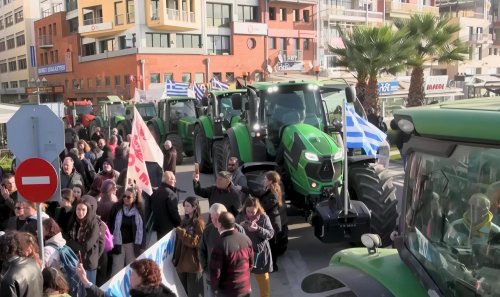
These accumulated causes meant that, unlike previous mobilizations, this one did not play on “competition” between the blockades, with the action still based on roadblocks, this time very numerous, to stop or slow down traffic on the country’s major roads. Faced with Mitsotakis’ intransigence, national coordination and grassroots general assemblies helped to avoid attempts at division.
Although thousands of tractors were on the roads, the desired effect was above all to show a united force, rather than to bring about a total blockade. And this time, many young farmers were resolutely committed. As a result, this mobilization was very popular, and many supporters came to the blockades: young people, workers...
A defeat?
Unwilling to give in, Mitsotakis sought early on to criminalize the movement, labeling it “extremist” (and even “fascist”!). He failed in his attempt to divide the movement by creating and inviting a puppet delegation that even included people with no connection to the farming world! And he believed that repression and trials would make the mobilized peasants back down, but in vain: they have nothing left to lose.
For their part, the left and PASOK certainly affirmed their support... but without going as far as what would have been decisive: pushing for a national solidarity strike.
Faced with the contempt of the right wing and the lack of prospects with the blockades alone, the barricades have now been lifted. Despite this setback, the anger remains intact, and the idea of a national rally in Athens is gaining momentum. On that day, a general strike will be necessary!
25 January 2026
Translated by International Viewpoint from l’Anticapitaliste.