
 Version imprimable
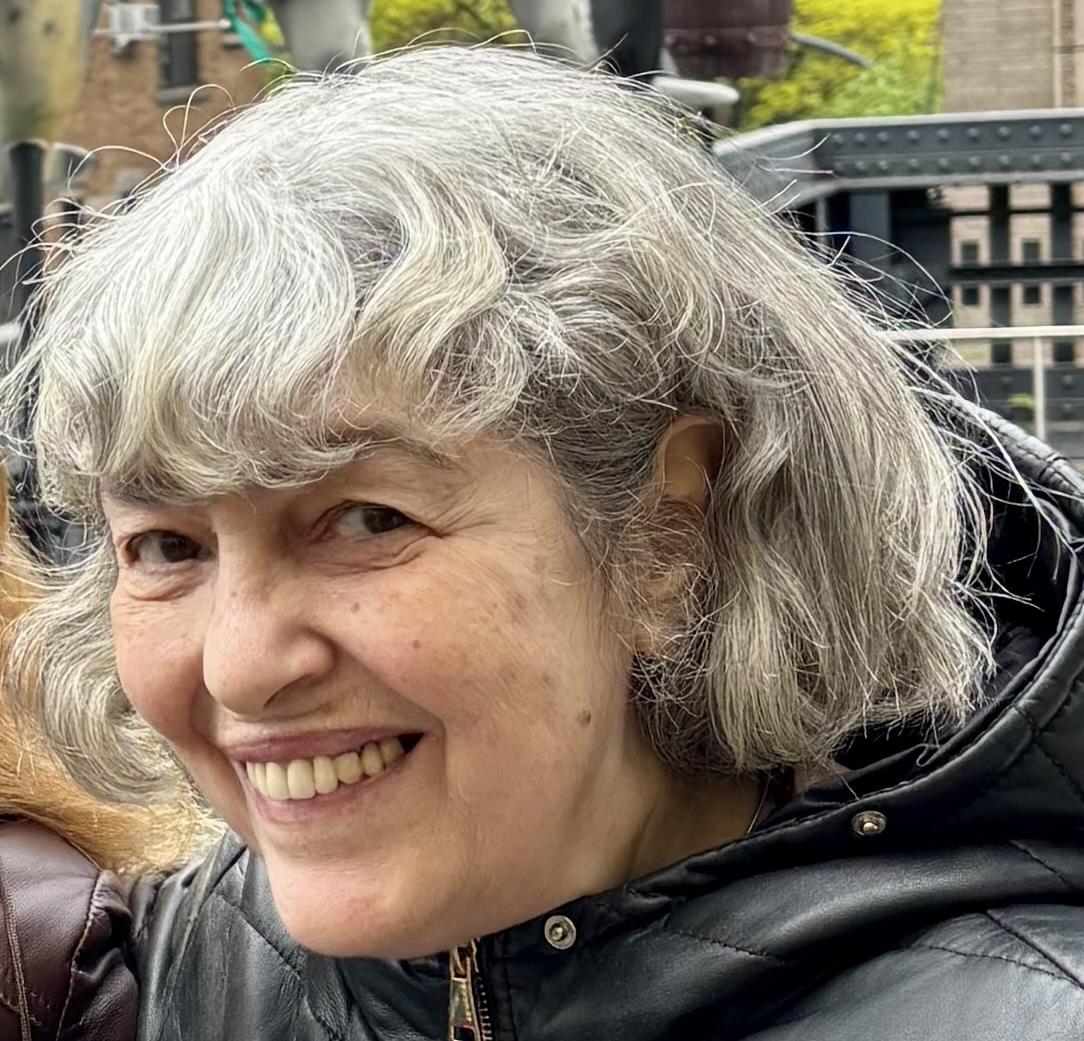
She was born in 1949 to Ioanna and Vassos Varika – her father was well known as a left-wing literary and theatre critic. She studied philosophy at the University of Athens, then at the École des Hautes Études en Sciences Sociales and Paris VII University in Paris. During her time as a student in Paris, she participated in the anti-junta movement [1] and became involved with the Fourth International. She took part in the events of May 1968, particularly the occupation of the Greek pavilion at the Cité Internationale Universitaire in Paris.
In the period following the fall of the junta, she returned to Greece and played a leading role in the founding of the Revolutionary Communist Front (KEM) and its magazine, Barricades (Odofragma). This organisation shared the views of the Fourth International, even before its unification with OKDE, which was the section at the time.
Alongside her leadership role in these political processes, Eleni played a leading role in the creation of a feminist circle, which developed into the ‘Women’s Liberation Movement’. This movement was the first in Greece to raise issues such as abortion and contraception, which had previously been taboo in Greek society. Reflecting this period, because she had translated into Greek the ‘Little Red Book for Schoolchildren and High School Students’, a Danish book that addressed these subjects, she was accused by Christian groups, brought to trial and only acquitted after a large support campaign.
In 1981, she returned to Paris with a scholarship to write her university thesis, supervised by Michelle Perrot, on the history of feminism in Greece. In 1991, she became a lecturer at the University of Paris VIII and a researcher at the National Centre for Scientific Research (CNRS). She has taught at numerous universities in France, Switzerland, the United States, Brazil, Athens and Crete. She has written many books and articles on feminism, social hierarchies and gender in political theory, and her texts have been translated into many languages.
The following works have been published in Greece: The Revolt of Women: The Genesis of Feminist Consciousness in 19th-Century Greece; With a Different Face: Gender, Difference and Ecumenicity.
She remained steadfast in her emancipatory ideas. We were fortunate enough to benefit more directly from discussions and collaboration with her during her relatively frequent visits to Greece with her partner Michel Löwy, a well-known intellectual, theorist and leader of the Fourth International.
We will miss Eleni very much, because what emanated from her was her deep appreciation of human connections, friendship and life.
The funeral will take place in Paris, in the historic Père Lachaise cemetery, on Friday 23 January 2026.
13 January 2026
Translated from tpt4org.