International Viewpoint, the monthly English-language magazine of the Fourth International, is a window to radical alternatives world-wide, carrying reports, analysis and debates from all corners of the globe. Correspondents in over 50 countries report on popular struggles, and the debates that are shaping the left of tomorrow.

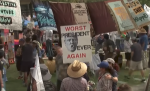
Uniting left-wing forces to counter the rise of the far right. That is the aim of the First International Anti-Fascist Conference, to be held in late March in Porto Alegre, Brazil
read article...
In Italy, prime minister Giorgia Meloni’s government is continuing its authoritarian offensive with a reform of the judiciary that threatens the independence of the judiciary. The referendum on 22 and 23 March is a central political issue. After the “security” decree, the reform of the judiciary is another important link in the authoritarian project promoted by Meloni’s government. By changing the methods of electing members of the Supreme Council of the Judiciary (CSM), the latter threatens the independence of this body and limits its ability to act as a counter-power to the political and economic systems. The victory of the “No” vote in the referendum on 22 and 23 March is an important opportunity to destabilise Meloni’s coalition and to solidify the political and social opposition camp.
read article...
Journalist and activist Avi Lewis is campaigning for the leadership of the NDP in the Canadian state, attracting much attention, dedication, and debate. Voting concludes on 28 March.
read article...
The already unbearable horrors engulfing the peoples of the Middle East exploded into U.S. domestic news on March 12 with the attack in suburban Detroit at Temple Israel, the country’s largest Reform Jewish congregation.
read article...
The imperialist war unleashed on 28 February 2026 by Donald Trump and Benjamin Netanyahu against the Islamic Republic of Iran is becoming more destructive every day.
read article...The supposed South Korean success story has been achieved thanks to policies that run contrary to the economic model advanced by the World Bank. Far from being a virtuous accumulation of wealth through the advantages of free-market forces, the economic development of South Korea came about by "a brutal primitive accumulation achieved by the most coercive methods, in order to produce virtue by force" (J-P Peemans). Korea has obtained its economic results under the yoke of a very repressive regime that had the support of the United States in the framework of its containment of the so called "socialist" regimes. South Korea has adopted a production-driven economic system that has little respect for the environment. The South Korean example is not to be recommended, nor is it repeatable, but it deserves to be analysed.
Revolutionary struggles against capitalism have raised, time and again, the issue of sexual liberation. Right at the start of capitalism, the English revolution of the 1640s and 1650s involved what historian Christopher Hill has called a “sexual revolution” against the old order. The more radical forces included “ranters” such as Lawrence Clarkson, who argued that “What act soever is done by thee in light and love is light and lovely, though it be that act called adultery.” [1]1 The “utopian socialists” of the early nineteenth century also challenged accepted ideas about sexuality.
Hannah Arendt was worried that politics might disappear completely from the world. The century had seen such disasters that the question of whether ’politics still has any meaning at all’ had become unavoidable”. The issues at stake in these fears were eminently practical: ’The lack of meaning in which the whole of politics has ended up is confirmed by the dead end into which specific political questions are flocking.’
The World Bank claims that, in order to progress, the Developing Countries [2] should rely on external borrowing and attract foreign investments. The main aim of thus running up debt is to buy basic equipment and consumer goods from the highly industrialised countries. The facts show that day after day, for decades now, the idea has been failing to bring about progress. The models which have influenced the Bank’s vision can only result in making the developing countries heavily dependent on an influx of external capital, particularly in the form of loans, which create the illusion of a certain level of self-sustained development. The lenders of public money (the governments of the industrialised countries and especially the World Bank) see loans as a powerful means of control over indebted countries. Thus the Bank’s actions should not be seen as a succession of errors or bad management. On the contrary, they are a deliberate part of a coherent, carefully thought-out, theoretical plan, taught with great application in most universities. It is distilled in hundreds of books on development economics. The World Bank has produced its own ideology of development. When facts undermine the theory, the Bank does not question the theory. Rather, it seeks to twist the facts in order to protect the dogma.
The first round of the local elections took place against a backdrop of widespread creeping fascism in France and comes after a brutal offensive by the far right, during which the traditional ‘Republican’ right has decisively broken from much of its historical framework and values.
- read article...The majority of the party votes to maintain its autonomy and a commitment to social change.
- read article...After 59 days of unjust imprisonment, Lyes Touati has finally been acquitted - 59 days of waiting, mobilization, solidarity and determination.
- read article...International Viewpoint is published under the responsibility of the Bureau of the Fourth International. Signed articles do not necessarily reflect editorial policy. Articles can be reprinted with acknowledgement, and a live link if possible.
We need your help to get our message across! Send donations payable to International Viewpoint 10b Windsor Rd N7 6JG, Britain - or why not donate online:
Site Map
| Log in |
Contact |
RSS 2.0