
 Version imprimable
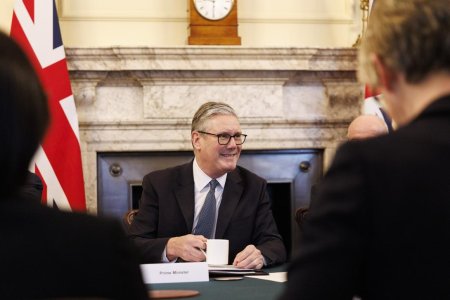
As things stand, Wes Streeting (Secretary of State for Health) is the bookmakers’ favourite to succeed him – assuming Angela Rayner (former Deputy leader) won’t stand because of her tax problems. Yet neither would break from Labour’s self-imposed fiscal straitjacket. If anything, Streeting would likely push further right: on public spending, on Palestine, and on the right to protest.
Every week brings a fresh scandal. But the real problem is deeper. The common thread is the deference shown by Britain’s major parties towards wealth and power. Even without controversies like the Mandelson-Epstein revelations, Labour would still be trapped in the contradictions of its economic strategy.
The depth of the Labour crisis is such that many are asking whether Labour can survive. When the Labour loyalist paper, Tribune, says the party is on its last legs, the situation is at least deadly serious.
The Growth Myth
Starmer and Rachel Reeves (Chancellor of the Exchequer) promised that economic “growth” would magically generate tax revenue. It did not. Partly that reflects a sluggish global economy. More importantly, it reflects a domestic context in which working-class households and poorer segments of the middle class lack spending power.
The result? Millions face low pay, inadequate benefits, and deteriorating public services. The NHS and transport systems are visibly struggling. Meanwhile, the housing crisis grinds on, locking people out of stable and affordable homes.
Yet despite this, Labour pressed ahead with deeply unpopular policies: keeping the two-child benefit cap, scrapping winter fuel payments, and attempting to cut disability mobility payments – moves withdrawn only after backbench revolts. Add to that the retreat on key net-zero pledges and the refusal to take meaningful action over Gaza, and the political damage becomes clearer.
Labour’s slide in the polls was predictable. So too was its failed attempt to deal with Reform UK by echoing it. In addition, the right’s obsession with small boats crossing the Channel, restrictions on care homes, and the NHS recruiting from abroad threaten drastic cuts in the availability of care home places and a further squeeze on the number of NHS workers.
If the aim is to encourage British people to take up these roles, this is unlikely to succeed. Unemployed people won’t want to take jobs that offer low pay and very long shifts, and need skills they don’t have.
New restrictions on international students, including restrictions on family reunion for graduates, will affect both higher education finances and the number of skilled workers and researchers who wish to remain in Britain. And why not go instead to Canada or Australia that are more welcoming?
Reform cannot be beaten by copying its ‘keep them out’ and ‘send them back’ sentiments. The policies of Enoch Powell and the National Front in the 1970s on ‘stop immigration, start repatriation’ are becoming the policies of all the main parties. It is shameful that these are now the policies of a Labour government.
And the widely held but utterly false view that immigrants are to blame for crisis-ridden services ignores the real causes: decades of under-investment, privatisation, and spending squeezes.
The Tax Taboo
Mention higher taxes and the major parties protest that ordinary people are already stretched. But this deliberately obscures where substantial tax revenue could actually come from.
Corporation tax remains low by international standards. Vast profits are lightly taxed or untaxed. Enormous personal wealth sits shielded in offshore havens. Britain is not short of money – it is short of political will. This is the case for dozens of transnational corporations that reap vast profits in the UK. They pay minimal tax by claiming to be headquartered in Ireland, Switzerland, or Luxembourg, and asserting that their UK subsidiaries must pay substantial licensing fees, leaving little or no taxable income in the UK.
High-tech giants such as Apple, Amazon, Jigsaw (Google), Meta (Facebook), Microsoft, X (Elon Musk), and OpenAI all benefit from a low or no-tax regime for their British operations. In addition, untold billions of taxable wealth globally, valued at £388 billion per year, evade tax in tax havens, the majority of which are British overseas territories.
Public Services in Decay
Because Labour has bound itself to strict fiscal rules, meaningful improvements to the NHS, elderly care, and housing remain elusive. Across public services, the picture is bleak.
Water is a glaring example. Privatisation has delivered vast profits for investors, rising bills for consumers, and chronic under-investment in infrastructure. The result: polluted rivers and sewage-strewn beaches.
Local government is near breaking point. Housing shortages deepen poverty. All of this creates fertile ground for Nigel Farage and Reform UK. The opposition hardly needs to try.
The Shadow of New Labour
What is now unravelling is an attempt to recreate Tony Blair’s New Labour. Across Labour’s leadership – from Streeting to Miliband, Rayner to Starmer – there is broad agreement that the New Labour record is something close to sacred: pragmatic, modern, electorally successful.
But that account is a myth. New Labour’s support started to drain because of Tony Blair’s role in backing George W. Bush in the Iraq and Afghanistan wars. Domestically, it ended in 2010 with austerity and political collapse after years of indulgence towards banks and financial institutions.
When mortgage-backed investments imploded in 2008, the state bailed out Northern Rock, Lloyds, and the Royal Bank of Scotland and gave significant sums to other banks as well. The cost was in the hundreds of billions of dollars. Austerity followed – first under Labour chancellors Gordon Brown and Alistair Darling, which intensified under David Cameron and George Osborne.
Public-private partnerships have left long-term debt that continues to strain health budgets, with some hospital trusts paying millions annually in interest before funding frontline services.
The tight grip on spending is also evident in the slow compensation for victims of the Post Office scandal, the contaminated blood catastrophe, and the Windrush scandal. WASPI women, affected by the rapid rise in the state pension age, have been denied compensation entirely.
Mandelson and the Party Machine
There is little reason to shed tears for Morgan McSweeney or Peter Mandelson. Over different periods, both were instrumental in marginalising the Labour left and steering the party toward intensified neoliberal and anti-left-wing policies.
Morgan McSweeny rose up the ranks of the Labour hierarchy under the protective wing of Steve Reed, then leader of Lambeth Council, whose chief of staff he became. Latterly, he is said to have had close links with Peter Mandelson while advising Keir Starmer.
Mandelson – alongside Blair and Brown – was a principal architect of “Blairism”. The largely symbolic Clause 4 on common ownership was swept away, the policy shifted rightward, and relations with the wealthy elite flourished.
Mandelson’s close connections with the mega-rich and his strongly pro-American, pro-Israeli positions were positive credentials for an incoming ambassador to the US. After all, the American president also has multiple connections to the rich and famous internationally, a world where hostility to the needs and rights of ordinary people is taken for granted.
Mandelson once said: “Every morning I wake up and think about how to bring down Jeremy Corbyn.” The party’s right wing attempted to remove Corbyn for the first time in 2016 by standing Owen Smith against him. Smith’s campaign was backed by Keir Starmer, Yvette Cooper, Ed Miliband, Sadiq Khan, Margaret Beckett, Harriet Harman, and dozens of other Labour MPs and some trade unions, including the GMB and USDAW. The outcome was a humiliating defeat for Smith, who took only 38% of the vote.
But if you drill down into that figure, you find that Smith won 81% of MPs, 46% of trade unions, and 40% of constituency members. However, these votes were swamped by the 123,000 registered supporters, whose votes were permitted in 2015 and 2016. This was a shock to the Labour right, who decided that something much more serious had to be undertaken to undermine Corbyn, and it is a strong indication that Mandelson was involved in the subsequent witch-hunt against him.
The Housing Example
Housing is among the clearest failures of the Starmer era. Labour pledged to boost housebuilding dramatically and expand affordable housing, promising to sweep away planning “obstacles”. Yet little meaningful public investment has followed.
The housing crisis remains a major driver of poverty and insecurity. Promises of large-scale social housing construction have not materialised. Labour promised 300,000 new homes each year until 2029. Last year, only 122,500 were built, up slightly from the previous year and way off the 300,000 target.
Everyone knows that climbing onto the housing ladder is hugely difficult when the average house price in Britain is £300,000 and a staggering £553,000 in London. The rent for a two-bedroom flat is also extremely high.
Many private renters are paying 50% or more of their disposable income on rent or mortgage repayments. The housing crisis and low wages are graphically revealed in the figure, which shows that approximately 30% of people are still living at home at age 30.
The housing crisis and the high costs of utilities lead to a substantial transfer of disposable income to finance capital. This, in turn, means that hundreds of thousands of households are using their savings and credit cards to sustain household expenditure. They are, in effect, in debt bondage.
The Core Question
The crisis facing Labour is not just about personalities. It is about political economy. Public services are crumbling. Inequality is widening. Living standards are stagnant. And yet the party leadership refuses to challenge the structures that produce these outcomes.
There is an unavoidable conclusion: if Britain is to repair its public realm – from the NHS to housing, from local councils to environmental infrastructure – state revenue must rise.
Governmental spending is a lower percentage of GDP than in comparable states. In Germany, for example, it is 58% of GDP; in France, it is 57%. In Britain, it is around 40%, just above the US rate of 37-38%, while in Brazil, it’s just 20%. These are not just economic figures; they represent the extent to which public spending has been repressed in Britain.
Political movements advocating a realignment of the British economy towards working people and a shift towards supporting the poor and the victimised internationally face a major political struggle. Without it, the far right will walk into the political vacuum that the left has been incapable of occupying.
A government that works for the majority, the millions without significant wealth, who struggle from one payday to the next, must bite the bullet of a realignment of wealth and power. Until that question is confronted honestly, the cycle of disappointment will continue – and the political space will remain open to Reform UK, the Tories, or a coalition of both.
16 February 2026
Source: Anti*Capitalist Resistance.