
 Version imprimable
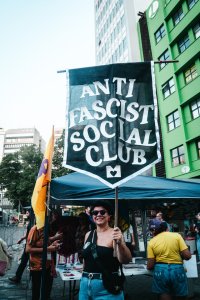
At a time marked by the rise of authoritarian nationalism, intensifying imperial rivalries, and deepening social fragmentation, the Anti-Fascist and Anti-Imperialist Conference in Porto Alegre represented more than a gathering. It became a space where dispersed struggles began to recognise one another again, where movements separated by geography, language, and political traditions searched for common ground in an increasingly unstable world.
The Porto Alegre Declaration reflects this moment of convergence. It’s true that neither does it resolve the contradictions of the present period, such as the differing approaches to activism and the challenges posed by global inequalities nor does it offer a finished roadmap. But it shows that confronting neo-fascism and imperial rivalry will require rebuilding international solidarity in ways that respond to today’s realities.
Toward Authoritarianism
Multiple overlapping crises characterise the current global landscape. Across various continents, far-right forces are increasingly gaining influence, while democratic institutions are facing significant weakening. The expansion of militarisation is evident, and inequality continues to escalate. These interconnected phenomena signify a broader transformation within global capitalism.
Exploiting economic insecurity, migration crises and general political disillusionment, the European far-right continue to expand their influence. In Latin America, there are authoritarian tendencies that exist alongside fragile democratic advancements, while social movements face challenges in their efforts to safeguard social rights. The Asian political landscape is marked by majoritarian nationalism and authoritarian governance are reshaping political landscapes. In Africa, external interventions, debt dependency and internal authoritarianism intersect in complex ways.
These developments unfold alongside intensifying imperial rivalries. The United States seeks to maintain its global dominance while emerging powers expand their influence. Military alliances are strengthened. Defence budgets rise. Geopolitical tensions escalate.
In such a context, fascism does not emerge as an isolated phenomenon. It grows within a global environment shaped by militarisation, inequality, and political crisis. Authoritarian nationalism thrives when democratic institutions weaken and when social insecurity intensifies. Imperial rivalry, in turn, fuels nationalism, militarisation, and repression. This convergence between imperialism and authoritarianism defines the current period.
A New Internationalist Challenge
A recurring debate in Porto Alegre was how to approach anti-imperialism in a world shaped by competing imperial powers. Well, the pressure to side with one camp against another is difficult to avoid, but doing so risks reinforcing the same patterns of rivalry and domination that many movements are trying to move beyond.
In Porto Alegre, many discussions pointed toward the need to move beyond this kind of thinking. Opposition to U.S. imperialism, solidarity with Palestine, rejection of Russian aggression in Ukraine, and support for democratic struggles against authoritarian regimes were treated as compatible. Rather, we can increasingly consider them part of the same internationalist approach; one grounded in solidarity with peoples rather than alignment with states.
This approach rejects campism, the idea that anti-imperialism requires alignment with particular states; prioritising solidarity with people at the centre. Such a perspective is not abstract. It emerges from concrete realities.
The US–Israeli attacks on Iran represent a dangerous escalation of imperial aggression and militarisation. These actions blatatly violate sovereignty, risk regional war, and strengthen authoritarian tendencies across Western Asia. However, opposing imperialist aggression does not mean supporting the Iranian government, which still limits civil liberties and represses democratic movements. The Iranian people themselves have repeatedly mobilised for political freedom and social justice. Solidarity must, therefore, be directed toward the Iranian people: against both external aggression and internal repression.
Similarly, the Russian invasion of Ukraine illustrates another dimension of imperialist aggression, not only violating Ukraine’s sovereignty and inflicted devastating consequences on populations. Our solidarity with the Ukrainian people is possible without aligning with NATO or Western geopolitical strategies, as it is possible to support Ukraine’s right to self-determination while also criticising the military alliances that may exploit the situation for their own interests. A consistent internationalist perspective rejects both Russian aggression and the militarisation driven by competing global powers. These examples illustrate a broader principle: anti-imperialism must be rooted in solidarity with peoples, not states.
Multipolarity and Its Limits
The Porto Alegre discussions around multi-polarity is instructive as many people frequently portray the rise of new powers as a counter to Western dominance. However, multi-polarity does not inherently lead to a more equitable world.
Competition among powers can deepen militarisation, intensify resource conflicts, and reinforce authoritarian tendencies. Many on the left advance the idea of multi-polarity as a panacea for such evils. Multi-polarity may shift the balance of power; it’s only among elites while leaving the conditions of working people largely unchanged.
India can be taken as a telling example of these contradictions. As a member of BRICS, it is frequently depicted as part of an emerging multi-polar order. However, concurrently, India is strengthening military cooperation with Western alliances aimed at containing China. This contradiction is enough to reveal the complexities of contemporary geopolitics.
Internally, India also exemplifies the rise of authoritarian majoritarian nationalism backed by an ideological agenda of the RSS, rooted in a century-old vision influenced by European fascism, which aspires to transform India into a Hindu majoritarian state. The erosion of democratic institutions, attacks on minorities, and centralised power form part of this process. At the same time, the growing strategic proximity between India and Israel reflects the unity of authoritarian governance models across borders.
These developments reinforce an important lesson: multi-polarity among states does not necessarily translate into emancipation for peoples.
Resistance in a Fragmented World
Despite these challenges, resistance continues to emerge. Mass mobilisations against authoritarian governments, labour struggles against austerity, feminist movements confronting patriarchy, and grassroots campaigns against extractivism all demonstrate that opposition to authoritarianism and imperialism remains alive.
The electoral setback suffered by Viktor Orbán in Hungary reinforces the hope that far-right consolidation is not linear. Social movements across Latin America persist in their efforts to confront neo-liberal policies and resist authoritarianism. Workers’ struggles across continents confront precarious labour and economic inequality. These struggles often remain fragmented. Yet they share common dynamics. Porto Alegre provided a venue where these diverse struggles could start to come together.
The Difficult Task Ahead
The conference also revealed the difficulties facing renewed internationalism. Differences in geopolitical analysis, historical experience, and political traditions remain significant. These divergences did not disappear in Porto Alegre.
The assembly highlighted a significant point: unity of action can be achieved even in the absence of complete consensus. In an era characterised by fragmentation, such convergence is becoming ever more essential.
The rise of neo-fascism, intensifying imperial rivalry, and the deepening crisis of global capitalism necessitate responses commensurate with their magnitude. This necessitates the rebuilding of international networks, the strengthening of solidarity, and the development of collective strategies.
The Porto Alegre Declaration announced concrete political moments where this emerging internationalism could take shape. The anti-NATO meeting planned in Turkey in 2026 comes at a time of expanding militarisation, growing military budgets, and the widening geography of NATO’s strategic ambitions, from Eastern Europe to the Indo-Pacific. Bringing together movements opposing militarisation, war, and geopolitical bloc politics, the meeting has the potential to link struggles against military alliances with broader resistance to austerity, authoritarianism, and imperial competition. Similarly, the G7 counter-summit in France and Switzerland in June 2026 offers an opportunity to confront the economic dimension of imperial power, debt regimes, austerity policies, sanctions, and financial domination, imposed by the world’s most powerful economies. These initiatives signal that Porto Alegre was not simply a moment of discussion, but part of an emerging calendar of coordinated international mobilisation, where resistance to militarisation and resistance to economic domination can begin to converge.
A Beginning, Not a Conclusion
Porto Alegre should not be considered an endpoint. It represents a moment — a fragile but meaningful step toward renewed internationalism. In the present day, internationalism will not appear as a fully realised entity. Instead, we must be ready to traverse a long path through continuous dialogue, relentless struggle, and creative experimentation. This process will inevitably be uneven and open to contestation, as various political entities and groups might harbour conflicting interests and priorities that shape their engagement with internationalism. Nevertheless, the urgency for such internationalism has seldom been more pronounced.
The world is moving in contradictory directions. Authoritarianism is rising. Imperial rivalries intensify. Inequality deepens. But resistance persists. Movements regroup. Alliances are reconsidered. New forms of cooperation begin to emerge. Porto Alegre offered a glimpse of this process. Not a finished project. Not a unified movement. But a beginning - fragile, imperfect, and necessary. In a time of fragmentation, that beginning matters.
26 May 2026
Source: CADTM
An earlier version of this article appeared in the May 2026 issue of The Hammer.