
 Version imprimable
Today the victories of the civil rights revolution of the 1960s — the winning of civil rights (1964), Voting Rights (1965) and other laws ending legal segregation and discrimination — are being reversed. We are experiencing a counterrevolution against equality for peoples of color, with African Americans a special target.
Black history is denied. Confederate flags rise again in military bases. Is the return of Jim Crow segregation next?
The counterrevolution, which began in full throttle in the 1980s, continues to unfold under Trump’s authoritarian regime.
Born in Jim Crow South
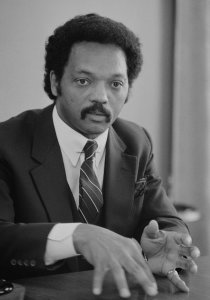
Jackson was born in South Carolina, in the Jim Crow South. He became a close associate of King. We recall the iconic photograph of the civil rights leaders standing on the balcony where King was assassinated the next day. That was when King had gone to Memphis, Tennessee in 1968 to support striking sanitation workers.
King always spoke out for labor rights as well as civil rights. He was criticized by others in the movement who thought he went too far. Most major voices criticized King for speaking out against the Vietnam War in 1967, so soon after President Johnson signed the civil and voting rights acts.
King always argued legal equality was not enough for Blacks after centuries of super exploitation and oppression. He always compared Blacks starting a track race as being 50 yards behind better off whites. Affirmative action programs were necessary to move toward full equality. Today affirmative action lives on as Diversity, Equity, Inclusion (DEI) programs, programs that the Trump government strongly opposes.
Jackson identified with King’s determination and militancy. King appointed him to lead the Southern Christian Leadership Conference (SCLC) office in Chicago.
In 1971 Jackson set up in Operation PUSH (People United to Save Humanity) after leaving SCLC over differences with King’s replacement. PUSH continued the civil rights agenda that King had founded.
In 1984, Jackson set up the Rainbow Coalition as he prepared for a run for the presidency as a Democrat. His Rainbow Coalition campaign was based on the concept of a country based on hope (popularized by Barach Obama who was elected the first Black president 20 years later). The Rainbow Coalition represented ethnic diversity and stood against white nationalism.
Between his Operation PUSH to his presidential campaign in the 1980s, Jackson remained an outspoken critic of racist politics, even endorsing independent Black politics while supporting former comrades running for office in the Democratic Party. He demanded the hiring and advancement of Blacks in industry, banking and higher education, all institutions that in the Jim Crow era had been off limits.
Unlike many other civil rights leaders at the time, Jackson said African Americans might vote for Republican candidates if the Democratic Party did not work for its rights. His framework was always protecting the rights and well-being of African Americans. That’s why during his 1984 presidential campaign Jackson spoke up for Gay and Lesbian rights and for women’s equality.
Like King on Vietnam, Jackson spoke on international issues. He praised the Sandinistas after the 1979 Nicaraguan revolution, went to Cuba to help free some detained Americans and met with Cuban President Fidel Castro.
Jackson backed the anti-apartheid movement against South Africa and later met Nelson Mandela.
He voiced support for the freedom for the Portuguese colonies of Angola Mozambique and Gunia Bissau. He did so while official U.S. policy backed the military junta in Portugal.
Jackson’s activism stayed within the framework of the capitalist system. He supported building a strong Black middle class and threatened Wall Street firms that did not take affirmative steps of inclusion. He drew on the boycott tactic adopted during the Jim Crow era as a silent club against the big companies.
Independent Black Politics
While nodding to independent Black politics, King rejected that path. After his assassination, it was still not clear if Black participation in the political system was possible. There were few Black elected officials.
The left wing of the Black Power and civil rights movement (Black Panthers, League of Revolutionary Black Workers and African nationalists openly spoke against capitalism) advocated an independent Black freedom movement and party.
An important gathering occurred in Gary, Indiana, in 1972. Gary had elected one of the nation’s first Black mayors, Richard Hatcher. Many future Black elected officials and leaders came to the convention. Many on the left were also present, including myself. Some 10,000 delegates attended.
Jackson attended and gave a fiery speech. He spoke out even if the Democratic Party did not.
Jesse Jackson was a hero to millions. Even those of us on the socialist left praised his integrity and outspoken views on issues like Black Lives Matter and police violence.
Jackson was a living link to two periods. The first covered the legal segregation of the first 200 years of a country that never was the true democracy it proclaimed. The founding fathers (a majority of whom were slave owners) only considered that whites were U.S. citizens.
The second period only comes in the second half of the 20th century, with the passage of civil rights legislation. That’s when the country became a true capitalist democracy. It discarded legal segregation and belatedly began to recognize the talents of African Americans and other people of color. It is the 50 years of integration that Trump as an authoritarian ruler seeks to reverse.
Within the framework he accepted, Jackson’s life story represents what’s possible in a life dedicated to winning equality and freedom.
Source: Against the Current->https://againstthecurrent.org/jesse-jackson-1941-2026-an-assessment-of-a-civil-rights-icon/].