
 Version imprimable
The climate catastrophe is not some distant prospect. The summer of 2026 provides proof of this, with unprecedented heatwaves in Western Europe, 540,000 hectares of forest gone up in smoke across the European Union since mid-June, sun-scorched crops and rivers running dry, forcing nuclear power stations to shut down. There have been massive floods in China, whilst Tunisia, Cyprus and Algeria are experiencing unprecedented droughts and water shortages. In Nepal, glacial melt and a glacier collapse have triggered a tsunami of mud and ice, claiming thousands of lives. Nepal emits just 0.5 tonnes of CO₂ per capita, a far cry from the 9.4 tonnes carbon footprint of the French and the 14 tonnes of the Americans. Yet the ‘roof of the world’ is warming twice as fast as the rest of the planet, and, due to global warming, is at risk of losing 7 per cent of its GDP by 2050, according to the World Bank. [1] Those who are not invited to the banquet of fossil-fuel capitalism are footing the bill. A call for climate justice!
But the impact of global warming on human health goes far beyond the deaths caused by heatwaves or the victims of the floods in Nepal. So much so that on the eve of COP 26, in a historic and resounding editorial published simultaneously by 233 international medical journals, the prestigious British Medical Journal identified global warming and the failure of world leaders to keep the rise in temperatures below 1.5°C as the number one threat to global public health.
‘Who could have imagined it?’ say Macron, the French President, and the leading figures of global capitalism. Yet, following the IPCC’s model, since 2015, year after year, the medical journal The Lancet has been publishing key figures on the climate-induced deterioration of the main indicators of global health. This is The Lancet Countdown, the global health and climate change countdown, the result of work by several hundred researchers, 71 academic institutions and United Nations agencies, including the WHO! So, inaction? In reality, there is none. For two centuries, a social class has been burning fossil fuels to turn them into value; this is the driving force behind capitalism. And despite all the warnings, it is determined to carry on!
Heatwaves : how many deaths? Capital : how much profit!
It is still too early to know the death toll from this summer’s heatwaves. But for the record, the ‘Canicule’ study put the death toll from the 2003 heatwave at nearly 20,000 in France and 70,000 across Europe. [2] And researchers have not observed any ‘catch-up’ in mortality. These victims would not have died a few weeks later had it not been for the heatwave!
Heat that lays bare social inequalities. The densest, poorest and least green neighbourhoods in Paris were also those with the highest heat-related mortality rates, with night-time temperatures sometimes 5 to 8 degrees higher than in the green spaces on the outskirts. Living in top-floor flats, being unable to afford a fan, working in the construction industry, or living alone on disability benefit whilst taking antidepressants can seriously harm one’s health!
According to the Lancet Countdown 2025 report, heat-related deaths have risen by 63 per cent since the 1990s, reaching an annual average of 546,000 deaths between 2012 and 2021. This figure is already out of date – it was surely surpassed by the 2026 heatwave – and is set to rise further due to the cumulative effects of worsening global warming and a historic El Niño event.
The fumes of capitalism and its mega-fires…
Climate change is leading to an increase in mega-fires, which release CO₂, fine particulate matter, volatile organic compounds and nitrogen oxides. They also promote the formation of ground-level tropospheric ozone [3], a powerful greenhouse gas and aggressive pollutant that exacerbates asthma, bronchitis and emphysema [4] and reduces agricultural yields. These factors reinforce one another, to the great detriment of our lungs, compounding the problem of chronic agricultural burning in sub-Saharan Africa and South-East Asia! Exposure to smoke and PM 2.5 fine particulates from forest fires alone is estimated to have caused around 154,000 deaths in 2024, closely linked to global warming. Through increased mortality from cardiovascular disease, strokes and respiratory conditions… And, to a lesser extent, through the worsening of diabetes, kidney disease and neurological disorders. Taken together, forest fires, agricultural slash-and-burn practices and wildfires could be responsible for nearly 1.53 million deaths, according to a study published in The Lancet. [5]
In Europe, even wetter and cooler regions, such as Belgium and Germany, have broken their records for mega-fires. Canada and Siberia are experiencing giant, uncontrollable blazes in the boreal forests – the world’s largest biome – which are releasing colossal quantities of CO₂. But these fires are also reducing snow and ice cover, lowering the ground’s reflectivity and leading to increased absorption of solar radiation. They are further weakening the permafrost [6], which alone stores 2.8 times more CO₂ than there is in the atmosphere. A ticking time bomb.The thawing of permafrost can also release bacteria and viruses that have been trapped for thousands of years. And the deeper they are, the older they are. In 2016, this already led to an anthrax outbreak amongst reindeer in Siberia, which claimed the life of a child. This emerging health risk makes Trump’s plans to annex Greenland – in order to conduct deep-mining operations for the strategic metals necessary for capitalist growth – all the more worrying, given the risk of exposing human societies to new pathogens.
The Lancet Countdown also estimates that, in addition to global warming, the failure to transition to clean energy sources also led, in 2022, to 2.5 million deaths due to outdoor air pollution linked to fossil fuels, particularly through PM2.5. Of these, nearly 1 million deaths were attributable to coal alone. And nearly 1.5 million deaths were attributable to oil – mainly from transport – and to gas, the combustion of which also releases fine particulate matter, responsible for cardiovascular disease, strokes, lung cancer and chronic respiratory diseases.
The good news isn’t good news for everyone! Progress has been made in reducing deaths linked to outdoor air pollution caused by fossil fuels. These have fallen by 5.8 per cent since 2010, preventing 160,000 deaths per year and creating healthier and more sustainable jobs. But this progress has in fact mainly benefited developed capitalist countries. Between 2010 and 2022, there were 28 fewer deaths per 100,000 inhabitants each year in France, compared with 3 more deaths in Brazil or Cambodia, but 21 more deaths in India, which has seen a 38 per cent rise in pollution-related deaths since 2010. Liberal globalisation has transformed India and China into factories, but also into the world’s chimneys. Every cough prevented in Paris has simply been shifted to Mumbai, because it costs less, thus shaping the map of globalised capitalism.
The origins of pandemics and infectious diseases
Global warming never acts alone, but it expands the geographical range of pathogens and creates the ecological conditions that facilitate their transmission and cross-species jumps. Yet the major pandemics – the Spanish flu, HIV, SARS, Ebola and Covid – all stem from the same mechanism: the crossing of species barriers, made possible by the forced proximity between wildlife and humans. These pandemics are occurring at an ever-increasing rate, as capital accelerates the pace of urban sprawl [7]and deforestation for timber, oil palm monocultures or ‘blood diamonds’, expands intensive livestock farming and unregulated urbanisation in areas neglected by public health systems, plunges communities into food insecurity and fuels the wildlife trade. Every hectare cleared shortens the distance between a dormant virus and its future human victim. The authoritative Georgetown study [8] predicts at least 15,000 inter-species viral transmissions by 2070, in a scenario where temperatures rise by more than 2°. Bats, which are highly mobile and carry numerous viruses, play a central role in this.
Dengue fever, which has been known for centuries, has seen a dramatic rise since the 1950s. The overlap of the areas where the four types of dengue develop – driven by population movements during the world war and rapid urbanisation – has even led to the emergence of a new form of dengue, known as haemorrhagic dengue, in the Philippines, Thailand and subsequently across the world, causing between 10,000 and 20,000 deaths a year. Global warming is also shortening the mosquitoes’ life cycle and increasing the rate at which the viruses multiply within them. Every summer, local transmission is on the rise in Europe, as since the 1950s, temperature and humidity conditions have become 55 per cent more favourable to the tiger mosquito, which acts as its vector. This climate-related propensity for transmission – which allows the climate-related component of the risk to be isolated – has also increased by 13.9 per cent for Plasmodium falciparum malaria. Nearly 300,000 million cases and around 610,000 deaths are projected for 2024 [9], mainly in Africa, and the number of affected areas has risen by 17.1 per cent, particularly in the warming Andean and East African highlands. In China, the risk of infectious diarrhoea linked to extreme rainfall has risen by 3.0 per cent since the 1986–2005 period. The Mora study [10] showed that 58 per cent of known human infectious diseases can be exacerbated by at least one climate hazard: heat, drought, flooding or storms. Nature strikes back against a world that turns ecosystems into profit mines to be relentlessly exploited.
Food insecurity
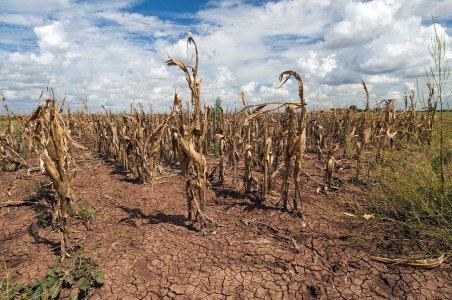
Compared with the period 1981–2010, a further 123.7 million people are facing moderate or severe food insecurity due to an increase in droughts and heatwaves, water shortages and floods, which are reducing agricultural yields. This is a double blow, as rising CO₂ levels also reduce the nutritional quality and the protein and mineral (iron, zinc) content of major cereals, such as wheat and rice. Food is becoming higher in calories but less nutritious. Not to mention that, in the global agribusiness market, shortages fuel speculation and price rises, which deprive the poorest of access to good-quality food, weaken their immune systems, and contribute to epidemics, violence, rural exodus, migration and poverty, erode social cohesion, and encourage early marriage and the withdrawal of girls from school… Food insecurity is a central factor in the dynamics of global warming.
Biodiversity, our health and food security
Global warming has a multiplier effect on the main factors driving the collapse of biodiversity: the destruction of habitats through capitalist deforestation and urban sprawl, overfishing by factory ships, the genetic impoverishment of crops and factory farms in the agribusiness sector, pollution from an industry primarily concerned with profitability, and the introduction of invasive species. Our food security depends on it: pollination, soil degradation and water filtration… It contributes to global warming, ocean acidification and deoxygenation. It strips the sea of its corals, which are an essential feeding ground whilst also protecting the coastline from swells. It contributes to the decline and migration of many fish species. Yet the Nexus report by IPBES, the Intergovernmental Science-Policy Platform on Biodiversity and Ecosystem Services [11], alongside the WHO and the IPCC, advocates the idea that the health of ecosystems, animals and humans is interconnected. This is the ‘One Health’ approach.
In an environment with rich biodiversity, pathogenic organisms affecting humans and animals ‘get lost’ due to a dilution effect, whereas the collapse of biodiversity favours opportunistic pathogens and the crossing of species barriers. For example, in the USA, in an environment fragmented by urbanisation, ticks are mainly likely to encounter white-footed mice, which harbour and transmit the bacterium responsible for Lyme disease very effectively to ticks. In a more biodiverse environment, they would also encounter possums or squirrels, which are poor at transmitting the bacterium and may even groom the ticks. As tick infection rates fall, so does the risk to humans. The destruction of ecosystems ultimately releases stored CO₂ and depletes biodiversity – which is the primary source of therapeutic molecules, both those of the past (aspirin, penicillin…) and those of the future!
Asthma, allergies… capitalism is suffocating us!
Thirty per cent of the world’s population now suffers from allergies, compared with just 4 per cent in the late 1960s. 363 million people have asthma, including 100 to 125 million children, according to 2023 figures from the WHO, resulting in 440,000 deaths. In wealthy countries, asthma rates have levelled off among adults and continue to rise among children, but are still rising sharply in Asia, Latin America and Africa – regions where capitalism is relocating its pollution. The rise in allergies and asthma appears to be the result of a combination of several mutually reinforcing factors: a loss of biodiversity in the skin, gut and respiratory microbiota to which we are exposed in early childhood, as well as various forms of pollution – particularly during pregnancy and early childhood – including air pollution, domestic pollution, second-hand smoke, poor ventilation in homes, urbanisation and road traffic pollution linked to the prevalence of private car use.
However, global warming also contributes to an earlier, longer and more intense pollen season, whilst rising CO₂ levels lead to a higher concentration of allergenic proteins and smaller pollen particles – further fragmented by pollution, fine particulate matter and ozone – which penetrate deeper into the small bronchi. Every breath of fresh air that should have been preserved came at a cost, which capitalism refused to pay.
Heat doesn’t just kill bodies: fossil capital and mental breakdown!
Heat increases mental fatigue, leads to a rise in acts of self-harm such as jumping from windows or using firearms, and exacerbates the side effects of psychotropic, antipsychotic and anti-epileptic drugs, due to an imbalance in lithium levels or dehydration in people with bipolar disorder. In cases of hyperthermia, these medicines increase the risk of death. A mere 1° rise in seasonal temperature increases interpersonal violence by 4 per cent – particularly amongst the elderly or those who are socially isolated, such as the homeless – and intergroup violence by 14 per cent, according to a 2013 study by the Universities of Berkeley and Princeton. [12] In hot weather, patients remain confined to their homes, are less likely to adhere to their treatment, and are more likely to slip through the net of support from those around them and their carers.
Eco-anxiety has risen by 20 per cent in two years in France, fuelled by this summer’s heatwaves, particularly amongst 15–24-year-olds, according to the Eco-Anxiety Observatory. Although anxiety scales remain a matter of debate, the figure cited – 15 million people suffering from eco-anxiety in France, with a further 1.1 million in the severe anxiety category – gives an idea of the scale of the problem. The COVID-19 pandemic had already exacerbated the prevailing trends in our liberal society: social isolation, confinement within social media networks, ever-increasing demands in terms of competition, educational performance and image – particularly for young women – precarious living conditions, and a future marked by crises and wars. Eco-anxiety in the face of global warming further exacerbates these trends. Although these figures may mask cases of mental breakdown, the key factor behind this reactive anxiety lies in a two-pronged approach, which has more to do with biosociology than with psychiatry or pathology: physical distress caused by heat, social suffering in the face of inaction on climate change, and, at times, guilt at being unable to challenge the inaction of capital. This results in more violent behaviour amongst young men, and more frequent suicides, self-harm and eating disorders amongst young women. Two clinical manifestations and a single, highly political diagnosis: extractivist capitalism and government inaction on climate change are inflicting suffering on both body and mind, in an epidemic of lucidity that causes pain, until it transforms into a movement of collective hope.
Bangladesh: the intersecting dynamics of a country that is drowning
Bangladesh is a flat delta country, situated between the great Himalayan rivers that are melting at breakneck speed and the Bay of Bengal, whose water level is rising – a country ravaged by monsoon floods and El Niño. It is one of the world’s most densely populated countries, with 175 million inhabitants, or 1,300 people per square kilometre. Since the Green Revolution, the IMF and the World Bank have steered the country towards specialising in rice cultivation. With even a slight rise in night-time temperatures, rice productivity falls by more than 10 per cent. As sea levels rise, salt water is seeping in everywhere, up to 100 km inland from the coast, further reducing the rice harvest. Already, it is experiencing a 12 per cent decline in agricultural production due to global warming, whilst 20 per cent of its infant mortality is attributable to the salinisation of fresh water. It risks losing 11 to 17 per cent of its land by 2050, resulting in 13 to 22 million displaced people. Women are forced to travel ever further afield in search of fresh water; rural exodus and poverty are on the rise; human health is threatened by salinisation (high blood pressure, heart and kidney failure, etc.) and falling incomes, as is the health of livestock, which provide a significant proportion of protein. Faced with the rice crisis, farmers are turning to shrimp farming for export, filling ponds with… salt water, which further exacerbates the salinisation of water sources and wells! The Bay of Bengal is known to be one of the sources of cholera outbreaks, a disease linked to contaminated water. Flooding causes latrines to overflow, polluting the few remaining water sources, where displaced and weakened populations gather.
Since the 1970s, to meet the increased water demands of rice monoculture and to combat cholera, tens of thousands of wells have been dug with the help of NGOs and the government. By the 1990s, scientists realised that the wells – more than half of them today – were contaminated with arsenic, chronic poisoning from which causes fatigue, night blindness, heart disease, cancers of the skin, lungs, liver and pancreas, diarrhoea, neurological damage… The link to global warming is a long chain of events. Sedimentary rocks from the Himalayas carry insoluble arsenic. To combat flooding (caused by glacial melt and rising sea levels), retention basins are being dug everywhere to raise houses and villages. In these basins, organic matter and bacteria combine to solubilise the arsenic, which then seeps into shallow wells. One in five deaths in Bangladesh is thought to be caused by arsenic.
Global warming is also responsible for an increase in the number and intensity of cyclones in the region, bringing with them a series of particularly devastating floods in this flat country. What is urgently needed is a global policy to combat global warming, but also an effective public policy to mitigate its effects. Whilst Cyclone Bhola claimed around 300,000 lives in 1970, thanks to early warnings, shelters, dykes and community volunteers… the number of cyclone-related deaths has since been reduced by a factor of 100, according to the World Bank. This contrasts with the lack of adaptation measures in a neighbouring country such as Myanmar, where Cyclone Nargis in 2008 claimed 140,000 lives. On the one hand, in Bangladesh, a civil society, a Red Crescent and powerful trade unions – particularly farmers’ unions – which push for a policy of public investment and prevention, relying heavily on grassroots social support from community volunteers; on the other hand, in Myanmar, a military dictatorship that blocks information and international humanitarian aid, making community-based aid (from doctors, priests, farmers, etc.) much more difficult and far less effective – although these groups did play a major role in showing solidarity at the time of Nargis, albeit in the face of a failing military state. It is not only the strength of the winds that determines the death toll; it is also grassroots and community mobilisation.
Women: the primary victims of climate patriarchy
Rising temperatures increase the risk of domestic violence, early marriages before the age of 14, and a decline in women’s incomes, as highlighted in the November 2020 issue of Global Environmental Change. It is not nature that is cruel to women, but rather a patriarchal world of domination that denies them land and credit; a world where they are beaten when life becomes unbearable and are treated as just another mouth to feed, to be married off quickly, despite having to work a double shift. For every additional degree of education, Jama Psychiatry (June 2023) found a 6.3 per cent increase in domestic, physical and sexual violence, in a follow-up study involving 190,000 women from India, Pakistan and Nepal. This figure rises to as much as 8 per cent for physical violence in India. According to the FAO, the income gap between women and men in rural areas widens by 34 per cent for every additional degree.
In 2010, a Californian study [13] revealed that an average rise of 5.6° increased the risk of premature birth by 8.6 per cent. This increase was confirmed by the Sepages study of 700 pregnant women in Grenoble, which identified sudden changes in temperature – such as heatwaves – as the main culprit.
Capital is burning up the planet; the people must put out the fire!
The Lancet’s countdown was intended to sound the alarm as we approach the 1.5°C threshold, which will soon be exceeded. The diagnosis is correct, but the treatment is wrong. Advising capital to limit its emissions because the cost would be too high is to overlook the fact that it socialises the losses and privatises the profits. The richest 1 per cent emit as much CO₂ as the poorest 5.1 billion. [14] The 100 largest fossil fuel companies, fuelled by bank investment, account for three times the level of production compatible with the 1.5°C limit. Yet the bill is footed by the poorest and most vulnerable, women, indigenous peoples and small island states.
We may be at a tipping point. Lifestyle-related diseases, such as cancer, which has risen by 80 per cent among the under-50s since 1990 [15], and cardiovascular mortality, combined with global warming, are reversing the trend towards increased life expectancy that has characterised the past half-century, with an average gain of 3.5 months each year in France. But this average masks all the inequalities in the world. In France, life expectancy among the poorest 5 per cent is falling, whilst it is rising among the richest 5 per cent. [16]The gap is 13 years for men, 9 for women, and as much as 17 years between a rich woman and a poor man. The rich hope to secede from a world of inequality that is burning.
Systems that emit greenhouse gases also emit pollutants, cause pandemics, threaten food security, lead to deforestation and cause biodiversity to collapse. Social and climate justice based on degrowth, the expropriation of capital and the global sharing of wealth would not be a sacrifice, but the promise of better health for all, of a life at peace with nature and humankind. In a world that prefers bombs, imperialist or genocidal wars to hospitals, denies climate change, dismantles international health solidarity, hoards land and water, rejects the European Green Deal, and diverts anger towards foreigners or environmentalists, the ‘flamingo revolution’ sweeping through Albania offers a glimmer of hope [17]: the defence of a protected natural area seized by the Trump family, the denunciation of a corrupt regime, and the demand for democracy. A movement driven by the exploited – the only force that never waits for capital’s permission to act.