
 Version imprimable
It is necessary to say these things, because when Clara Zetkin and her comrades called for the Women’s Day at the International Socialist Women’s Conference, that was driven by a proletarian perspective. In 1894, in the pages of the proletarian women’s paper Die Gleichheit (Equality), Zetkin had entered into a debate with bourgeois feminism to assert that bourgeois feminism and the proletarian women’s movement were fundamentally different social movements. Zetkin said that bourgeois feminism wanted reforms within the existing social systems, and asked for gifts with folded hands. They did not want social change but equality with men of their own class. They raised no questions about the existence of capitalism. On the other hand, the point of unity between working class women nd men was, they both wanted the abolition of capitalism.
Of course, Zetkin was aware that proletarian women were compelled to bear the burden of inequality, exploitation and oppression in terms of both class and gender. In 1893, in a long article written for the Social Democracy led trade union journal, she explained that it as vital to treat women workers as comrade, not as sexual objects or as inferior types of beings; and if trade union leaders failed in thi, primarily the women workers would lose, but along with them the entire class would lose out. It was through a long course of struggles since 1892 that in 1910, the Second International Socialist Women’s Conference was called in Copenhagen. Its call said: “We urgently call on all the socialist parties and organizations of socialist women as well as on all the working women’s organizations standing on the foundation of the class struggle to send their delegates to this conference.”
When this conference called for a women’s day, it was made clear that the women’s day was being called on the basis of unity of opinion with class conscious political and trade union organisations. That is why today, in differentiating ourselves from all manners of bourgeois commodity peddlers, Corporate ‘feminists’, NGO feminists, we call it the International Working Women’s Day of the International Proletarian Women’s Day.
The name of the day is of course not the ultimate thing. The main thing is, why this Day? How do revolutionary socialists define their duties on this day today, in 2026? Radical Socialist is the Indian Section of the Fourth International, and it is the declared policy of the Fourth International that it is both feminist and Marxist. In other words, proletarian feminism is distinct and is connected to the revolutionary proletarian movement.
How should we visualise the tasks of the women’s day today? This can be answered at different levels. When Clara Zetkin criticized bourgeois feminism that was not through some sectarian workerism. Zetkin had admitted that in her society women of different classes and strata had to put up with oppression, discrimination. But she argued that bourgeois women would get all rights that should go to all women, and earn such rights as a byproduct of the proletarian socialist women’s movement. To this we should add Lenin’s lesson, that the Communist activist is not a trade union secretary but a tribune of the people. So the working-class women’s movement must show the path for all kinds of mass struggles opposing gender discrimination, or sexual violence.
In reality of course that is not often happening. Zetkin and her comrades had organised working class women through years of agitation and organisation. The movement today is often in the opposite direction. The proportion of organised workers is going down in India, The proportion of organised women is going down even more. Women workers have not stopped fighting. The joint oppression of class and gender on them has not been reduced. But the decline of the organised workers’ movement, within that the limited power of socialist or Marxist feminist consciousness, has led to substitutionism in two ways. On one hand, like often in the past, the demands of male workers has been seen as the class demands of all. A famous incident was when at a CPI Conference Geeta Mukherjee gave a speech on women’s rights and a male comrade said, Geetadi talked about women, she did not talk about politics.
On the other hand, non-party feminism has in class terms mostly not been with working class women. In recent times, we have seen a province-wide mass explosion over the rape and murder of a woman doctor at the R G Kar Medical College and Hospital. But those who came to the forefront of the movement, those who led the movement, they did not put this event in the overall context of rapes, sexual harassment and torture and murder of women at workplace, going to work etc. To move ahead from the unprecedented mobilizations of 14 August 2024 midnight it would have been necessary to stress the rights of all working women. It was perhaps not unusual that doctors would talk about doctors. But those who talked about feminism about mass movements, needed to come forward, to provide a clear class-gender perspective for the movement. As a result of their failure that massive upsurge shrank in a massive ebb tide.
Our question is not primarily directed to those coming into the movement from other perspectives. If there is no revolutionary leadership, a professional association is likely to put forward professional demands alone. But if we say that because the movement has a “mass” character, criticisms should not be made, we actually keep the movement within narrow limits. So when there were again sexual violence on working class women in this province, that mass upsurge was absent.
Socialist feminists of course condemned and will go on condemning the rape and murder of Abhaya, as the young woman has come to be called. But socialist feminism will join her to the rights of every working woman and her rights, the sexual harassment of all of them, the extra loads put on all of them. Abhaya had been forced to work multiple shifts. Campaigning for the restriction of working hours for domestic workers, their regular right to get paid leave, their right to organise, and tying the pressures on Abhaya with all this would have served that purpose. If instead the focus is on saying, Abhaya was a doctor, why should she face such a situation, we remove the brutality on her, and her murder, from the struggles of other working women.
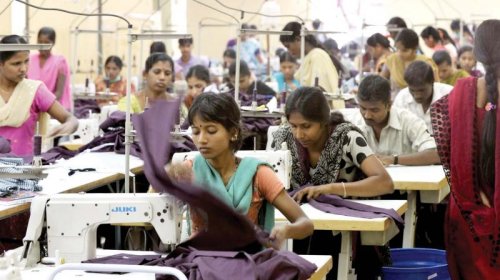
Without organising women workers in hosieries, in jute mills, among hawkers, fighting for their rights, 8th March loses its significance. Today, when neoliberalism and Hindutva-fascism is sharpening assaults, women’s rights must also be placed within the context of fighting that.
8 March 2026