
 Version imprimable
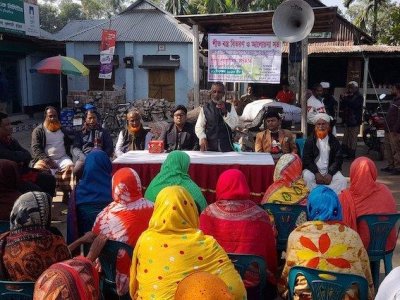
The training program was inaugurated by Badrul Alam, President of the Bangladesh Krishok Federation. In his opening remarks, he stated that the strength of a mass organization does not lie only in its political position or capacity for struggle; rather, an organization becomes truly strong when it ensures safety, dignity, mutual respect, and accountability within its internal structure. He further noted that in the contemporary world, safeguarding policy has become an important international standard in the work of development and social organizations. Therefore, the Bangladesh Krishok Federation has organized this training to make its organizational activities more transparent, safe, and responsible.
The training sessions were facilitated by Lily Anthonia Gomez, who served as the main trainer. She elaborated on the fundamental concepts of safeguarding, its importance, the responsibilities of the organization, and the code of conduct expected from members. During the sessions, extensive discussions were held with the participants on how to effectively implement safeguarding policies within the organization, how to identify potential risks, and how responsible actions can be taken in cases of complaints or misconduct.
An important outcome of the two-day training was the drafting of a preliminary Safeguarding Policy and a Code of Conduct for the Bangladesh Krishok Federation. The main objective of this policy is to ensure safety, dignity, and non-discriminatory behavior in the organization’s work with staff members, activists, volunteers, women, children, and marginalized communities. The Code of Conduct particularly emphasizes the following principles:
1. Avoiding any abuse of power
2. Maintaining respectful behavior towards women and children
3.Ensuring transparent use of organizational responsibilities and authority
4.Taking a strong stance against sexual harassment, violence, or discriminatory behavior
5. Establishing a transparent process for receiving and investigating complaints
As part of the training, participants were asked to sign a Commitment Declaration, through which they pledged to follow the organization’s safeguarding policy and code of conduct. Through this declaration, each participant affirmed that they would uphold human dignity, safety, and responsible behavior in the course of organizational activities and would consciously stand against any unethical or harmful practices.
To make the training more participatory and engaging, the sessions were conducted through various video screenings, digital presentations, group discussions, and interactive games. This approach enabled participants not only to engage in theoretical discussions but also to gain deeper understanding through practical exercises and real-life examples. In particular, group discussions were organized to analyze different possible scenarios and to explore how responsible and ethical behavior should be maintained in such situations.
During the discussions on safeguarding planning and real-life experiences, examples from various international organizations were presented. In particular, the experiences from humanitarian assistance operations following the 2010 earthquake in Haiti, as well as certain incidents involving the international organization Oxfam, were analyzed. These examples illustrated how serious problems can arise when safeguarding policies are weak, and how quickly the reputation and credibility of an organization can be damaged. Through these discussions, participants clearly understood that safeguarding is not merely a paper policy; rather, it is a fundamental ethical commitment and a matter of accountability for any organization.
Multimedia support for the training was provided by Incidin Bangladesh. Mushfiqur Rahman Sabbir, Program Chief of Incidin Bangladesh, actively participated in the training and provided technical support and insights during several sessions. In his closing remarks, he emphasized that proper implementation of safeguarding policies is essential for ensuring that organizational activities remain safe, accountable, and humane. He also noted that such training programs play an important role in strengthening the sense of responsibility and awareness among members of organizations.
In the closing session, remarks were also delivered by Zayed Iqbal Khan, General Secretary of the Bangladesh Krishok Federation, and Lovely Yasmin, President of the Ready-Made Garments Workers Federation. They described the training program as highly timely and important, emphasizing that the practice and implementation of safeguarding policies are essential to ensure mutual respect, safety, and responsible conduct within organizations. They also highlighted that such policies are particularly crucial for organizations working with women and marginalized communities.
Through this two-day training program, participants gained new insights into safeguarding policies, developed a clearer understanding of the organization’s internal code of conduct, and acquired practical skills for managing organizational activities in a safer and more responsible manner in the future. The organizers expressed hope that the knowledge, experiences, and commitments generated during the training will be implemented at every level of the organization, enabling the Bangladesh Krishok Federation to build a safe, accountable, and humane organizational environment.
10 March 2026
Source: ESSF.