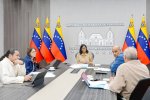
On 3 January 2026, the United States launched a military operation against Venezuela, resulting in the capture and detention of President Nicolás Maduro and his wife, Cilia Flores, and their transfer to the United States. During this attack, carried out using 150 aircraft, around a hundred people lost their lives, including 32 Cubans who had attempted to protect the country’s presidential palace; the remaining victims were Venezuelans. A few hours after this intervention, Donald Trump announced that Washington now claimed to be temporarily in control of Venezuela and would exploit its oil resources.

How to Defeat Milei: The Left’s Strategy in a Reactionary Period
21 August, byGlobally, the left faces a strategic debate on how to respond to the current reactionary surge. The answer depends on how we characterise the period, what we understand by the extreme right, and what kind of political unity we deem necessary to confront it. In Argentina, the discussion is gaining prominence given the gradual decline of Milei’s government. Before examining the Argentine case, however, it is worthwhile considering the global scale of the phenomenon.
Rampage of the Surveillance State: What’s Behind the Minneapolis Indictments?
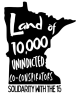
20 August, byFOR TWO MONTHS last winter, 4000 U.S. Immigration and Customs Enforcement (ICE) unleashed an assault on the Twin Cities with a violent roundup of immigrants, prompting a mass, nonviolent grassroots resistance movement that eventually involved hundreds of thousands of protesters. The Trump administration was forced to retreat.

Who is responsible for xenophobia in South Africa?
19 August, byIf the outpouring of hatred against foreign nationals in South Africa is part of a catastrophic social context, it is also encouraged by crooked politicians. On 30 June 2026, 300 demonstrations were organized across South Africa to demand the departure of migrants.

The strategic stakes of Brazil’s October elections in the international situation
18 August, byA victory for the current president, Luiz Inácio Lula da Silva (“Lula”) in Brazil’s October 2026 presidential election and an increased vote for the left wing Partido Socialismo e Liberdade (PSOL) would constitute points of support for coordinating an international anti-fascist movement, combining the fight against the global far right with the defence of the sovereignty of the peoples.

Resumption of Bombing and Internal Crisis in Iran
17 August, byThe ceasefire between the US and Iran was shattered around the question of control of the Strait of Hormuz. As the US bombing resumes, divisions are deepening at the top of the Islamic Republic, with no way out for the people of Iran.

Revoking TPS: Trump Escalates Racist Assault
16 August, byTEMPORARY PROTECTED STATUS (TPS) for more than 350,000 Haitians living in the United States was overturned by the government, following a June 25 ruling by the Supreme Court to allow the termination.
The spectre of the far right is haunting Latin America
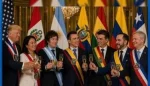
15 August, byFar-right movements have come to power in numerous countries across the region. They are linked to Trumpism; resisting them requires the broadest possible coordination of these resistance movements at both local and regional levels.
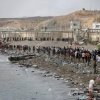
Ceuta: the boundary of the right to have rights
14 August, byLast Friday [31 July], thousands of people swam across the border to reach the autonomous city of Ceuta. This enclave of some 83,000 people received, in a matter of 24 hours, just over 50,000 more people, exhausted from a migratory journey that has caused the deaths of at least 100 in the last two days. In summer, arrivals in Ceuta and Melilla by sea increase significantly, as sea fog hinders early detection on the coast by the Civil Guard. But no one in the government seemed to foresee a humanitarian crisis of this magnitude, with significant political repercussions that extend far beyond the usual media headlines.

The Wrong Lever: Europe, Ukraine, and the Refugee Question
13 August, byEU leaders are moving towards removal of asylum rights for Ukrainian men aged 23-60, to improve conscription and functioning of essential services in the fifth year of Ukraine’s fight against Russian imperialist aggression. The Zelenskiy government asked for this change. But that does not make the policy right.