
 Version imprimable
The fragile ceasefire that came into force on 18 June, which opened a 60-day period of negotiations, was the subject of divergent interpretations from the outset. The main sticking point is the Strait of Hormuz, through which about 20% of the world’s oil passes. Teheran intends to impose a payment for passage, while Trump refuses to leave control of this to the Iranian regime.
Breaking of the ceasefire
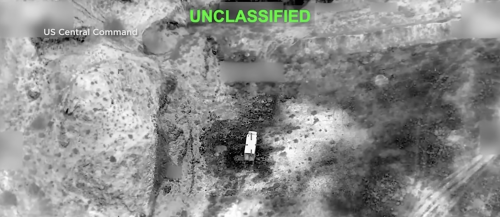
While Tehran had obtained guarantees from Washington to organize the funeral of former Leader Ali Khamenei, the Iranian army attacked commercial ships in the strait. The United States then launched a new bombing campaign on Iran’s coastal regions.
Heavily militarized, these regions make it possible to control the strait and target American bases in the Gulf. The populations, especially Baluchis and Arabs, already among the poorest and most oppressed in Iran, are bearing the brunt of these bombings, without benefiting from the slightest protection from the regime.
While announcing to Congress the resumption of war, Trump indicated that he is reinstating the blockade of Iranian ports, thus seeking to economically strangle Iran.
Since 28 February, this confrontation has seen an alternation of phases of confrontation and negotiations. It has major economic consequences on a global scale, but also leads to an exacerbation of the crises in Iran and highlights the divisions at the top of the state.
Crises and developments in Iran
President Pezeshkian and Foreign Minister Araghchi want to reach an agreement with Washington to ease sanctions, increase oil exports and recover some of the frozen assets.
But the Revolutionary Guards control the circuits for circumventing sanctions, which are a source of considerable enrichment. They reject any normalization with the United States or any abandonment of the nuclear and ballistic programs.
Scenes showing Araghchi’s exfiltration during Khameini’s funeral are eloquent. These ceremonies were an opportunity for the currents hostile to the negotiations to organize rallies whose participants treated Araghchi and Pezeshkian as traitors to the fatherland.
The regime could evolve towards a more traditional military-security dictatorship, while conceding some relaxations. This is reflected in particular in a certain tolerance of women’s clothing “considered not to be in accordance with Islamic law” or in the acceptance of greater diversity in the public space.
The future of the peoples of Iran
However, these developments will not bridge the gap between the regime and the people of Iran. Moreover, the repression is a daily reminder of the brutality of the regime. The current difficulties, aggravated by sanctions and war, are also the consequences of more than forty years of despotism, savage capitalism, gender apartheid, structural corruption, the enrichment of the elites and the repression of combative sectors of society. Dictatorship, oppression of national minorities, falling real wages, inflation, unemployment, poverty, housing crisis and environmental destruction continue to worsen.
The January 2026 uprising confirmed that the vast majority of the population yearns for the end of the Islamic Republic of Iran. The bloody repression, followed by the military intervention of the United States and Israel, interrupted this dynamic without making it disappear. Popular discontent is already resurfacing.
Workers, women, youth and national minorities have nothing to expect from the ongoing negotiations, nor from the US or Israeli armies. No one in Iran is counting on an internal evolution of the regime leading to freedom, equality and social progress. The future of the peoples of Iran will not be decided in Washington, Tel Aviv or the ruling circles of the Islamic Republic of Iran, but through organization, social and democratic struggles, as well as solidarity among the peoples of the Middle East in struggle against imperialism, colonialism and despotism.
16 July 2026
Translated by International Viewpoint from l’Anticapitaliste.