
 Version imprimable
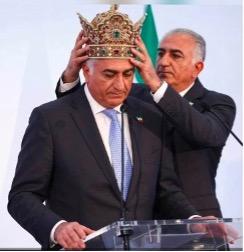
In this context, Reza Pahlavi was accused of having sent the population to their deaths by calling for demonstrations. But the first problem concerning him is the very nature of the political project he embodies. The second is the real political function that the son of the former Shah wants to assign to himself: he aspires to lead, but without assuming a real role as a revolutionary leader. This position conceals a fundamental contradiction: wanting to frame a movement while avoiding the revolutionary dynamic that could result from it.
Pahlavi’s orientation draws on both Gene Sharp’s theories of “colour revolutions” and approaches that advocate limited and controlled confrontation. In both cases, the emphasis is of course not on the self-organization of the masses, but on preconceived scenarios aimed at channelling, indeed containing, popular mobilization.
However, the Iranian experience has already shown the limits of these approaches. Mass mobilizations can only succeed when the regime in place is already deeply weakened. Conversely, dispersed forms of confrontation must face the cohesion of the repressive apparatus. In both cases, the absence of an autonomous organization of the masses constitutes a decisive weakness. However, without organization, there is no social transformation possible.
The reality of the uprisings: the centrality of the popular classes
The social reality resulting from the recent uprisings, especially since 2017, contradicts the schemas of the monarchists. The popular classes, confronted with permanent structural violence, have developed their own forms of struggle. These do not correspond to the models developed to analyse mobilizations mainly affecting the “middle classes”.
Moreover, a part of these “middle classes”, deprived of political representation since the collapse of the “reformist” clans of the regime, has turned to a form of nostalgia for the past. The “Pahlavi Organization” has been able to capture and organize this nostalgia, positioning itself as a new pole of representation. Thanks to extremely rich media relays, part of the diaspora and various networks of influence, the “Pahlavi Organization” has gradually extended its influence, including in certain segments of the popular classes.
However, this strategy is based on a major contradiction. On the one hand, it recognizes the need to mobilize social anger; on the other, it seeks to limit its scope, in order to avoid any transformation into an autonomous revolutionary dynamic. This double movement — encouraging mobilization while preventing its deepening — constitutes the heart of the project of Reza Pahlavi and his entourage.
What they know, but keep silent, is that no revolution triumphs through mere mass demonstrations or dispersed violent actions. A revolution is a long process, based on the progressive organization of the dominated: neighbourhood committees, strike structures, forms of self-organization capable of concretely contesting the existing regime.
It is precisely this prospect that is feared by the monarchists. Such a dynamic would open the way to autonomous forces, beyond their control. Recent history has shown that movements capable of anchoring themselves in social structures can permanently transform the balance of forces — even when counterrevolutionary forces seek to capture them for their own benefit.
A strategy that exposes the population without protecting it
From then on, a central question arises: what “revolution” is Pahlavi talking about? For him, it is a “national revolution” of a particular type: a strategy consisting of exposing the unarmed masses to massive repression, so that the human cost becomes a lever in international negotiations. This logic cannot be imposed without foreign intervention.
But such a prospect is a dead end. It is based on an instrumentalization of popular mobilizations, without offering any perspective of real emancipation. Meanwhile, the most precarious classes—those who do not even have the means to resort to the weapon of strikes—continue to pay the highest price.
An alternative that needs organization
The Islamic Republic, for its part, has demonstrated that it will not back down from an escalation of violence. Under these conditions, the repetition of unstructured mobilizations can only lead to a reproduction of the cycle of repression-sacrifice.
Breaking this deadlock requires breaking with these illusions: neither imported scenarios of “peaceful transition” nor strategies of dispersed confrontation can, on their own, open a path to real transformation. Only the autonomous organization of the oppressed and exploited masses can constitute a real alternative.
Until such a perspective is implemented, the situation is likely to remain unchanged — and streets, morgues and cemeteries will continue to bear the brunt of this impasse.
But in reality, the question is not whether Pahlavi and his entourage could move towards the creation of mass organizations, or whether they are afraid of them and will therefore fail to overthrow the Islamic Republic. Rather, it is a matter of noting that this “national revolution,” whose real name is “neo-fascist counterrevolution,” is based on street mobilization, control of the media, and implicit recourse to U.S.-Israeli military intervention.
Even if, where necessary, it could attempt to set up mass institutions, these would be of the fascist type and intended to consolidate its control, and not to emancipate the popular masses.
Basically, this whole discussion shows a simple and disturbing reality: Reza Pahlavi has de facto taken the lead of the "counter-revolution”. The question is not whether this “counter-revolution” – or “royalist revolution” – can triumph, as the Islamic “counter-revolution” did in 1979. Above all, it is a question of becoming aware of this fact and remembering the great lesson of 1979: popular uprisings, however powerful, can be co-opted or betrayed when they are not based on an autonomous organization of the masses.
This lucidity is essential to understand that the real transformation will come neither from Pahlavi nor from any foreign intervention, but only from the ability of the oppressed and exploited to organize and defend their own interests.
10 April 2026