
 Version imprimable
An expression of the still-powerful democratic reserves in Brazil, the come-from-behind victory in the runoff was a victory for the entire Brazilian people: for the youth, who were the spark of the grassroots mobilization that secured the result; for the working class, which mobilized in neighborhoods, workplaces, unions, and associations; for women, Black Brazilians, and Indigenous peoples, who went out to defend their gains and their survival; for the elderly, who went to repeat the “down with the dictatorship” of their youth; and for the people of the Northeast, who reaffirmed their decisive role. It was a democratic victory that puts a brake on Trump’s neocolonialist fury across the entire region. It is a result that pushed the pendulum of the balance of forces in Brazil to the other side — the same side that is mobilizing in social struggles across Europe and in India, and the same side that bitterly defeated Trump in the November 3 elections in the United States.
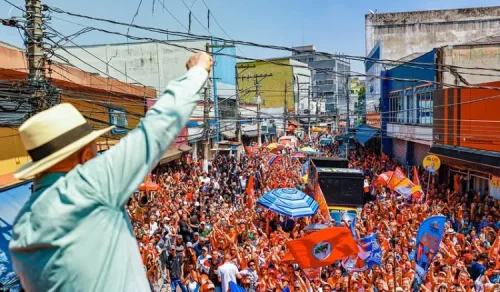
In the three weeks between the first round on October 5 and the runoff, Brazil saw a democratic popular uprising in defense of rights. It was a second, new, politicized, and fiercely fought mass electoral battle, completely different from the lukewarm campaign of the previous months. It was an electoral political movement made up of thousands of organized actions, initially spontaneous, in families, neighborhoods, and groups of every kind, in all five regions of the country. Although historical comparisons are difficult and have their limits, there were rallies comparable in turnout to the Diretas Já (Direct Elections Now) rallies of the 1980s, such as the one with 1.2 to 1.5 million people on Avenida Paulista, and nearly as many on Copacabana beach in Rio, which spread to state capitals and mid-sized cities from North to South. The mobilized students and youth in general recalled the days of “Fora Collor” (Out with Collor) in 1991–1992. And in the spontaneity and strength of crowds of all generations and backgrounds, it had the feel of June 2013.
There is no single factor that explains what happened. There was a combination of popular mobilization, action on social media, and a course correction in the direction and program of Lula’s campaign, all of which worked together and fed back into one another. A narrow opening appeared in the days after the first round: the spark of the students at UFF (Fluminense Federal University) lit a mobilization, boosted by the “whip” of Flávio’s reactionary statements. In the euphoria of his initial victory, he said he would change the Constitution, release his father from prison, and suggested ending social programs—which the far right has always fought.
The awakening of anger and fear among the popular base found shelter in practical measures by the Lula government, which hastened the end of the 6x1 work schedule (six days on, one day off) — a move that even swung opportunistically Flávio Bolsonaro’s own opinion — electrifying and giving confidence to the millions who work in shopping malls, street retail, telemarketing, restaurants, fast food, and pharmacies, in Brazil’s more than 5,000 municipalities. The actions of the movement overflowed the leadership of the first-round campaign, which had been undermined by faulty forecasts and a moderate, bureaucratic line, giving way to a totally different dynamic.
Central to all this were the weight and political instinct of Lula, the country’s greatest political figure and an expression of the history of the Brazilian working class, who reinvented himself at 80 by capturing the mood of the streets. Joining him was Janones, with his “combat” empiricism, who understood the nature of the “war” in the political-digital sphere, centralizing the energy in a true “collective organizer” dubbed “Lula’s Army,” which played the role of a centralized digital party, the only force capable of beating the strength of Bolsonarism and Meta on social media.
It was the largest vote in Brazil’s history: Lula received more than 64 million votes—ten million more than 20 days earlier. Recall that Lula was elected in 2022 with about 60 million votes, and Jair Bolsonaro with more than 57 million in 2018. In his first victorious presidential election (2002), Lula received almost 53 million votes, which shows the objective, absolute growth in the number of Brazilians engaged in voting for Lula. This time, against neofascism.
The Comeback Was Made Possible by a Program
The mobilization and the candidate’s stance galvanized the politicization of millions, based on the defense of a program of better living conditions for the people and for those who live by their labor. The results’ change in 212 cities — notably the huge margin of victory and the mobilization in the Northeast; a spectacular turnaround in Minas Gerais and in the city of Rio de Janeiro, in the Southeast; the incredible mobilization in the state of São Paulo; and the flip in swing cities such as those in the Porto Alegre metropolitan area (Alvorada, Esteio, Sapucaia), Osasco in Sâo Paulo’s metropolitan area, and Ananindeua near Belém — are expressions of the scale of what happened.
Entire rural communities — quilombolas (descendants of formerly enslaved people), riverside dwellers, and Indigenous people — came out to vote, overcoming obstacles such as rivers to cross and dozens of kilometers on foot. There were scenes of bus terminals in the Northeast, on the eve of the 25th, packed with people traveling to vote, and of elderly people with limited mobility from across the country, brought by their children and grandchildren, some in wheelchairs and on stretchers.
There was a leap in millions of people’s understanding of what the Bolsonaro clan’s return to power would mean. Flávio stood as the representation of an anti-people elite that attacked and slandered entire cities and regions during the televised debates, while Lula stood out by saying that Flávio is an agent of the elite, a sellout who betrays the nation, corrupt, violent, and tied to the criminal militias. In this way, the country’s two great political blocs confronted each other in plain view: the “coalition of backwardness” on one side, and popular mobilization on the other.
Lula expressed the drive of the streets, with broad support from the most politically conscious sectors of the working class and the youth, in all their diversity; from artists, scientists, intellectuals, environmentalists, small shopkeepers; and even from a minority sector of political representatives of the non-Bolsonarist bourgeoisie, such as Omar Aziz in Amazonas (elected governor), Aníbal (former minister of FH Cardoso), Sarney, and others. Flávio expressed above all the core of agribusiness, with weight in the Center-West and North; the financiers of Faria Lima, São Paulo’s financial district; the “BBB” world (the Beef, Bullets, and Bible caucuses, or Bankers, Bets, and Billionaires); a large part of the leadership of the neo-Pentecostal churches; and part of the public security forces.
The program that Lula defended, always in the heat of the moment, was one of reducing the workweek; defending increases in the minimum wage and in the pensions of the poorest; renegotiating the debts of families and small businesses; free public transit fares on weekends; defending investment in the SUS (the public health system) and in public education; combating violence against women, organized crime, and government corruption; and—very forcefully, given the circumstances of confrontation with Trump and Big Tech (Meta in particular)—the question of national sovereignty. Peter Thiel, Palantir, Meta, and others worked heavily to tip the scales in favor of the far right.
The eyes of the Western world were on Brazil. A Flávio victory would have strengthened Trump and Netanyahu. It would have been a step toward consolidating the neocolonialist project of the “Shield of the Americas.” The defeat of neofascism in Brazil opens the way to the defense of national sovereignty and to the necessary alliance among peoples, reclaiming the slogan of Latin American unity. It became evident that we must support the Argentine people in their struggle to defeat Milei —whom Flávio tried to imitate with his pathetic “tesouraço” (his “big scissors” spending-cut stunt), and which was decisive in the former candidate’s shameful flight to the United States.
Lula’s electoral victory opens the way to new conditions in the international struggle.
Capital, Oligarchy, and the Far Right Are Already Applying Pressure
The enormous popular victory creates more favorable conditions in the fight over the future of a polarized, divided country. The scale and unprecedented nature of the comeback forced institutions, including opposition parties and figures, to promptly recognize the result. But the pressure on the government is already great before the January inauguration, given the organization and deep roots of the far right in society and in institutions. Although the hard core of Bolsonarism was defeated, the far right will carry immense weight in Congress, with 26% of the Chamber of Deputies (including the 24%, or 121 deputies, held by the Bolsonaros’ party) and 35% of the Senate. The right, both extreme and traditional, won most states governorships and has great influence over the media and social networks, as well as popular reach. After all, it won half of the country’s votes.
On the economic front, in the weeks following October 25, bourgeois propaganda and mobilization — led by the dominant financial sector — intensified considerably in favor of a fiscal adjustment more severe than the one provided for under current law. The idea is to make the current rules for public accounts even stricter. These rules are known in Brazil as the “fiscal framework” (arcabouço fiscal) of Lula’s third term, were drawn up and proposed by the PT government itself during the transition from Bolsonaro to Lula 3.0. To pull off this feat, the coalition of backwardness is working to convince public opinion that the framework is insufficient, that the country is on the brink of financial collapse, and that it will therefore be necessary, among other ultra-liberal atrocities, to: (1) end minimum wage increases above the rate of inflation; (2) delink the annual adjustment of minimum private-sector pensions from the minimum wage, and of public-sector pensions from the adjustment for inflation; (3) cut the list of beneficiaries and prevent the expansion of social programs such as Bolsa Família and Pé de Meia (a stipend for high school students who stay in school, to prevent dropout); (4) end the so-called “constitutional minimums” that must by law be set aside in federal, state, and municipal budgets for education and health; and (5) end tan annual salary bonus equal to one minimum wage (today close to US$300) for formal-sector workers. The argument is the same as always, used by all the defenders of neoliberal adjustments over the past forty or fifty years. The much-touted “fiscal imbalance” is measured by the growth of public debt relative to Brazil’s GDP.
The popular camp, and within it the combative left, will have the task of unmasking this argument and proposing an end to the many “business stipends” (bolsas-empresário) and agribusiness stipends through which the government spends billions of dollars a year — in tax exemptions, incentive programs, and low-interest financing. It will have to maintain mobilization and organization to pressure and help the government fulfill its campaign promises. The memory of the frustration of 2015, when Dilma carried out a plan opposite to the one she had promised and appointed as minister a technocrat from international finance, must remain present, lest it set the stage for more defeats for the working class.
New time, new challenges
This is only the beginning of a new era. We must fight on different fronts. First, there is the need to tighten the net around the criminals of the Bolsonaro clan and their direct collaborators. Second, we must defend the “runoff program,” with an emphasis on heavy public investment in the SUS and in education—whether in universities, the Federal Institutes (IFs), or basic education; expansion of free fares to all public transit; a real reduction of the workweek; defense of minimum wage increases above inflation, and of pensions along with them; an end to betting companies and a tax on great fortunes; an effective debt amnesty program for millions; investment to put an end to femicides; and an emergency plan for climate catastrophes, among other measures.
Third, we must seize the window of opportunity to begin the debate and the demand for a different model of Brazil: a sovereign one, with a true energy and environmental transition, with digital and technological sovereignty, and with a different kind of industrialization that breaks with the agro-export model and allows the country to leap forward in sustainable production. A country that advances in international relations, first and foremost within the Global South, confronting the bottlenecks of extreme inequality and dependence that mark our society.
For all this — and this is the fourth and decisive element — we must take on the challenge of building unified tools for action, with mechanisms of democratic participation and encouragement of creativity from the bottom up, in unions, student organizations, neighborhood and professional associations, cultural clubs, and groups of small merchants and independent shopkeepers; in the women’s, LGBTQIA+, landless, and homeless movements; and among peasants, Indigenous peoples, and riverside communities. Any and every space in which working people are the main social component. It is the path to putting a brake on the eagerness of the ultra-liberal far right and to overcoming the baneful traditions of the pacts of the New Republic — which the hypocritical far right does not condemn — and of class conciliation, from which come the Centrão, bankers as Vorcaro (perpetrator of the largest banking fraud in the country’s history), criminal militias, and dangerous relations with every kind of delinquency. So that all the sectors that self-organized during the October upsurge may have effective and independent channels to hold elected officials accountable, manage priorities, pressure institutions, defend their rights, and advance their agenda of liberation.