
 Version imprimable
How do you analyse the surprising success of the far-right candidate Abelardo De la Espriella in the first round of the Colombian presidential election, which was held on 31 May? How can we explain the crisis of Uribismo, the low score of its candidate and the ongoing recomposition of the Colombian far right?
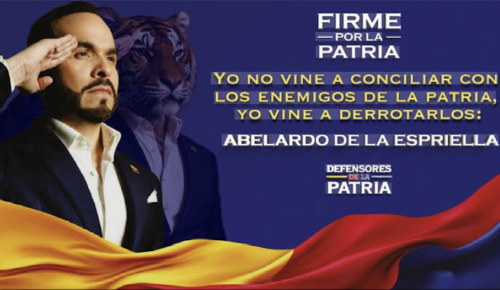
Almost no one in Colombia expected a victory for the candidate Abelardo de la Espriella in the first round, on May 31. He was able to capture the political zeitgeist within large sectors that were bitter enemies of the peace process and opposed the policy of change proposed by President Petro. Similarly, some of these sectors have felt “aggrieved” — and I say this in quotation marks — by his policies of change. It is mainly the petty and middle bourgeoisie and, of course, the large groups of economic power in Colombia.
20 June 2026
Translated by International Viewpoint from Marx21.ch.
In addition, De la Espriella has been financed, supported and aided by mafia groups. Let us remember that he has always been linked to these circles and, to top it all off, is supported by the Latin American and global far right, including the United States government.
This individual is a citizen of the United States; he also has Italian nationality, and has benefited from considerable funding for his campaign, as well as from the openness of the mass media, made available to him. In this way, he has managed to channel discontent with what they see as the continuation and deepening of the policy of reforms and changes defended by Iván Cepeda. They also resorted to fear, lies and anti-communism, which continues to exert great influence in Colombia.
What is your assessment of Gustavo Petro’s years in office, the successes and failures of his policies?
Gustavo Petro has succeeded in generating a great surge of motivation among the Colombian people, who have seen the arrival of a citizen who is able to interpret the needs for change of the moment. He came to power, also buoyed by the wave of the Havana peace agreement, which, if fully implemented, could have definitively changed the face of Colombia and restored dignity to life in the countryside, as well as to the poor and needy population of the country.
Gustavo Petro has managed to allocate more land to the poorest than the previous two presidents. We are talking about one and a half million hectares of land distributed during his term of office, mainly to indigenous and peasant organizations and, to a lesser extent, to ethnic organizations and female heads of households.
He has also managed to allocate 20,000 hectares of land to the signatories of the peace agreement, as well as to launch some free housing projects in some territorial zones, including 125 homes that will be handed over to their recipients on 24 June in the Georgina Ortiz territorial zone, in San Juan de Arama, in the department of Meta. These are some of the successes of his presidential term.
We can also add the regularization of the ownership of 2 million hectares of land and the progress made in the framework of a modern multipurpose cadastre. Similarly, in the area of social investment, we can note progress in the areas of education, the elderly (increase in pensions) and the minimum wage, which is due to increase by 23% from January 2026.
Similarly, and despite all the difficulties that persist in the field of health, he has succeeded in gradually removing those who, for many years, had taken over the system for private purposes, and in establishing a return to public management, beneficial to the disadvantaged.
In addition, Gustavo Petro has managed to change Colombia’s image in the world and to highlight issues as important as global warming, the transition from fossil fuels to clean energy, the preservation of the environment and respect for human rights.
He has condemned Israel’s aggression against the people of Gaza, opposed American foreign policy on many issues, and worked tirelessly for Latin American and Caribbean unity.
These are important aspects, to which we could add the fact that the country’s economy has grown, especially in the food production sector. In rural areas, it grew by 15%. He has also created a new climate in terms of the relationship with social movements.
The incidence of enforced disappearances and torture has also decreased; There has been an overall decrease in crimes and massacres, which does not mean that all regions of the country have benefited from this respite. There are regions where we cannot deny that violence persists and is spreading, but we obviously cannot ignore the progress of this government.
And what is your assessment of the failures of his policy?
Mistakes were made in the management of certain aspects, especially with regard to President Petro’s “total peace” policy, which was perceived by many as a failure on all fronts, because a large part of the funds obtained to finance the final Havana agreement was allocated to the policy of dialogue that the government wanted to carry out with other armed groups. groups that had not yet expressly signed a peace commitment.
In addition, the population has felt deeply aggrieved in these territories due to the upsurge in violence and the growing presence of groups that economically control large areas of the national territory. There is pressure, fear, a feeling of failure. All these situations have therefore allowed the far right to reorganise itself and De la Espriella to gain supporters.
This momentum has also been fostered by the global recomposition of the new order established following the operation against Nicolás Maduro in Venezuela. Then, by the intervention, the bombings and the assassination of the Iranian president. All these situations mean that the far right is experiencing a new boom in these sectors, and this was expressed in this direct vote in favour of the candidate De la Espriella.
To what extent has Petro been able to rely on popular mobilizations?
Gustavo Petro was able to rely very much on the support of the trade union movement, the indigenous movement and the popular movement to defend a large part of the reforms he carried out, because he had to face a hostile parliament. It should not be forgotten that he came to power also on the basis of alliances with part of the centre and even with certain sectors of the right, to whom he initially gave a place in the government, but this was an almost unavoidable step at the beginning of his term. Later, he realized that within the government itself, some people were working to sabotage the various development projects and achievements of his administration, a situation that still persists today, especially in the regions, in some ministries and in agencies of the Colombian state. In some of these areas, there has been a lack of people loyal to the government line.
The other element that has affected him a lot is the internal factors of corruption. He complained about it himself, because many of the people he trusted betrayed him. These are factors that, in one way or another, have also influenced the results of his term in office.
How do you explain the result of his successor, Iván Cepeda, who came second in the first round of the elections?
Iván Cepeda undoubtedly ran an admirable campaign, but unfortunately the team around him functioned as a kind of iron circle, almost impenetrable and too exclusive, which prevented a large number of people, especially those linked to the centre and certain sectors of the right, from voting for him.
He was accused of everything, resorting to defamation, slander and lies, fear, disinformation, and waging a counter-campaign focused on presenting him as a guerrilla, as a man who combines all forms of struggle, as a man who, if he came to power, could lead Colombia to communism and “Castro-Chavismo”. All this in a country that is deeply conservative and fearful of change.
To what do you attribute the climate of violence that reigns in the country, ten years after the signing of the 2016 agreements that led to the abandonment of the armed struggle by the FARC-EP fighters and the launch of a peace process?
Petro has always criticized the Havana peace agreement. He never appreciated it at its true value. He described it as a “little peace”. However, the truth is that in Havana, those of us who were there had pleaded for all the different guerrillas to be involved in the process, with the possibility of including several negotiating tables within the same process; in other words, we argued that simultaneous discussion tables could be opened with the ELN in order to reach agreements, but this idea did not come to fruition. The same was true for those who had been extradited to the United States and who still exercised, or exercise, influence over vast sectors linked to paramilitarism and illegal economies in our country.
In addition, in this context, Iván Cepeda went to the United States, with the authorization of the Colombian and American governments, to meet with the groups that held real power in Colombia from there, as is the case with Salvatore Mancuso and other paramilitary leaders. Cepeda was accompanied, at that time, by the former senator, now deceased, Piedad Córdoba, two people who fought for peace in this country. This peace was not achieved with them. In the end, it was with us that peace was concluded.
Petro then spoke of the demobilization of the ELN in three months. For example, Danilo Rueda, the High Commissioner for Peace at the time, even proposed to start talks, not only with the ELN, but also with ordinary criminals and other armed actors; This proposal turned out to be a real imbroglio, because discussions were initiated without each of these groups having been previously characterized: what did they represent? What did they have? What was their human composition? Their territorial influence? What strength did they have? And what was their political-ideological orientation?
As a result, these armed groups, strengthened by the status granted to them by the authorities, reorganized themselves on the ground, which was not difficult given the weakness of the state in these territories, places where it had never managed to establish itself through social investment, nor to implement the Havana Peace Agreement. And since some changes had already occurred since the time of the Duque government, this trend continued; the president then had the idea of dismantling the High Council for Peace in the country, and replaced it with an Implementation Unit, which had neither its own resources, nor specific political weight, nor functions with a real link to the whole process under way. Of course, this has weakened the entire architecture of the peace process.
Three years ago, during a visit to the Mesetas region of the Meta department, the president promised to re-establish the High Council for Peace, but this has not been possible so far, and it will not be possible in the short time he has left. [2]
Has the peace process been seriously compromised?
Of course, we can mention the non-compliance with the six points of the peace agreement, because this agreement can only work in its entirety. For example, the fight against drugs or illicit crops is directly linked to point 1, which refers to comprehensive rural reform; In other words, no point can be dissociated from the others.
Similarly, there are delays, among other things, in the implementation of territorial development plans, the initial structure of which envisaged that these investments would benefit entire regions through high-impact development plans aimed at bringing about change: creation of new communication routes, bridges, establishment of health, education and housing services. High-impact social investment plans that promote regional integration, benefiting Black, Indigenous and peasant communities, as well as female heads of households. And that, unfortunately, has not been realized.
This does not mean that everything has been a failure, but the objectives have not been achieved, the indicators have not been respected and the monitoring has been lacking; In addition, there is the rise in corruption and the pressure exerted by the groups that persist and have developed in Colombia in rural areas, which has led large sections of the population of these regions to live in a climate of uncertainty and disillusionment.
To take another example, in many areas, a thousand, two thousand, three thousand hectares of land were handed over to the communities, but no economic investment came to support their productive projects, because many of these investments exceeded 20,000 or 35,000 million pesos, and there was supposedly no money for these types of investments. These are situations that are still waiting for a response and that will certainly continue under the next government, whatever it may be.
It must be understood that the Havana peace agreement was not just a government policy, but a state policy, which also has legal repercussions, because Colombia has enshrined it in the constitutional body and, moreover, in a unilateral statement by Dr. Juan Manuel Santos before the United Nations.
This agreement also has the support of the international community and the original documents are kept in Switzerland as a special agreement, which means that the agreement must be respected; otherwise, it would have repercussions at the international level, particularly with regard to its application.
Unfortunately, at present, on a global scale, respect for treaties, territorial integrity and the sovereignty of peoples is experiencing a total deterioration, a perverse reversal due to the fact that those who are strong impose their conditions.
How do you explain the existence of FARC dissidents who have resumed the armed struggle? What do they represent? What does the ELN represent? What is your assessment of the transformation of the FARC into a political party under the name of Comunes?
I would say that there was no real dissent within the FARC to resume the armed struggle. Before the signing of the agreement, in 2016, we organized the national conference of guerrillas in the department of Meta, also in the Llanos del Yarí. All the former fronts, columns, companies and urban structures of the guerrilla organization were represented, and the draft agreement that we had reached in Havana with the government was unanimously adopted. Once this document was approved, it was signed between us as an agreement that the entire guerrilla organization had agreed upon; There were no dissenters, that is, no one stood up to express their disagreement. Among the guerrillas, support was unanimous.
At the end of the conference, the commanders returned to their home areas, where their camps were located, and that was where some dissented, but there were very few of them: people abandoned or betrayed the peace agreement they were signing at this time. Others were subjected to harassment and politically motivated schemes to obtain their extradition, orchestrated and manipulated by the then Attorney General, Néstor Humberto Martínez. This is the case of Óscar Montero, known as “El Paisa”, Jesús Santrich and Iván Márquez himself, who were forced to take up arms again.
It should be noted that at the moment, of the 14,000 guerrillas who signed the peace agreement, more than 95% of us are respecting the commitment made and the word given to the Colombian people. This is, let’s say, the highest number of guerrillas per capita who keep their word and respect the agreements, if we refer to the various agreements concluded between states and guerrillas around the world.
Similarly, it has been shown that we were the guerrilla organization that handed over the most weapons: 2.8 weapons per demobilized man. It was then that other types of groupings appeared, which are no longer based on the ideological, political and programmatic principles of the guerrillas born in the 60s, but which are made up of people using the name “guerrilla” for economic purposes, for their personal profit, and who erect money as a god.
This phenomenon undoubtedly also affected the comrades or former comrades of the ELN; indeed, in many regions, both those who have defected from the peace process and the ELN are responsible for about 80 per cent of the assassinations committed against peace signatories.
It must be said that this experience, this transition from an armed movement to a political party, was quite interesting, even if it had already been done in El Salvador and Guatemala. In Colombia, the experience was different, since it was possible to recall the events that took place between the 1970s and the 1980s, when the political platform of the Patriotic Union was launched, which was born thanks to the agreements concluded at the time between the Colombian State and the FARC-EP. This platform had suffered the systematic elimination of its activists. This extermination has continued and extended; in addition, there was stigmatization from the president himself as well as from senior state or government officials.
This is particularly the case with the statements of the director of the National Protection Unit, Mr. Augusto Rodríguez, who publicly states that those of us who are part of the Comunes political party are, in fact, people who are “holding hostage” this entity of protection. In addition, the latter is trying to unilaterally introduce changes that are totally prohibited or that are not part of the Havana Peace Agreement.
These are very complex situations. Similarly, governments — I’m talking about three governments — all of whom systematically violated the Peace Agreement in one way or another, trying to change its letter and spirit and give it the interpretation they thought was correct. [3]
However, the Constitutional Court called on the state to rectify certain unconstitutional positions and shortcomings vis-à-vis the signatories to the peace; for example, in the area of security, where it does not respect its commitments. The Court issued a series of orders and set deadlines for the Petro government to remedy this. However, this was not possible, and here, it is like in colonial times: “we obey, but we do not apply”.
It has been a very unequal fight, which will continue, because we have just lost our legal status, which is a major political blow in view of the deaths, the assassinations, the lockdown, the threats and the displacement that we have suffered during these years of reintegration [4] But the important thing is that we do not lose our status as High Contracting Party to the final Havana Peace Agreement, which goes beyond the mere constitution of a political party or movement.
We reserve this status for actions of a legal nature, because there have been territories that we have not been able to enter to campaign, because we have been designated as a military target and where we have been denied the opportunity to be on an equal footing with other movements and political parties that exist in Colombia.
“”