International Viewpoint, the monthly English-language magazine of the Fourth International, is a window to radical alternatives world-wide, carrying reports, analysis and debates from all corners of the globe. Correspondents in over 50 countries report on popular struggles, and the debates that are shaping the left of tomorrow.
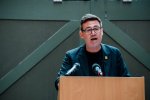
Andy Burnham became British Prime Minister on 20 July 2026. The former Mayor of Manchester had served in the Labour governments of Tony Blair and of Gordon Brown and in the opposition teams of Ed Milliband and Jeremy Corbyn. He stood twice previously to be Labour leader but this time was the only candidate with active support from people earlier expected to stand themselves. His predecessor Keir Starmer was forced to resign on 22 June after Burnham won an impressive by-election victory in Makerfielld inthe north west of England where Nigel Farage’s far right party Reform had hoped the prize might be theirs. This was in stark contrast to Labour - and Starmer’s - disastrous showing in elections in May. It was clear that Burnham’s success partly came from people supporting him precisely to get rid of Starmer.
Since the article below was written Burnham has appointed his Cabinet retaining many of those who served with Starmer and made a number of announcements of policies to assist with the biting cost of living crisis, while sticking to the fiscal rules. Only 5 days in, it is too early to draw a substantive balance sheet, On the other hand there is no doubt that Burnham is opening up a number of key political discussions - on devolution, on electoral reform and on reindustrialisation, for example, which it will be essential for the radical left to engage with.
read article...
The mobilisation in the streets forced a backdown on Zelensky.
read article...
During the first ten days of July, cyclones (typhoons), tornadoes, storms, severe weather, floods, and landslides wreaked havoc in the central and southern parts of the country—and beyond. China is facing extreme weather events intensified by the climate crisis.
read article...
“To confront the climate catastrophe—accelerated by neo-fascist denialism—the emergency brake lies in the struggle and mobilization of the social majority”
read article...
“Overcoming the social and environmental problems that afflict us and reversing the reversible effects of the climate crisis is impossible under the rules of this economic system. The climate crisis is perhaps the most dramatic example. It is not possible to address the climate crisis without making the energy sector—as well as water management—public property and administering it democratically with the dual objective of satisfying our needs and reducing environmental impact. ”
read article...On the programme: the history of the Spanish Trotskyist movement; the regime crisis in Spanish state; the idea of plurinationality and Catalonia; relations with the NPA, and the strategy of Podemos with regard to the constraints of Europe.
Feminist philosopher, political economist, and activist Silvia Federici on the transformation reproductive labor has experienced over the last 40 years, and in particular, with the post-2009 austerity. Originally published in Italian in Francesca Coin (ed.), Salari rubati. Economia politica e conflitto ai tempi del lavoro gratuito, Verona: Ombre Corte, 2017, pp. 99-106.
The "debt system" is gathering steam In Asia, Africa, Latin America and the Caribbean, just as in the highly industrialized countries, after going through several fundamental changes over the past 40 years. Mainly since the outbreak of the Third World debt crisis in the early 1980s.
Throughout human history, private debt has been used by the dominant classes to subjugate, despoil, expropriate, and dispossess the toiling classes (among whom women have always been the hardest-hit victims): small farmers, artisans, fishers, and on up to the salaried workers of today and the members of their households (students, who go into debt to pursue their education). [1] The process is simple: the lender requires that borrowers pledge their possessions as collateral. This can be, for example, the land held and cultivated by the farmer, or in the case of an artisan, the tools of his or her trade. Repayment of the loan must be made in cash or in kind. Since the interest rates are high, to repay the loan the borrower must transfer a large share of the fruits of his or her labour to the lender, and so becomes impoverished. If the borrower defaults on repayment, the borrower is dispossessed of the pledged collateral. In some societies, that can mean a loss of freedom for the debtor and/or the members of his or her family. This is called debt slavery. Under the laws of the United States and certain European countries, failure to repay a debt was punishable by physical mutilation until the early 19th century. And still today, in Europe and elsewhere, non-repayment of debts may be punishable by imprisonment.
“The future of Ukraine will not be decided by choosing between competing factions of the political elite. It will be decided by whether the country can defend itself while preserving the democratic and social foundations worth defending.”
- read article...“Popular mobilisation is crucial in a country that has endured repeated crises, a blockade and the deterioration of public services in recent years, and it gives full meaning to the saying ‘Only the people can save the people’. ”
- read article...In order to detrermine its position for the 2027 presidential elections, the NPA-l’Anticapitaliste held a national conference on 27 and 28 June 2026. This conference brought together delegates representing the activists of the NPA-l’Anticapitaliste, who had debated and voted in the general assemblies held throughout June.
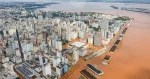
- read article...MIHANDS has always been fueled by people, not deep pockets. Because we lack the massive financial reserves and pre-staged stockpiles of larger international agencies, our response standard operating procedure is a race against time to mobilize—gathering our volunteer network, fundraising, and sourcing materials from scratch whenever a crisis hits.
- read article...The Confederation of Free Trade Unions of Ukraine (KVPU) has announced the creation of a new organisation: the All-Ukrainian Union of Combatants, Military Personnel and Veterans.
- read article...International Viewpoint is published under the responsibility of the Bureau of the Fourth International. Signed articles do not necessarily reflect editorial policy. Articles can be reprinted with acknowledgement, and a live link if possible.
We need your help to get our message across! Send donations payable to International Viewpoint 10b Windsor Rd N7 6JG, Britain - or why not donate online:
Site Map
| Log in |
Contact |
RSS 2.0