
 Version imprimable
ESSF is joining the call for solidarity – particularly financial support – launched by Mihands, a network of associations with which we have been working for a long time. International donations can be made through us, which can be easier and less costly. See below for full details.
The Context: An Update
The earth did not just shake on the morning of June 8, 2026; it tore itself apart. At exactly 7:37 AM Philippine Standard Time (PhST), a massive Mw 7.8 subduction earthquake struck off the southern coast of Mindanao. The event unleashed a 70-second rupture process that has entirely rewritten the geography of the region and fractured the lives of hundreds of thousands of people.
According to technical briefs published by the Philippine Institute of Volcanology and Seismology (DOST-PHIVOLCS) and data verified by the U.S. Geological Survey (USGS), the massive rupture released a total seismic moment equivalent to 6.14×10²⁰ N⋅m. It stands as the most severe seismic trauma to impact the country since the historic 1976 Moro Gulf disaster [1].
As emergency teams continue to assess the widespread structural damage caused by this catastrophic event, a silent psychological crisis is unfolding across our educational communities. While initial disaster response frameworks naturally prioritize the immediate physical and emotional safety of students, an urgent, overlooked population requires important intervention: the adults responsible for keeping those children safe.
The Morning the Coast Rose
The earthquake struck at the worst possible moment: the very hour schools were opening their doors for the day. Along the shallow megathrust interface of the Cotabato Trench, the oceanic crust of the Sunda Plate slipped violently eastward underneath the Philippine Mobile Belt [2] at a depth of 55.2 kilometers. The epicenter was pinpointed by the USGS at 5.592∘N,125.047∘E—roughly 32 kilometers offshore west of Maasim, Sarangani province.
When the dust settled, coastal residents in Glan and Jose Abad Santos walked out to a surreal landscape. Field teams from DOST-PHIVOLCS confirmed a rare, localized co-seismic coastal uplift. The intense tectonic thrust literally pushed sections of the shoreline and marine sanctuaries upward by about 2.0 meters, causing the sea to permanently retreat by nearly 200 meters. Coral reefs and seagrass beds that had been fully submerged for centuries were suddenly thrust into the open air—a raw, permanent monument to the immense pressure building beneath the ocean floor.
But the sea would quickly strike back. The sudden displacement of the seabed triggered an immediate Tsunami Warning across nine provinces. Sea level monitoring stations captured waves peaking at 2.5 meters (8.2 feet) slicing into the coastal communities of Kiamba, Maasim, and Kalamansig. While massive evacuations saved thousands, the National Disaster Risk Reduction and Management Council (NDRRMC) reported that two individuals tragically drowned and a third went missing when they were swept out into the sea off General Santos City.
A Landscape of Ruin
In General Santos City, located just north of the fault line, the morning commute turned into a scene of absolute terror as ground shaking reached a maximum of Intensity VIII (Very Destructive) on the PHIVOLCS Earthquake Intensity Scale (PEIS). Concrete commercial buildings collapsed into intersections, and multi-story structures buckled under peak ground accelerations reaching 173.4 gal. In Barangay Lagao alone, over 1,000 families completely lost their homes as residential blocks crumpled.
The destruction rippled across multiple provinces, leaving behind damage to infrastructure estimated by national disaster networks at ₱1 billion ($20.3 million USD):
The Loss of Lifelines: Major bridges collapsed across South Cotabato, and massive cracks split open regional highways, immediately severing local power grids and cellular towers.
Burying the Highlands: In the mountains, the shaking triggered massive landslides, sending entire hillsides crashing down onto rural access roads, burying homes, and isolating remote villages from the rest of the island.
The Human Toll: The NDRRMC’s consolidated casualty logs confirm 69 deaths, 1,343 injuries, and 33 people remaining missing across Mindanao. The towns of Sarangani, Jose Abad Santos, Glan, and Malapatan suffered the highest percentages of structural destruction, with nearly 20% of all housing in General Santos City left structurally compromised.
The Shadow of History and the Agony of Our Caregivers
For the older generation of survivors, the disaster carries a terrifying sense of déjà vu. The Cotabato Trench has long been a known catalyst for catastrophe, most notably generating the historic 1976 Moro Gulf earthquake (Mw 8.0) and tsunami, which claimed up to 8,000 lives. Seismologists revealed that the extensive Kalamansig Earthquake Swarm spanning late 2025 and early 2026—which brought over 3,500 distinct tremors—was the sound of the plates aggressively shifting and loading stress onto the central Sarangani segment until it finally failed on June 8.
Now, the region is caught in a seemingly endless cycle of fear. The Philippine Seismic Network has logged over 6,058 aftershocks in the days following the event, punctuated by a powerful mb 6.5 aftershock that struck on the very afternoon of June 8.
Working through these thousands of aftershocks and initial tsunami warnings, often in a complete telecommunications vacuum, adults in the school ecosystem are operating under immense neurological and emotional strain. Striking on the very morning schools were opening, the earthquake forced educators and school workers into an unnatural cognitive split. Thousands of school personnel who are also parents had to suppress their agonizing fear for their own biological children to fulfill their professional duty—physically shielding, calming, and evacuating dozens of terrified students under their care.
These dual-role caregivers have experienced profound role-conflict trauma and debilitating survivor guilt. We cannot expect a traumatized workforce to effectively co-regulate, comfort, and rehabilitate traumatized children if their own mental health needs are systematically ignored.
Shattered Lifelines: Agriculture and Fisheries
Beyond the structural rubble, the earthquake dealt a devastating, long-term blow to southern Mindanao’s economic backbone: its fertile fields and rich fishing grounds. The primary livelihoods of the region have been effectively paralyzed.
The Collapse of the Blue Economy
For coastal communities, the ocean is everything. The combination of a 2.5-meter tsunami and the 2.0-meter coastal uplift has devastated the local fishing industry:
Harbor and Fleet Destruction: In Sarangani and Sultan Kudarat, hundreds of outrigger bancas (traditional fishing boats) were either crushed by tsunami waves or left permanently stranded high and dry on newly uplifted land.
Aquaculture Devastation: Intense ground shaking and localized underwater landslides ruptured municipal fish cages and inland aquaculture ponds. Millions of pesos worth of high-value milkfish (bangus) and tilapia escaped or died, wiping out the life savings of local operators.
Ruptured Fields and Blocked Markets
Inland, the agricultural sector faces a logistical and physical crisis.
Irrigation and Soil Failures: Widespread liquefaction caused massive lateral spreading and sand boils across the low-lying river basins of South Cotabato. Irrigation canals supplying vital rice paddies cracked and drained, while farmland surfaces were split open by wide fissures.
The Isolation of High-Value Crops: Because mountain roads were obliterated by landslides, tons of harvested produce—including high-grade coffee, bananas, and coconut (copra)—are currently rotting in isolated upland communities, completely cut off from trading hubs in General Santos City.
The "Tri-People" Reality and the Mandate of "Do-No-Harm"
To truly understand the humanitarian landscape of this disaster, one must look through the lens of Mindanao’s unique "Tri-People" dynamic—the delicate social fabric composed of Christian settlers, Moro (Muslim) communities, and the non-Moro Indigenous Peoples (Lumad), such as the Blaan and Tboli.
Disasters do not discriminate in their destruction, but relief interventions can inadvertently cause harm if they fail to respect deep-seated cultural boundaries and the immense psychological pain of the survivors.
Culturally Sensitive Facilitation
As emergency interventions roll out, aid agencies must strictly enforce a do-no-harm framework designed with extreme sensitivity to regional differences:
The Lumad Populations: The ancestral domains of the Blaan and Tboli peoples span the very mountainsides that suffered the worst of the earthquake’s landslides. Relief must be structured using local languages and traditional tribal leadership structures to prevent alienation and preserve communal dignity.
The Moro Communities: Moro communities heavily populate the low-lying coastal spaces and river deltas, placing them directly in the path of the tsunami and severe liquefaction. Inside crowded evacuation centers, international monitoring groups like OCHA and UNFPA emphasize the critical need for culturally appropriate relief—including private, gender-segregated sanitation facilities and the strict distribution of certified Halal food rations.
The Christian Settlers: Concentrated heavily in urban and commercial centers like General Santos City and Koronadal, Christian communities bore the brunt of heavy structural collapses. The immediate challenge is managing the tense, dense environments of urban camps while providing targeted psychological first aid.
The Hidden Vulnerable: Home-Based and Relocated Survivors
A critical blind spot is emerging in the local disaster response: thousands of survivors are completely absent from official evacuation camp registries. Fearing the suffocating density of the camps or the relentless psychological toll of aftershocks near large concrete structures, an estimated 40% of displaced families have chosen to self-relocate. These home-based survivors are staying in the backyards of relatives, crowded into host family homes, or living in makeshift tents next to their ruined properties.
Humanitarian aid must not be conditional on a family’s physical presence inside an official evacuation center. Home-based survivors have suffered the exact same loss of livelihoods, shelter, and security, yet they are systematically being missed by mobile supply drops.
Local government units (LGUs) and mapping networks must actively locate, account for, and serve these home-based populations with the exact same parity and care as those in public shelters.
Redoubling the Governance Effort and Care for the Caregivers
To prevent this disaster from becoming a protracted humanitarian failure, the national government and its line agencies—including the Department of Social Welfare and Development (DSWD), the Department of Public Works and Highways (DPWH), and military engineering brigades—must double-time their efforts to reach the geographic periphery and stabilize our structural and emotional foundations.
The Department of Education (DepEd), local government units (LGUs), and community recovery networks must immediately expand their Mental Health and Psychosocial Support (MHPSS) mandates to explicitly include teachers, school personnel, utility workers, security guards, and parents. We call on all coordinating agencies to deploy immediate, specialized Psychological First Aid (PFA) designed specifically for adult school personnel and parents, create family-centric communication channels for future alerts, and implement rotational relief schedules to prevent immediate caregiver burnout.
In a major regional crisis, our teachers and parents are the primary oxygen supply for our youth. To heal our schools, we must first care for our caregivers.
United in Survival: Organizing Against Marginalization
As the initial emergency phase shifts into long-term rehabilitation and recovery, a historical risk emerges: the uneven distribution of resources, political favoritism, or cultural misunderstandings can divide communities and widen existing social fault lines.
To counter this, the survivors must actively organize themselves. By forming multi-cultural local committees that represent Lumad, Moro, and Christian voices equally, affected citizens can prevent themselves from being marginalized or divided during the reconstruction process. Collective grassroots organization ensures that community members are not merely passive recipients of aid, but active directors of their own recovery.
Urgent Appeal for Humanitarian Support
More than a week after the initial earthquake, severe access restrictions remain the greatest obstacle to saving lives. More than 430,000 people have been heavily impacted, and tens of thousands remain stranded in isolated communities or scattered across home-based refuge sites. Major international and local humanitarian organizations—including CARE Philippines, UNICEF, Americares, Plan International, and Save the Children—have mobilized emergency resources, but local capacities are completely overwhelmed.
Every Next Hours Are Critical: Families are sleeping in makeshift shelters under the constant threat of active aftershocks and unstable, mud-slicked mountain slopes. Water contamination across Sarangani and Davao Occidental has triggered severe public health warnings, putting infants, pregnant women, and nursing mothers at extreme risk.
How to Help and Where Support is Needed Most:
Water, Sanitation, and Hygiene (WASH): Rapid deployment of portable water filtration systems, emergency water containers, and water treatment tablets to combat waterborne illnesses in both public camps and home-based clusters.
Shelter and Evacuation Management: Distribution of heavy-duty tarpaulins, emergency tents, and construction materials for the 68,600 families whose homes were completely flattened or structurally compromised.
Dignity and Protection Kits: Establishing safe, partitioned sanitation spaces in evacuation camps, alongside supplying critical, culturally sensitive hygiene packages for women and girls across Moro, Lumad, and Christian populations.
Psychosocial Support First Aid: Mobilizing counselors to provide specialized trauma support for children, parents, and school educators struggling under the continuous barrage of thousands of aftershocks.
And, longer partnerships for the rehabilitation and recovery period. The survivors must be organized and their livelihood support be consistently supported with sustainability. Decision-making process must include the survivors themselves as core affected actor of the tragedy. The ecological question must also be dealt with, and recovery interventions must at all times be ecologically sound, democratic and human-rights based.
Individuals and corporate partners looking to contribute can coordinate directly with Multi-Stakeholders Initiatives for Humanitarian Action against Disasters
Address:
No. 37 Tulingan Street, Usman Subdivision, Bagua 2, Cotabato City
Tel: 064 421 1369
Email: [email protected]
FB Page: Multi-Stakeholders Initiative for Humanitarian Action against Multi-Stakeholders Initiatives for Humanitarian Action against Disasters
We invite everyone to be part of this humanitarian missions of MIHANDS dubbed as
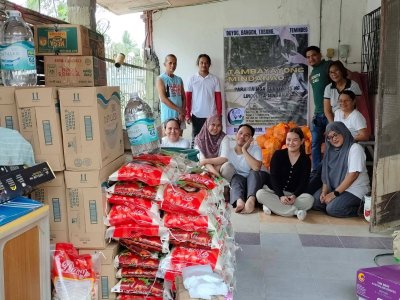
"TAMBAYAYONG MINDANAO: Tabang alang sa mga survivors sa linog sa Mindanao" (Working Together: Aid for the Survivors of the Mindanao Earthquakes).
DONATE, VOLUNTEER, and BUILD SOLIDARITY with COMPASSION
For Cash Donations:
PNB Account: 405110023198
Tri-People Org. against Disasters
Insta Pay: Use the poster barcode
Drop-off Centers for food and non-food materials:
1. Kaagapay Office - Ante Compound, Sinsuat Avenue, Cotabato City
Tel: 064-421-5024
2. TRIPOD Office - #37 Tulingan St., Usman Subd., Bagua 2, Cotabato City
Tel: 064-421-1369
HOW TO SEND INTERNATIONAL DONATIONS THROUGH ESSF
All donations we receive are transmitted to their recipients. The small team of ESSF coordinators covers the operating costs of the association and the website. Donations can be made in the form of cheques (in euros only and payable in France), by bank transfers directly to our association’s account, and via HelloAsso or PayPal. Access to all payment methods is indicated on the homepage of our site.
Cheques Cheques in euros only and payable in France to the order of ESSF should be sent to:
ESSF 2, rue Richard-Lenoir, 93100 Montreuil, France
Bank Crédit lyonnais Agence de la Croix-de-Chavaux (00525)
10 boulevard Chanzy 93100 Montreuil France
ESSF, account No. 445757C
National bank references (RIB)
Bank: 30002
Indicator: 00525
Account No.: 0000445757C Key: 12
Account in the name of: ESSF
International bank details
IBAN: FR85 3000 2005 2500 0044 5757 C12
BIC / SWIFT: CRLYFRPP
Account in the name of: ESSF
PayPal: you can also transfer your donations via PayPal: on the homepage of our site, click on the PayPal command at the top right.
HelloAsso: you can also transfer your donations via HelloAsso (see the command placed on the homepage): https://www.helloasso.com/associations/europe-solidaire-sans-frontieres/formulaires/1/widget
In France, these donations give entitlement to tax deductions. We need your address to send you a tax receipt (the address generally indicated on cheques).
17 June 2026
Source: ESSF.