Raphaëlle Manière explains to Fanny Gallot ““Fighting sexist and sexual violence means guaranteeing the place of women in the CGT””, Jean Batou discusses Ilya Budraitskis’ and Ilya Matveev’s “Russia’s New Imperialism”, Kit Wainer on Dan La Botz’s “Mexico: A Revolutionary Ride”.

International Viewpoint - online socialist magazine
International Viewpoint, the monthly English-language magazine of the Fourth International, is a window to radical alternatives world-wide, carrying reports, analysis and debates from all corners of the globe. Correspondents in over 50 countries report on popular struggles, and the debates that are shaping the left of tomorrow.

- 11 September – Fighting sexism at work and two reviews
-
Latin America

Latin America: Patterns and Pendulum
13 September, byRECENT ELECTIONS ACROSS across Latin America appear to have placed the hard right firmly back in power. While the landscape may appear to be dim for the left, other factors signal glimmers of hope.
read article... -
Situation in East Asia and Japanese Politics/Economy

Oppose the Takaichi Administration’s Military Expansion and Constitutional Revision
12 September, by“These struggles for anti-war peace, the defense of working people’s livelihoods, and the fight for climate justice in the face of a deepening climate crisis are unfolding in response to the multifaceted crises of the capitalist system. As these crises converge into a single unified front, our movements and struggles must likewise interconnect to form a powerful, single stream. The current situation demands nothing less.”
read article... -
“War on Terror”

9/11: A Quarter Century of Imperial War
11 September, by“Absolutely, I hold on to hope, hope rooted in the new generation and its capacity to invent new forms of struggle, as we have seen recently with the Moroccan Gen Z movement, an extraordinary moment, with thousands of young people mobilising and using modern technology to coordinate their action. I make a crucial distinction between optimism and hope, they are not the same thing at all. Optimism is the belief that the best outcome will happen. Hope is the belief that a better outcome is possible, with no guarantee attached. I can keep hoping, while recognising that today the balance of evidence weighs heavily toward pessimism.”
read article... -
Germany: regional elections in Sachsen-Anhalt

The AfD just short of an absolute majority
10 September, byOn 6 September a new Landtag was elected in Saxony-Anhalt. Saxony-Anhalt is the smallest of the territorial Länder by population, with 2.1 million people. It was clear in advance that there would be considerable changes. At the last Landtag election in 2021 the AfD, which the Saxony-Anhalt domestic intelligence service has classified as confirmed right-wing extremist, took over 20 per cent. In the run-up to this election the standing of the federal government of CDU and SPD reached a low point, as the opinion polls had made foreseeable. Accordingly the task for all the other parties was at least to prevent an absolute majority for the AfD, in percentages as well as in seats.
read article... -
USA
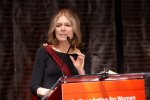
Gloria Steinem, prominent American feminist, 1934-2026
9 September, byThe passing of Gloria Steinem, the most celebrated of the US “second wave” feminists of the 1970s, provides an opportunity to consider both her life and work. Some on the left, such as Jenny Brown writing in Jacobin, have condemned Steinem as a “neoliberal” who used and misused the women’s movement, disdaining the movement’s radical wing, to advance her own career as self-proclaimed leader.
read article...