
 Version imprimable
What is the scale of the attacks carried out by Israeli and American forces in Lebanon?
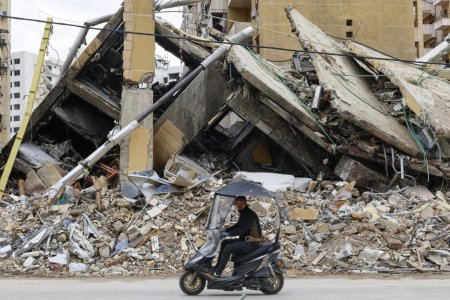
The scale of the Israeli attacks is greater than the last war at the end of 2024: the destruction of the southern suburbs of Beirut and southern Lebanon is colossal, the forced expulsion of hundreds of thousands of Lebanese of the Shiite faith is systematic, with a marked character of communal war on the part of Israel. The Israelis are trying to separate the south from the rest of the country, including by bombing bridges, and to cut off Hezbollah’s passageways. Targeted assassinations and strikes – also costly for civilians – also affect some areas that are not Shia, including Baabda, in a Christian area near the presidential palace, or Bourj Hammoud, an Armenian neighbourhood. Palestinian refugee camps are also a regular target of Israelis, knowing that Palestinian factions were involved in the last war in 2024 in Lebanon, alongside Hezbollah. All this represents a threat to the Lebanese government and the whole of Lebanese society, to say that basically no one is safe and that it is Lebanon as a whole that will pay the price of this war, not only the Shiite community, even if it is the first target. Israel’s political objective is to cut Hezbollah off from its social base, to disperse this social base throughout Lebanese territory, to make it a category of refugees, to stir up Lebanese internal tensions. By striking at Christian or Sunni areas where Shia displaced people are located, they are turning communities against each other. People are afraid to welcome displaced people into their villages. It is therefore a strategy of dividing the entirety of Lebanese society.
This war also has a higher threshold of violence, since it is a regional war: Israelis have been talking for almost two years now of a war on seven fronts: Gaza, the West Bank, Lebanon, Syria, Iraq, Yemen and Iran. These fronts have been relatively divided in recent years: when there was the Twelve Day War on Iran – the first Israeli-American war – Lebanon was not directly involved. When there was the war on Lebanon from September to November 2024, there was no strike on Iran, although the Iranians did carry out fire in support of Hezbollah at that time. But not all the fronts were unified. Today, these seven fronts are beginning to be unified. This is the post- 7 October 2023 effect: a gradual rise in the unification of the fronts, which today tend to converge in the direction of an out-of-bounds war, from the Gulf to the Mediterranean.
The logic of the unification of the fronts, however, is not only an Israeli theory, it also has an earlier reality: this idea of unifying the fronts has existed since 2021 on the side of what is called the “axis of resistance”, made up of Hezbollah, Iran, their Houthi partners, the Iraqi armed Shiite movements, and virtually all of the Palestinian factions – which are not Shia. From the 2021 uprising, all the forces of this “axis of resistance” had theorized the principle of wahdat al sahat (the unity of places). This theory considers that any attack on one of the of this axis must call for a response on another front, on the part of another actor in this “axis of resistance”. This was applied in a relative but nevertheless post-7 October 2023 manner, when Hezbollah decided to launch what is called Jabhat al-Isnad (a support front) in the Gaza Strip. At the time, it saw this front of support not as a completely open war against Israel but as a means of putting pressure on Israel and the United States to ease Israeli military pressure on Gaza.
This “support front” opened by Hezbollah on the morning of 8 October 2023, has gradually resulted in the outbreak of a war. As much as Hezbollah had the initiative for a year, Israel also began to take the initiative, and accelerated things from July 2024 until the outbreak of war from September to November. It then committed a series of assassinations, not only the famous operation of the pagers, there was also the gradual decapitation of the entire Hezbollah command. Now, this logic of unifying the fronts applies to everyone: Israel and the United States are waging a war on Iran, the fronts have widened to the Gulf, Iraq and Lebanon – while waiting for Yemen. On the other hand, Iran no longer has a red line and is pulling the plug from the cycle of negotiations/sanctions/bombings imposed by the United States for several months. They want to change the equation. From this point of view, it is no longer impossible that, in the event of negotiations, Iran will put the Lebanese issue in the balance, and want a global and regional agreement. This is indicated by the latest interventions of its Supreme Leader and Foreign Minister. In any case, Iran no longer wants a return to the status quo ante. And obviously, it holds out militarily and knows how to mobilize a combination of Iranian nationalism that is not specifically Islamic with the profoundly messianic dynamics of Shiism, two fundamental fuels to hold out in the war. The same thing happened during the Iran-Iraq war of the 1980s which, after the internal crises after the post-79 internal crises, resolidified the country. As a result, even the United States is beginning to doubt the possibility of regime change.
It is likely that the Israelis are now attempting an invasion of southern Lebanon. The limit for them is on the purely military level. If we refer to the last war in 2024, Hezbollah has suffered a blow, in the sense that its leadership was decapitated and its charismatic leader, Hassan Nasrallah, was killed. But on the ground in southern Lebanon, it turned out that its fighters had somehow held strong and that the Israeli incursion was still quite limited, since it could not go beyond 4 to 5 km inside Lebanon’s borders. There was no invasion of southern Lebanon and there were a number of fierce battles, including in Khiam, in southeastern Lebanon – not far from Syria and the Golan Heights, which the Israelis entered three times and had to leave.
Hezbollah, according to some indicators, seems to have partly reorganized itself since the last war. If it is not reorganized, the war is short and it is crushed. If it is reorganized, the war is bound to be longer. Indicators for the moment are that its leadership, unlike in the 2024 war, has not been decapitated. When the war began on the night of Sunday, 1 March 2026, the Israelis carried out a number of very precise strikes on the southern suburbs, which in the first few hours suggested that the entire leadership had been decapitated, which is not the case. There was a rumour that the leader of the parliamentary bloc, Mohamed Raad, had been killed. But he spoke the following evening. There was a rumour that the party’s secretary general, Naim Qassem, had been assassinated. It turned out to be false. This is a first indicator: their leadership is not decapitated, it is hidden. The second indicator is that in spite of the policy of disarmament of southern Lebanon, south of the Litani River, carried out by the Lebanese army, by the government and by the international forces of UNIFIL 1, it seems that Hezbollah, in fact, still has a military existence, since currently battles are taking place, especially in the village of Khiam, Naqqoura, Taybeh. [1] Battles that have engaged Israeli troops and Hezbollah on the border for three weeks, and not deep in Lebanon.
The ceasefire period was not a real ceasefire period since Lebanon was bombed daily in the south and east in the Bekaa. Israeli air force and Israeli drone overflights over Beirut were continuous. And finally, it should be noted that Israel occupied five points in southern Lebanon, from which the army should supposedly have withdrawn from at the end of the ceasefire after 60 days, which it did not do. So the situation before the present war was one of probable war. For the people of southern Lebanon, the war has never really stopped since the 2024 ceasefire.
What do you think is the broader goal of the United States and Israel?
In my view, the Israelis’ historical global vision of Lebanon is based on three central elements.
The first element is that there are historically claims among the religious far right on South Lebanon as a biblical land. But this is not necessarily the aspect that plays the most role, at least among the military and politicians.
The aspect that plays a central and historical role is the question of water and the question of strategic heights: southern Lebanon is a mountainous territory that also borders the Syrian Golan. As early as 1948, when Israel was created, the forces of the future Israeli state attacked 15 villages in southern Lebanon. At the time, there was a massacre of Lebanese civilians in the village of Houla – it’s a fairly well-known village because there is a historical Communist presence, until today. The history of Israeli claims and Israeli designs on Lebanon is an old story.
The third aspect is that South Lebanon is historically linked to Palestine, through trade, exchanges, marriages... Under the Ottoman Empire, there were no borders between southern Lebanon and historic Palestine. During the period of Mandatory Palestine, in the 1920s and 1930s, it was an area where there continued to be a lot of traffic. During the great Palestinian Arab revolt of 1936, the British expelled many Palestinian activists to Lebanon. In 1948, Lebanese groups also participated in the struggle alongside the Palestinians against the troops of the future Israeli state. So, there was a historic interaction between Lebanon and historic Palestine.
This historical interaction was particularly strong in the 1960s and 1980s, as Palestinian resistance movements, such as Fatah, the PFLP, the Democratic Front and others, which were present in southern Lebanon in the Palestinian refugee camps, linked up with the organizations of the Lebanese left. But this history is not reducible to the history of the Lebanese left. Imam Moussa Sadr – a charismatic figure and Shiite theologian, Lebanese, but born in Iran in the city of Qom – created a Shiite movement in the 1970s, the Movement of the Disinherited, whose armed wing is Amal, which is the acronym for Lebanese Resistance Detachments. The Amal movement was militarily trained in the Palestinian refugee camps. Legend has it that the word Amal, which means hope, was coined at the time by Yasser Arafat. This party still exists today, with the central role of the speaker of the Lebanese Parliament, Nabih Berri. In 1979, we are talking about the alliance between those disinherited of their land and those disinherited on their land, those disinherited of their land being the Palestinians and the disinherited on their land being the Shiite community, which was one of the most socially, economically and politically marginalized communities in Lebanon. The founding of Hezbollah was itself closely linked, in the early 1980s, not only to the experience of the Iranian revolution, or to Iraq and a transnational Shi’ism, but also to the Palestinian experience, since a certain number of Hezbollah officers, in reality, had previously been members of Palestinian organizations, mostly in Yasser Arafat’s Fatah. It should be noted that there were many Lebanese fighters in the Palestinian organizations, and a number of them were later found in the ranks of Hezbollah. All this to say that the historical future of southern Lebanon has always been linked to that of the former Mandatory Palestine. There is a historical interaction that is undeniable today.
We are now facing three major conflicts concerning Lebanon that will take time to develop and resolve. The first is the regional nature of the conflict: the conflict today is not only a conflict on Lebanese soil, it is taking place in Iran, Iraq and the Gulf. The fronts are interconnected as they have probably never been since the 1967 war, and even then, the field of confrontation is much broader today. The second conflict is the question of the pure military balance of power between Hezbollah and the Israelis, on the basis of an asymmetrical war and a war of attrition. And the third issue is the internal Lebanese contradictions at the end of this war, which may portend great internal tensions in the country.
The Israeli strategy today is no longer necessarily a strategy based on normalization. Normalization with Arab countries remains a priority for them, but not as much as it was during the Abraham Accords with Donald Trump. I think that the current priority for the Israelis is to establish a kind of general disarmament of all the bordering countries. What they are asking for in Lebanon is very clearly a demilitarized zone with a weak Lebanese army south of the Litani River. They are asking for the same thing in Syria, which is a particularly weakened state. We must not forget that when Bashar al-Assad fell, the Israelis massively bombed all the positions of what was left of the Syrian army to annihilate it. Today it has returned to the level of capabilities it had at the end of the 1940s. They have the same demands on the Egyptian Sinai, since they have asked the Egyptians for the last two years to demilitarize it. Sinai is Egyptian, it is part of Egyptian sovereignty but they are asking for total demilitarization.
So I think that the Israelis’ priority, and this is completely in line with this war, is the demilitarization of the border countries, which for them is a priority on the issue of the normalization of the Arab states with Israel. That’s not to say that normalization isn’t important. This is the icing on the cake, but the priority for them is demilitarization. As for Lebanon, they can accept, at most, a Lebanese army that is a kind of internal police force, supposed to disarm Hezbollah or control the Palestinian refugee camps. Under no circumstances will they accept a national defence army. This is a vision shared by the Americans and the Europeans: a Lebanese army that is not an army of national defence, but an army turned towards the interior, a police force in short.
The Lebanese government seems to be attacking Hezbollah more and more, what is the current dynamic of relations between them?
The Lebanese government’s policy tends to give in to American demands. The Lebanese government is giving in for an obvious reason: it wants to preserve the civilian infrastructure, including the Beirut airport, the port, all the roads and axes that ensure continuity between the north and the south of the country. The Israelis are threatening a total blockade and in the face of this, the government of Nawaf Salam and the presidency of Joseph Aoun think that a certain number of guarantees must be given. And among the pledges given is the official ban on Hezbollah’s military wing in Lebanon, which is a first since the early 1990s. For the moment, this does not have many consequences, but it will probably have consequences when the war ends, since we can expect at that time a real political polarization in the country between those who support the arming of Hezbollah, whose military side will be banned, and those who advocate its disarmament. So the internal political crisis in Lebanon and the aggravation of internal tensions are very likely.
The second Israeli and American pressure is the knife put to the throat of the Lebanese army – which is already largely financed by the United States – particularly in terms of salaries and armaments. American and Israeli pressure is now practically going so far as to demand the resignation of the current head of the army, Heikal, whose position is to say that Hezbollah must be disarmed but that it should not mean a civil conflict in Lebanon and that it must be the work of a political dialogue, and not of an internal military balance of power in the country.
What are the possibilities of building a popular left-wing resistance in Lebanon, the points of support in this direction?
This question first calls for a remark on the state of the political balance of power in Lebanon, compared to the 1960s to the 1980s. There was a very rich and broad experience of the Lebanese left, exceptional even in the sense that Lebanon was the terrain of the appearance of what was called at the time the new Arab lefts. They existed in Tunisia with the le Travailleur tunisien, in Morocco with Ilal Amam (“forward”). In Lebanon, this took shape, particularly in formations such as the Organisation for Communist Action in Lebanon (OACL) or the Arab Socialist Action Party (PASA), which corresponded to a radicalisation of Arab nationalism to the left. This is also what produced the experience of the Lebanese Communist Party. For in Lebanon, the “old left” of the Lebanese Communist Party is also an element of the “new left”, from its second congress in 1968. The intellectual revival of the Lebanese left has also been influenced by the CP, with philosophers such as Mahdi Amel – who has been said to be inspired by Althusser, and this is partially true – or Hussein Mroueh, who attempted a Marxist reading of Islam – himself a former seminarian at the Shiite shrine of Najaf, in Iraq. The Lebanese Communist Party had a real role, including an intellectual one, in the renewal of Marxist thought at the time. It criticized Soviet positions, particularly on the Palestinian question, on the 1947 partition plan, but also on Soviet policy, for example in Czechoslovakia during the Prague Spring.
In the 1960s to 1980s, this Lebanese left was also carried by the dynamics and the breath of the Palestinian revolution in Lebanon. After the Palestinian withdrawal from Lebanon in 1982, the Lebanese left, the Communist Party, the Communist Action Organization in Lebanon and other formations such as the Arab Socialist Action Party were at the heart of the resistance to Israel in southern Lebanon, notably with the founding of the so-called Jamoul (Lebanese National Resistance Front). [2] But the whole of this Lebanese left was to be hit by the fall of the Eastern bloc and by the Chinese turn in the 1980s. [3] This had financial and military implications in the context of the civil war and resistance to Israel in southern Lebanon. Military and financial support was crucial: when this financial and military support disappears, then political power disappears with it. And behind this, Iran and Hezbollah were recuperating the anti-imperialist capital of the left – including by siphoning off and integrating its militants.
The Lebanese left is therefore today very weakened and it has also been divided by a number of issues. The Syrian issue divided it in the 2010s, with some left-wing activists prioritizing defending Hezbollah and the “axis of resistance” against the United States and Israel, while others sided with the Syrian revolution. The issue of Iran has also divided it. It has therefore been divided on strategic issues, on the question of the Arab revolutions, the relationship with the West, the organization of politics and so on.
The question of the rebirth of a left-wing resistance in Lebanon, posed like this, is in my opinion a rather abstract question: because who says resistance also means thinking about the question of means, of the internal popular base, and of the necessary external support, all things of which the Lebanese left, unlike in the 1970s, is unequipped, due to the shift in the global balance of power since the fall of the Wall. There are, let’s say, three left-wing positions in Lebanon in this context: the first is structured around one of the country’s leading daily newspapers, the newspaper al-Akhbar, which defends the idea that the “axis of resistance” must be supported at all costs, insofar as what is at stake is an existential battle – in the literal sense for the future of this region. Since his return to Lebanon, Georges Ibrahim Abdallah has been unambiguously on this line. The second position is expressed in the Lebanese Communist Party or the Nasserite Popular Organization of Osama Saad in Saida: we must rebuild a non-sectarian popular resistance beyond Hezbollah: but this brings us back to the end of the day. the question of the popular base, the means and the support, a question that is currently insoluble. A third left reduces the name left to a minimal defence of human rights, democracy, but in a rather political way: this is the “civil society” and NGOist left, represented by some so-called “civil society” deputies in the Lebanese Parliament since 2022.
Nevertheless, there is today a left-wing sensibility in Lebanon, anti-imperialist, opposed to the occupation and which has concrete effects on the ground, limited but nevertheless real. It is trying to build something, in particular what could be called a form of civil resistance. For example, during the ceasefire period that followed the 2024 war, in the villagers’ committees for the right to return to their villages on the border. Some of these left-wing activists have been directly threatened by Israelis on their phones. There is now a humanitarian social mobilization of the Lebanese Communist Party and the Secours Populaire, which is affiliated to it and which manages, for example, the hospital in the city of Nabatieh. Activists and workers are operating under particularly difficult conditions as the town of Nabatieh is under continuous fire and shelling.
What are the tasks of anti-imperialists around the world in this regard?
I think something quite interesting happened in Lebanon and in the whole region when there was the kidnapping of Maduro. This was perceived in Lebanon as an extremely worrying event in the sense that it affected people directly: not in the symbolic sense, but in the sense of a concrete threat: we are, in the region, the next. There is a very great awareness in Lebanon – not only among historical anti-imperialists, but even among the elites – of a kind of imperialism in its naked state, of an American imperialism without parallel in history in terms of intercontinental military deployment. Neither China nor Russia, for example, can compare in terms of intercontinental military deployment: the United States has more than 250,000 personnel deployed on all continents, in nearly 80 countries, with gigantic military bases. China, by comparison, has a military base in Djibouti with fewer than 2,000 people. Donald Trump’s discourse has completely separated itself from theoretical justifications about democracy, about the export of democracy, and is no longer even interested in soft power. It is an uninhibited imperialism, much more so than under Bush Jr.
The big contemporary question for anti-war movements in Western Europe, the United States or Australia is the question of how to articulate their anti-war movements with the anti-colonial movements in the global south. These interactions are still very difficult. The flotilla to Gaza that left Tunis was trying to provide initial answers. A new post-7 October internationalism has emerged around Gaza. At the same time, there are no longer spaces as in the 2000s, with the dynamics of the World Social Forums in Brazil or India, to meet and discuss contentious issues between activists from the North and the South: should we equate American imperialism with Russia and China? Or is there today a form of American super-imperialism with a complex and unequal record in history? How to address the question of anti-colonial movements with a religious dimension? These are divisive issues, but there is no longer a space for meetings to discuss them serenely.
One of the difficulties is that, in the global south, there is a very high awareness of the fact that the “West” remains very supportive: the disagreements on Ukraine, for example, between the European Union and the United States appear to be seen from here as deliberations which are conjunctural and not structural agreements, since in the end on Gaza or even on Iran this feeling of solidarity between the major Western countries always appears. Short-term disagreements have not succeeded in putting an end to this kind of structural alliance of the Western countries, an alliance that is at once ideological, political and economic. At the same time, there is a form of disappointment among the peoples of the global south: the global south today may exist economically through organizations such as the Shanghai Cooperation Organization or the BRICS, but it does not exist politically. Everyone is very aware of this. There is a great paradox here because in the1950s and 1970s there was a political dynamic in the global south – with the Bandung Conference and the Tricontinental – but without economic dynamics. And currently there is an opposite dynamic: economic solidarity, but without a real political expression.
26 March 2026
Translated by International Viewpoint.