
 Version imprimable
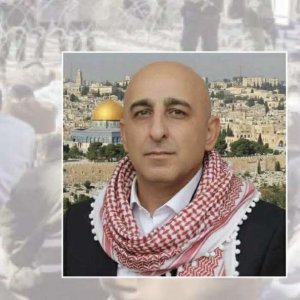
He is undeniably a living presence. Kamil Abu Haniesh is one of the most well-known Palestinian political prisoners in Israeli prisons and a leading member of the Popular Front for the Liberation of Palestine (PFLP). He was first arrested in the 1980s and has spent more than two decades in Israeli prisons, often in long uninterrupted periods. Israeli courts sentenced him to life imprisonment, later commuted to fixed-term sentences. He has also been held without charge or trial – a practice that has long been criticised by human rights organisations.
Abu Haniesh is not only known for having been imprisoned, but for what he did while there. He has been a central leadership figure among Palestinian prisoners, particularly on the left, and has participated in and organised collective hunger strikes for improved conditions, including the right to education, healthcare and family visits. He has also contributed to political education and organisation among the prisoners – what is often described as a “prison university”.
Rather than being regarded primarily as a “security prisoner”, Abu Haniesh has above all been seen as a prisoner of conscience. His case illustrates how political resistance is criminalised as “terrorism”, particularly when it is left-wing and secular. Internationally, he has been highlighted by Palestinian prisoner organisations, left-wing organisations and solidarity movements in Europe and Latin America. Abu Haniesh is also considered one of the most prominent writers among Palestinian prisoners. Despite his incarceration, he has published around twenty books and hundreds of articles.
His long imprisonment demonstrates how the prison system is used not only as punishment, but above all as a political tool of control. Today, thousands of Palestinians remain imprisoned in Israel – and Abu Haniesh has become a symbol of the struggle to which he has dedicated his life. Abu Haniesh was finally released from prison in October 2025 and deported to Egypt as part of an exchange agreement that freed nearly 2,000 Palestinian political prisoners.[Internationalen]
Here is his testimony:
“I was born on 26 September 1975 in the village of Beit Dajan in the Nablus district, in occupied Palestine. For a period of two and a half years, I was subjected to continuous persecution by the Israeli occupation forces and survived several assassination attempts. Between 1994 and 2000, I was active in student political work at universities, where I held several leadership roles. During this period, I completed a bachelor’s degree in economics.
I participated in the First Intifada, which began in 1987, when I was only twelve years old, and my involvement continued for six years. During my time in captivity, I took part in more than seven hunger strikes as part of the struggle for basic rights. After my release, I completed my academic studies and obtained a master’s degree in Israeli studies.
Palestinian prisoners in Israeli prisons have for a long time been subjected to systematic and serious abuses. Even today – and particularly since 7 October 2023 – Palestinian prisoners have been subjected to direct, repressive and inhumane measures by the Israeli Prison Service. These measures are implemented within the framework of an explicitly repressive and racist policy, driven by the far-right minister Itamar Ben-Gvir, and include collective punishment, policies of starvation, physical and psychological violence, and the deprivation of the most basic human rights. Prisoners are subjected to beatings, the spread of disease, humiliation and systematic violations of their human dignity.
Despite these conditions, Palestinian prisoners have, for more than 60 years and through a long and persistent struggle, managed to defend their humanity and to win important collective rights through hunger strikes and organised resistance. Among these achievements are the right to family visits, access to the prison canteen, daily outdoor exercise, books, newspapers, university-level education, radio and television, clothing, food and electrical appliances. Through their struggle, prisoners have also built a moral, national and human value system and created an organised prisoner society, known as the “prisoners’ movement”, which has continuously defended its rights against the recurring abuses of the prison authorities.
Since 7 October 2023, the Israeli Prison Service has implemented a brutal and systematic policy of revenge against the prisoners. All previous rights and gains have been withdrawn. Prisoners have been completely isolated from the outside world – without visits, without access to the canteen and without sufficient or appropriate food. Clothing, blankets and personal belongings have been confiscated, electrical appliances banned, and prisoners prevented from leaving their cells for daily exercise.
An organised policy of humiliation, repression and collective punishment has been imposed, including severe beatings, the use of tear gas, isolation, starvation, stress positions, arbitrary transfers and other forms of treatment akin to torture. These measures have led to the deaths of around one hundred prisoners, to the widespread spread of disease, and to extreme suffering. Prisoners are also enduring severe cold after their winter clothing and blankets were confiscated, as well as a lack of hot water for hygiene, in the midst of a harsh winter.
We call on all free people around the world to show solidarity with Palestinian prisoners in their struggle and to exert continuous international pressure to force the occupying power to put an end to its criminal and inhumane abuses. Palestinian prisoners are freedom fighters who defend their people’s legitimate right to freedom, self-determination and human dignity. We look forward to broad international support from our friends across the world – in solidarity with the prisoners, with the children of Gaza, and with the Palestinian people’s struggle for liberation against a colonial system whose brutality history has borne witness to.”
28 January 2026
Source: Internationalen.