
 Version imprimable
Against Fedorov’s ouster
This time, it was the dismissal of defence minister Mykhailo Fedorov that provoked anger. Appointed in January, the 35-year-old tech entrepreneur, who has been close to Zelensky since 2019, had reformed the supply of weapons, which had been opaque and conducive to corruption, and modernised defence through drones, advanced technology and data analysis, in order to thwart Russian plans and limit human losses. He had also launched limited-term contracts to allow rotation on the front. These measures made him very popular.
Ukrainians have therefore taken to the streets again to demand the return of Fedorov and the dismissal of the chief of staff, Oleksandr Syrskyi, a career soldier criticized for a strategy inherited from Soviet culture and unsuitable. For several months, voices in the army have been denouncing absurd decisions that have cost many lives. Statements by Fedorov and several generals suggest that the differences between the two men had forced Zelensky to make a decision.
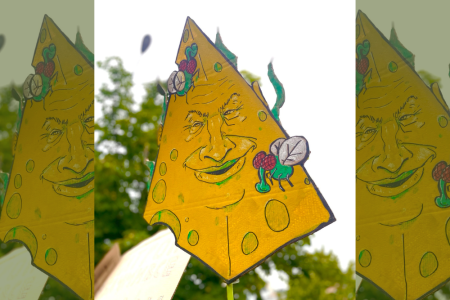
But in Ukraine, resistance to the invasion is everyone’s business and the population intends to influence decisions. The demonstrators make their placards with markers and scissors, comparing Syrskyi to a cheese — “syr” means “cheese” in Ukrainian. A giant flag runs through the square while groups chant the names of Fedorov or Drapatyi, a popular general.
Taras Bilous, a historian, member of the Social Movement and enlisted in the army, considers Fedorov better than his predecessors but denounces the “wave of idealization” and criticizes the new contracts of engagement: mobilized for four years, he could not benefit from them and their implementation is not progressing. But the main thing is elsewhere: “If Syrskyi were to be removed from his post, it would be for the best. This is in fact more important”. The street has once again achieved a victory, since on the evening of Tuesday, 21 July, Zelinsky announced the replacement of Syrskyi by Drapatyi.
Against the increase in the metro fare
Taras Bilous called for people to join, a few hundred meters away, the mobilization against the increase in public transport fares. About fifty people gathered in front of the town hall, whose façade bore a huge banner demanding the release of the defenders of Azovstal. Organized by Social Movement, the Ukrainian Socialist League and the Priama Diia student union, the rally, thanks to its media coverage, attracted passers-by outraged by the decree of Mayor Vitali Klitschko.
The metro ticket has just jumped from 8 to 30 hryvnias, or from 15 to 60 euro cents, while the majority of inhabitants earn less than 35,000 hryvnias per month and education and health workers often receive only half of that. Tania, a paediatrician and non-activist, joined the rally: for her, too many sacrifices are being asked of the population. Transport workers were also present and point out that this increase will not improve their working conditions.
For Vitaliy Dudin, a member of Social Movement, this decree adopted without consultation threatens social cohesion, the mobility of the population and municipal democracy: while more than 50 people were killed in the bombings in the first week of July alone, imposing an additional burden on the population is unacceptable.
Despite the bombs, the sacrifices and a war that drags on, Ukrainian society does not bend and “continues to fight against the external enemy and attacks from within”, says Svetlana, who returned to help in her native country after decades abroad.
23 July 2026
Translated by International Viewpoint from l’Anticapitaliste.