
 Version imprimable
We imagine virtually everyone was impressed by the mark that Alternativet [the Green Party], and perhaps especially the Red-Green Alliance, managed to make on the new government’s policy platform.
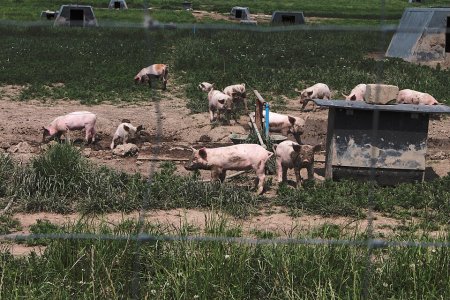
Impressed by scope of the commitments: I.e. the immediate, albeit temporary, halt to any expansion of conventional pig farming and the ceasing of tail docking and extreme breeding; the redistribution of agricultural subsidies; the investment of 4 billion DKK (over €133 million) into free dental care aiming for free dental care for everyone by 2035; making buses and trains across the country free for everyone up to the age of 22, and cutting VAT on food by half and removing VAT from fruit and vegetables entirely.
And also impressed by the number of positive fingerprints. There is simply a wealth of good intentions and a long row of more or less concrete promises in the government’s policy programme. Not just in the areas of agriculture and the environment, but across a long list of areas ranging from schools in remote areas and the victims of social security reforms to fairer conditions for trade unions.
Freedom to oppose
Almost more importantly, it was made clear that the Red-Green Alliance and the Alternative are entirely free to take a relentless stance against all the neoliberal, climate-destructive and right wing policies which, quite as expected, were also set out in the government’s programme. For example, the tax cuts for companies and shareholders and for those with the highest incomes; even accompanied by minor tax increases which disproportionately affect those with the very lowest incomes. The continued xenophobic immigration and integration policy, the absurd 5 per cent of GDP spent on military spending, the unchanged policy on Palestine, and so on.
Similarly, we are free to criticise the climate policy, which, on the whole, unfortunately remains catastrophically lax by ignoring the 2030 target and setting the 2035 target at a paltry 85 per cent reduction. The government’s platform only pays lip service to Denmark’s global consumption-based carbon footprint, which is an entirely different and far more embarrassing matter. The fact that not even the opening of new oil digging sites is being halted exposes the fact that Denmark’s climate hypocrisy continues.
Of course, the government’s policy platform will do nothing to address this problem. Because – despite the green rhetoric – we are dealing with a government whose primary objective is to stimulate endless capitalist growth, preferably based on cheap green energy in enormous quantities and by the rapid roll-out of AI –and with a declared openness to the introduction of nuclear power in Denmark.
The experiences of the Red-Green Alliance in relation to the government
If the Red Green Alliance did not have this freedom to simultaneously act as the left-wing opposition, it would, of course, be a political disaster to give political support for this government. But we do have that freedom, as Denmark has a negative parliamentarian system. That is why it was the right decision to let the Social Democratic-Reformist-Petite Bourgeoisie coalition come to power; to secure as many political commitments as possible from the situation rather than risk facing something worse.
Despite the clear centre-right majority in the Parliament, this government is not fundamentally different from governments for which RGL has previously provided parliamentary support. Take, for example, the Thorning government (2011-2015), where Margrethe Vestager certainly did not wield the rich’s baton any less than Lars Løkke does now. There we learnt – the hard way – that it was important to be in clear opposition. We were on the barricades in tough battles against the government, including in the teachers’ labour dispute and against the privatisation of the electricity company. We also learnt that we might need to be more willing to bring down such a government in situations where there was a shift to the left amongst the population.
Between 2019 and 2022, we sought to draw on the lessons learnt from the Thorning era to set limits on the bourgeois tendencies of the Social Democratic government by means of an internal so-called ‘memorandum of understanding’. That period was unusual due to the coronavirus pandemic. But we must at least acknowledge that, even though the Red-Green Alliance, armed with this document, secured a number of concessions – whilst formally remaining just as independent as we are now – the party came across too much as a supporting party rather than an opposition party. This applied, for example, to the series of climate agreements which, despite many fine words, formed the framework for the ‘hockey stick model’ and the Danish climate hypocrisy with which we are still living.
Has the Red-Green Alliance succeeded?
The RGA negotiating group has been open about the fact that it is not our policy, but that of the government and the centre-right parliamentary majority, which is reflected, for example, in the government’s policy on Palestine, in its immigration policy with the plans of opening asylum-processing facilities in Rwanda, in the anti-social tax cuts, and so on.
However, in the external communications from the Red-Green Alliance, it must be said that there has been room for enthusiasm – to such an extent that one could say we have oversold our influence and left an overly positive impression of the government’s platform as a whole. For example, it does not provide an accurate description of the new government when Pelle Dragsted (spokesperson for the RGA) apparently presents it at a meeting of the European left as a major step forward for the ‘Tax the Rich’ movement.
There is absolutely no reason to believe that all the positive promises in the government’s policy programme will be fulfilled automatically. Many of them are vague and/or unfunded. It is rather worrying that many of the specific objectives are explicitly not to be achieved within this term of office – not even in the form of clear interim targets.
Even in the most promising area, animal welfare, the deadline for phasing in compliance with the statutory ban on tail docking has been set for 2030, which is after the next election, and the deadline for ending extreme breeding practices has been set for 2035.
The VAT reductions are already being postponed until 2030. The reforms to social security benefits, etc., will reportedly require a great deal of ‘back-and-forth’ before they are implemented. We must be prepared to exert massive pressure on the government, or many of the long-term promises will remain shelved in committees up until the next general election, where they then risk being scrapped altogether.
We also run the risk that the government will attempt to link the fulfilment of its promises to the Red-Green Alliance with ‘funding’ measures that miss the social mark entirely. Løkke, minister of finance from a right-wing party, has, after all, made it a condition that the rich should not have to pay, but rather be pampered.
So there may only be room for enthusiasm – and there will certainly be a great need for movements that fight fiercely for their cause, with this government as their expected opponent.
There’s nothing wrong with enthusiastically celebrating these fine promises! It’s fine to highlight them – to promote them as realistic goals in the class struggle. For example, the promises of free dental care and a complete overhaul of agriculture. The enthusiasm these promises arouse is an excellent springboard for waging a struggle to have these demands met. It will by no means be easy for the government to shove these hopes back into the coffin – and we must make the most of that momentum.
But statements such as ‘The Red-Green Alliance has now delivered on its election promises’ is misleading and creates false hopes. And if we phrase things as though this is something Pelle and the others have already sorted out or will sort out in the Parliament (provided we just remember to vote for them or donate €1,5 a month) – then we are sending out completely wrong signals. For the Red-Green Alliance’s most important task is not to maximise the number of votes, but to organise and mobilise people. Not make people pin their hopes on politicians, but to become active themselves in pursuit of their own interests and views.
From enthusiasm to action
That is why enthusiasm must be used as a driving force for action.
The green movement – which bears the main responsibility for ensuring that pigs and drinking water were included reasonably well in the government’s policy platform – must be strengthened by us all to become even stronger, whilst we see the requirements through to the end. Otherwise, it could well end up with Løkke and the agricultural lobbyists undoing most of the ‘achievements’. That is why we must not give the impression that this matter has already been settled.
There will probably also be grounds for a social movement – or at least protests – rejecting tax cuts for the rich and tax increases for the poorest – as a precursor to VAT reductions that might lead to falling prices, but only in a year or two or even four.
We must use the enthusiasm generated by the many incentives in the government’s policy platform to mobilise support for the fight to make them a reality. Right now, the focus is on the fact that we on the left – not the far-right – are the ones actually trying to improve the livelihoods of those who are struggling financially. That is why people will listen if we call for action on this issue.
And of course, we won’t stop there! When VAT falls but prices do not fall to the same extent – that presents an obvious opportunity to demand price controls – and perhaps even to organise them ourselves. Danish retail prices have long been the highest in Europe and profit margins in the grocery sector are high.
Similarly, a victory over the pig farmers will be a victory for the entire green movement – which can strengthen the green struggle in general. It is a movement that can and will set a completely different (and urgently needed) growth and climate agenda than that of the government. An agenda that challenges the profit-driven approach which is currently driving the world towards the abyss.
And the struggle for Palestine continues! Now, as before, with the Red-Green Alliance – but unfortunately not the government – on the right side of the barricade.
Victories and mass mobilisations can be a ‘grinding mill of the class struggle’, which we’d love to set in motion, and through that sidelining the far-right completely. And when it becomes necessary and possible to topple the government, the way will be paved for something truly red and green.
A potential horror story
So much for that optimistic, enthusiastic and hopeful vision of the future. Unfortunately, things could also turn out quite differently: If the Red-Green Alliance becomes so fixated on having to rely only on negotiations in the Parliament that – in order to ‘deliver on our promises’ – we vote for one dubious ‘package’ after another, we will end up merely chasing our own tails.
If we allow ourselves to be pressured into voting for austerity budgets because there are signs of an economic downturn, and Løkke demands that rich and poor alike should share the burden.
And if the Red-Green Alliance wants to ‘save’ the government at any cost – because we’re hoping that in 5 or 10 years’ time it will fulfil the promises made to us in its government programme.
Well, then enthusiasm won’t last long. Frustration and anger will spread and, quite rightly, be directed towards the government. But also at its (in this nightmare scenario) ‘loyal supporting party’, the Red-Green Alliance. In that situation, we’ll quickly be seen as, and become, part of ‘the system’, ‘the Copenhagen elite’, who make the little people pay whilst the rich get by just fine.
In that situation, however, there are other forces that are only too happy to step in as the opposition. Other forces that will give voice to the justified anger – in their own way. So it may well be the xenophobic and/or neoliberal far-right that, riding on the back of the people’s anger, take over Government after the next election. And then there probably won’t be many of those 5- to 10-year promises that hold true. Neither for pigs nor for people.
21 August 2026