
 Version imprimable
The closure of the Strait of Hormuz, the maritime blockade and sanctions imposed by the United States, galloping inflation, poverty and the worsening economic crisis have brought Iranian society to the brink of social explosion. The deterioration of living conditions is accompanied by the militarization of the regime, an increase in executions and the intensification of repression.
Government strengthens security apparatus
This is evidenced by the bill presented to the Iranian parliament on 16 August, relating to “the infiltration of foreign intelligence services and agencies”. Three days later, nine senior officials from the judiciary, the Prison Organization, the General Inspectorate of the country, the security organs, the Guardians of the Revolution and the Basij were dismissed and replaced. This so-called “reform” is above all intended to strengthen the regime’s repressive capacity in the face of future upheavals.
The Supreme Leader, Ayatollah Mojtaba Khamenei, replaced the secretary of the Supreme National Security Council (SNSC) with Mohsen Rezaï, a former senior commander of the Islamic Revolutionary Guard Corps (IRGC) during the Iran-Iraq war. This sudden change places the latter at the heart of the national security decision-making process. The appointment of Hossein Taeb as head of the Basij is another example. Taeb, the former intelligence chief of the Revolutionary Guards, is a major figure in Iran’s security apparatus, associated in particular with the repression of popular uprisings and opponents.
An economy in tatters
Washington is further tightening the maritime blockade and sanctions. On 20 August, the United States announced new measures threatening any country that helped Iran circumvent them or maintained trade relations with it. If they were effectively implemented, the economic and social situation would become even more critical for the vast majority of the population.
Immediate consequences: a new collapse of the national currency and a new surge in prices. The blockade of the Strait of Hormuz is severely affecting imports. For example, India’s exports of medicines to Iran have declined. In August 2026, an Iranian pharmaceutical company announced an average price increase of 117% of 82 medicines, with some molecules increasing by several hundred %. Thus, between September 2025 and September 2026, the price of amoxicillin increased by 284%, that of ibuprofen by 110%.
In addition, there is a significant shortage of gasoline, which is pushing the regime to reduce subsidies and limit consumption. This situation illustrates the growing difficulties in the production, import and distribution of fuels.
The concern of the Iranian leaders
The Speaker of Parliament, Mohammad-Bagher Ghalibaf, declared on 21 August: “We can have all the military power we want, but without financial circulation, economic growth and national production, we will not be able to stand up to a starving people.”
President Masud Pezeshkian also speaks of a real economic, military and security war. He acknowledges the fall in imports and exports as well as the financial restrictions on aid to the population, the payment of salaries and social benefits. He also declared that "it would be better to end the war today”, implicitly questioning the leadership of the Guardians of the Revolution, who play a central role in defining the regime’s strategic orientations. In response, currents close to the Revolutionary Guards and their media accuse critics of the current policy of being "lackeys of Trump and Netanyahu”.
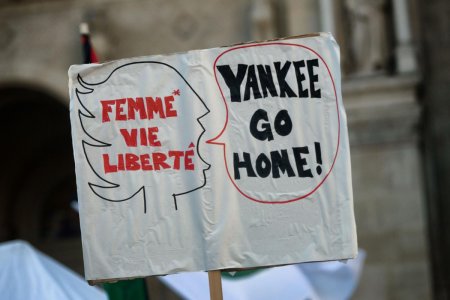
A few days before the fourth anniversary of the death of Jina Mahsa Amini and the “Woman, Life, Freedom” uprising, the government particularly fears a new mobilization of workers, women, youth and national minorities. Caught between the violence of US imperialism and that of the reactionary dictatorship, the peoples of Iran are fighting for their survival, dignity and freedom. They need our anti-imperialist solidarity.
9 September 2026
Translated by International Viewpoint from l’Anticapitaliste.