International Viewpoint, the monthly English-language magazine of the Fourth International, is a window to radical alternatives world-wide, carrying reports, analysis and debates from all corners of the globe. Correspondents in over 50 countries report on popular struggles, and the debates that are shaping the left of tomorrow.
Bolivia has been experiencing a powerful social movement against President Rodrigo Paz’s austerity measures since the spring of 2026. Led by trade union, peasant and indigenous organizations, the mobilization is facing growing repression while maintaining its demands against the high cost of living and the grip of multinationals.
read article...
New York Mayor Zohran Mamdani, 34, a member of the Democratic Socialists of America who took office on January 1, 2026, has already advanced his agenda and become a political king-maker. Mamdani ran promising universal childcare, lowering rents, and making buses free. He hasn’t achieved all, but he is well on his way. At the same time, he was able to dominate the recent elections in New York City.
read article...
“Socialists will need to adapt our campaigns and demands to relate to the new political issues and debates that are emerging. We still need to build our eco-socialist alternative independent of the Labour Party and the Greens.”
read article...
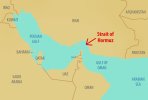
Strait of Hormuz: Nice oil shipping lane there. A real pity if something would happen to it…
read article...
“It is a matter of basic social justice that those who have more should pay more in taxes and that workers receive higher and better wages, pensions, and working conditions. In the last year, Mexico’s 24 wealthiest individuals earned US$100 billion, an astronomical figure that contrasts sharply with the stagnation of real wages.”
read article...Both inside and outside Taiwan, the research on Taiwan’s democratization has been overwhelmingly dominated by Western liberal discourses. In the mainstream liberal view, to the extent that the “most powerful collective decision makers are selected through fair, honest, and periodic elections in which candidates freely compete for votes and in which virtually all the adult population is eligible to vote” (Huntington, 1991: 7), Taiwan was no doubt democratic by 1996, a year marked by the first direct election for president (see e.g., Rigger, 1999).
The fast-reviving South African left is urgently coming to grips with the most acute national crises of structure and agency the country has experienced since the historic freeing of Nelson Mandela in February 1990 and the shift of the entire body politic in favor of the African National Congress (ANC) and the South African Communist Party (SACP). At that time, the ANC soon took control of the country’s progressive forces, winning mass social hegemony, vanquishing other liberation tendencies (Pan-Africanism and Black Consciousness), and dissolving the anti-apartheid United Democratic Front (UDF) that civil society activists founded a decade earlier. It then negotiated the first democratic election, which it won handily in April 1994 under Nelson Mandela’s leadership. Afrikaner state managers and corporate titans, as well as multilateral agencies and other forces of imperialism, demanded from the ANC an elite transition that opened both the macro- and microeconomies. Property rights were granted maximum protection, even though whites had acquired the bulk of those through what is widely termed a crime against humanity: apartheid.
When I first started writing this series of remarks in Italian (“Riflessioni degeneri”), subsequently collected into a single piece for the English version Remarks on Gender, my aim was twofold. The first was to make a complex debate – one that has unfolded over the course of several decades – accessible to a public of activists and people interested in gender, race, and class politics. The second was to contribute toward reopening this crucial debate about how we should conceptualize the structural relationship between gender oppression and capitalism.
Feminist theorists today are increasingly returning to the insight that capitalism must constitute the critical frame for understanding contemporary forms of gender oppression. Investigating the relationship between feminism and capitalism raises a host of difficult questions, however, which Cinzia Arruzza faces head on in her lucid essay Remarks on Gender. She gives an illuminative roadmap of the terrain in which this issue was debated in the 1970s and 1980s by laying out three different theses on how capitalism and gender oppression are related: dual or triple systems theory, indifferent capitalism, and the unitary thesis. She begins by assessing carefully the problems of the first two positions and concludes by defending the third, the unitary thesis: in capitalist societies, a patriarchal system that would be autonomous and distinct from capitalism no longer exists. Instead of treating gender and sexual oppression as separate forms of domination, a unitary Marxist-feminist theory must incorporate them in the total framework of capitalist accumulation.
In order to detrermine its position for the 2027 presidential elections, the NPA-l’Anticapitaliste held a national conference on 27 and 28 June 2026. This conference brought together delegates representing the activists of the NPA-l’Anticapitaliste, who had debated and voted in the general assemblies held throughout June.
- read article...MIHANDS has always been fueled by people, not deep pockets. Because we lack the massive financial reserves and pre-staged stockpiles of larger international agencies, our response standard operating procedure is a race against time to mobilize—gathering our volunteer network, fundraising, and sourcing materials from scratch whenever a crisis hits.
- read article...The Confederation of Free Trade Unions of Ukraine (KVPU) has announced the creation of a new organisation: the All-Ukrainian Union of Combatants, Military Personnel and Veterans.
- read article...Statement by Democracia Socialista (Socialist Democracy) Fourth International section in.Puerto Rico)
- read article...From 18 to 25 July 2026, the Movement for Socialism (BfS/MPS) of Switzerland, in collaboration with the Internationale Sozialistische Organisation (ISO) in Germany, is organising the 41st summer camp of the Fourth International.
- read article...International Viewpoint is published under the responsibility of the Bureau of the Fourth International. Signed articles do not necessarily reflect editorial policy. Articles can be reprinted with acknowledgement, and a live link if possible.
We need your help to get our message across! Send donations payable to International Viewpoint 10b Windsor Rd N7 6JG, Britain - or why not donate online:
Site Map
| Log in |
Contact |
RSS 2.0