
 Version imprimable
Every 19 July, the same debate returns. The Ortega-Murillo dictatorship insists on presenting itself as heir to the Sandinista Popular Revolution. At the same time, part of the opposition accepts that narrative and ends up reinforcing it by asserting that the current regime is nothing more than the logical consequence of the 1979 revolution.
Both versions are profoundly mistaken.
The dictatorship that oppresses Nicaragua today was not born of the Revolution. It was born of the progressive concentration of power, the abandonment of democratic principles, and the ethical degradation of a section of the leadership that ended up betraying the ideals it claimed to represent. The Revolution did not engender this dictatorship. It was engendered by the seven deadly sins of politics.
Memory too can be hijacked.
The insurrection that culminated on 19 July 1979 was not the exclusive work of a vanguard, still less of a small group of leaders. It was a national rebellion against a regime that had exhausted all legitimacy. Peasants, students, workers, business people, people of faith, intellectuals and citizens with no political affiliation all took part. Thousands of young people even gave their lives to make it possible. As with great historical events, the Revolution became possible only once it had become inevitable.
Reducing that feat to the figure of Daniel Ortega is one of the greatest falsifications of Nicaragua’s recent history. One need only look at who actually led the Revolution and where they are today. Many of its historic leaders broke with Ortega long before April 2018. They were persecuted, imprisoned, stripped of their nationality, or forced into exile. Others died in prison under persecution by the very regime that now claims to appropriate their legacy.
Rosario Murillo understood years ago that memory, too, is a space of power. That is why she systematically displaced the historic protagonists and built a political apparatus made up, in many cases, of people who never took part in the struggle against Somoza [1] — including some former collaborators of the overthrown regime. The irony is devastating: those who fought one dictatorship ended up persecuted by another that speaks in their name.
Revolutions can defeat a dictatorship without yet having built a democracy.
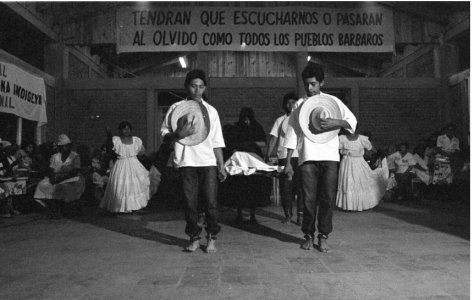
The 1979 Revolution grew out of a broad national consensus and extraordinary popular participation, expressed in the National Literacy Crusade [2], community health programmes, agrarian reform, and an exceptional flourishing of culture, education, music and poetry. It also sowed a far more active citizenry, which after the 1990 electoral defeat would find new expressions in feminist, environmental, municipalist and citizens’ rights movements.
None of this means turning the Revolution into a perfect process. That would be as false as the official narrative. Every revolution has its light and shadow. So does Nicaragua’s.
Its history cannot be analysed while ignoring the war promoted by the Reagan administration, the armed aggression of the counter-revolution [3], or the enormous tensions the new government faced. But nor can its own errors be concealed: human rights violations, repression against Indigenous and peasant communities, restrictions on public freedoms and, above all, the growing concentration of power in a small group of commanders. It was perhaps there that one of the most important lessons history left unresolved began to take shape.
Responsibility, however, does not end there either.
After the 1990 electoral defeat, Nicaragua had the opportunity to build a solid republican democracy. But economic policies that deepened inequality, the failure to heal the wounds of war, and the absence of genuine national reconciliation fed the resurgence of caudillismo [4] under the populist figures of Arnoldo Alemán and Daniel Ortega. At the same time, credit must be given to the democratic commitment of governments such as those of Violeta Barrios de Chamorro and Enrique Bolaños [5], who never imprisoned or persecuted their adversaries for political reasons.
History shows that authoritarian populisms, whether of the right or the left, thrive when democracies fail to respond to the population’s needs. It was on that fertile ground that Ortega reappeared. And once that process was under way, too many actors chose to accommodate themselves to it.
Sixteen years later he returned to the presidency. But the regime he built no longer represented the continuity of a revolution; it represented the triumph of the true sins that made the new dictatorship possible: caudillismo, corruption, the arrogance of absolute power, the greed to perpetuate oneself in government, the cult of personality, lying turned into state policy, and impunity as a system.
None of these ills was born in 1979. They grew over decades until they produced the regime that oppresses Nicaragua today.
Liberals, Social Christian sectors, conservatives and Contras struck pacts. Big capital prioritised the stability of its business interests. Important sectors of the religious hierarchies legitimised the new strongman. International bodies played down the signs of institutional deterioration, and part of the international community even went so far as to present the Nicaraguan model as an example of governability.
Meanwhile, Ortega dismantled democratic guarantees one by one, captured the electoral system, subordinated the other branches of the state, and prepared the establishment of a family regime [6].
This is why it is intellectually insufficient to claim that the current dictatorship is simply a consequence of the Revolution.
No.
It is also a consequence of the pact with Arnoldo Alemán [7]; of institutionalised fraud; of business silence; of religious complicity; of international indifference; of the errors of democratic Sandinismo itself; and of the collective failure to defend republican institutions in time.
Acknowledging that shared responsibility does not diminish the responsibility of orteguismo. It explains it. It allows us to understand how a society can lose its freedoms gradually, until one day it discovers that almost all of them have disappeared.
The April 2018 Rebellion showed, however, that democratic memory was still alive. Barricades, marches, territorial organising and even old slogans reappeared as the expression of a citizenry that once again said enough [8]. It involved young people who had not been born in 1979, alongside former Sandinistas who once again confronted another dictatorship. The struggle ceased to belong to an ideology and returned to belonging to the nation.
That may be the greatest lesson of our recent history.
Dictatorships do not always erupt through a coup d’état. Many are built slowly: they concentrate power, destroy institutional checks and balances, normalise corruption, and feed on complicity and silence. That is an uncomfortable truth, but an indispensable one if we want to offer the new generations an honest account of our history.
The 1979 Revolution may be remembered, as Ernesto Cardenal [9] put it, as a lost revolution. Others consider it a betrayed revolution. Perhaps both claims contain part of the truth. What history cannot accept is that the Ortega-Murillo dictatorship be presented as its inevitable outcome.
Revolutions do not inevitably produce dictatorships. What produces them is the absence of limits on power; the abdication by institutions of their role; fear turned into a form of government; and the decision of too many people to accommodate themselves rather than resist.
That was the true seed of orteguismo.
The lesson for new generations is not to renounce the ideals of social justice and freedom that mobilised thousands of Nicaraguans in 1979. It is to understand that no cause, however noble, justifies the concentration of power in a single man or a single family.
Because democracy rarely disappears overnight. It is lost slowly, every time a society tolerates someone placing themselves above the law.
And it is also recovered slowly, when a people decides that fear will no longer govern its destiny.
In exile, July 2026.
17 July 2026
Translated and annotated by Adam Novak for ESSF from Confidencial Digital.