
 Version imprimable
In such a scenario, an escalation of fighting and the re-emergence of attempts at massacres targeting civilians–similar to those previously witnessed along the coast and in Suwayda–cannot be ruled out. In the face of this possibility, which must not be underestimated, it is an unavoidable duty to engage in active solidarity with the Kurdish people, to demand an end to the operations carried out by forces affiliated with Damascus, and to stand firmly alongside the Kurds’ democratic national demands.
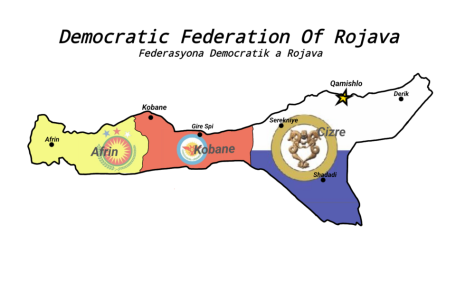
These developments, which radically transform the military and political balance of power in the country and effectively bring the Autonomous Administration of North and East Syria to an end, clearly amount to a serious defeat for the SDF. The SDF no longer enjoys the advantages that once derived, in negotiations with Damascus, from controlling roughly one third of the country’s territory. It is evident that the Sharaa administration, backed by the United States, will seek to establish a centralized system of governance, pushing the Kurds–at best–into the position of a minority granted certain cultural rights on an individual basis. The presidential decree issued on 17 January, which recognizes some aspects of Kurdish identity rights, makes clear that the Kurdish question in Syria is not being approached as an issue of self-government or self-determination, but rather as a minority rights problem. However, it should not be overlooked that the Sharaa administration–one that can hardly be said to embrace cultural and political pluralism as a guiding principle–has in practice contributed to the emergence of an aggressive, anti-Kurdish racist climate in the country, one that could very well lay the groundwork for a comprehensive assault on the Kurdish population.
Bourgeois Geostrategy and Revolutionary Politics
The defeat experienced here does not signify the end of Kurdish national demands, but rather the end of the Rojava experience–or, more precisely, of the experiment of the Autonomous Administration of North and East Syria. That an autonomous region once promoted as an alternative model for all of Syria should be effectively dismantled within a matter of days has sparked–and will rightly continue to spark–intense debate, both in Syria and across the region, regarding the geopolitical transformations such an outcome may trigger, as well as the extent to which regional and international powers shaped this result. The roles played by Turkey and the United States in facilitating Sharaa’s military operations, Israel’s pursuit of accommodation with the Sharaa administration that rendered this offensive possible, and the implications of these developments in northeastern Syria for other parts of the country–such as Suwayda–are all critical points of discussion.
Yet to leave the debate at this level–that is, to consign the defeat in Rojava to the exclusive domain of regional studies specialists, international relations experts, and military analysts–would be a grave mistake. Reducing the political and social developments of the region commonly referred to as the “Middle East,” a term coined by the British Foreign Office, to questions of geopolitics and geostrategy is a widespread and dangerous error. To interpret every development in the region as nothing more than a chessboard on which great powers and regional actors measure their respective power and interests is, from the outset, to exclude an entire geography from the field of radical or revolutionary politics.
In her article entitled “Social Democracy and The National Struggles in Turkey” published in 1896, Rosa Luxemburg pointed precisely to this problem:
In the party press, we all too often encounter the attempt to represent the events in Turkey (that is, in the Ottoman Empire – ed.) as a pure product of the play of diplomatic intrigue (…). What is above all striking about this position is that it is in no way fundamentally different from the bourgeois standpoint. In both cases, we have the reduction of great social phenomena to various ‘agents’, that is, to the deliberate actions of the diplomatic offices. On the part of bourgeois politicians, such points of view are, of course, not surprising: these people actually make history in this sphere, and hence the thinnest thread of a diplomatic intrigue has great practical importance for the position they take with regard to short-term interests. But for Social Democracy, which at the present time merely elucidates events in the international sphere, and which is above all concerned to trace back the phenomena of public life to deeper-lying material causes, the same policy appears to be completely futile. On the contrary, in foreign policy as in domestic politics, Social Democracy can adopt its own position, which in both spheres must be determined by the same standpoints, namely by the internal social conditions of the phenomenon in question, and by our general principles. [1]
From this standpoint, it is essential, when considering developments in Syria, not to limit ourselves to purely geopolitical debates but also to draw political lessons from this sudden transformation. For Rojava has been one of the most important experiences of this century for the international left. Like every major emancipatory movement, this experience must be assessed primarily on the basis of its concrete political and social practice. That, under the extremely harsh conditions of the Syrian civil war, an attempt was made–by reference to the idea of democratic confederalism–to establish a communalist, self-governing, and gender-egalitarian order, and that this experiment is now facing a serious retreat, constitutes a challenge that the radical and revolutionary left must confront.
Imperialism and resistance
The initial reaction of the international left to developments in Rojava was outrage at what was perceived as the United States’ betrayal of the Kurds. Rightly regarded as yet another example of imperialist hypocrisy, this development was often accompanied by a highly didactic, “we told you so” critique, asserting that the Kurdish movement should never have relied on U.S. support in the first place. Tariq Ali’s tweet, “Since 2001, some of us have pleaded with Kurdish leaders not to fall into the illusion that by collaborating with the United States they would be serving their own interests,”is a typical expression of this approach.
Whatever justified elements such a critique may contain, when advanced on its own and when it disregards the concrete conflicts and contradictions confronting the Kurdish movement, it risks reproducing the arguments of Turkish, Arab, and Persian nationalisms, which have long claimed that Kurdish national aspirations have, from past to present, almost always been nothing more than an instrument of imperialism.
Yet to question–in the name of an anti-imperialist political correctness–the fact that, a decade ago, the Kurdish movement, engaged in a life-and-death struggle against ISIS, received support and assistance from the United States, or even to present this support as the cause of today’s retreat, is akin to questioning the British support received by Yugoslav and Greek partisans in their resistance against the Nazis. At that time, the Kurdish movement was compelled, to borrow a metaphor used by Lenin in another context, to reach a compromise with imperialist “bandits” in order to “save its skin.” [2]
However, the struggle against ISIS and the Kurdish movement’s incorporation into the international anti-ISIS coalition produced, under the conditions of the Syrian civil war, a highly fragile and sui generis new geostrategic reality. U.S. support enabled the Kurdish movement–that is, the YPG/YPJ forces–to gain control over a vast territory far beyond the areas inhabited by Kurds. This represented a major opportunity for the movement, but it also brought with it enormous problems. The Kurdish movement found itself confronted with what is known as “overstretching,” that is, an expansion beyond its political and military capacities.
The way to mitigate, as far as possible, the pathologies created by the fact of de facto controlling nearly one third of the country with a limited social base lay in broadening the movement’s social foundations. This could only be achieved if the program implemented in these newly acquired territories found a concrete resonance among the local population, if it succeeded in mobilizing at least part of that population and binding it to the new order.
From Mobilization to Diplomacy
The creation of the Autonomous Administration of North and East Syria and the Syrian Democratic Forces was meant to respond precisely to this need: winning over the Arab population living in the territories liberated from ISIS. The claim was that the system of “democratic confederalism,” shaped through institutions of “democratic autonomy,” would constitute, across this vast geography in which Kurds are a minority, an alternative form of governance capable of serving as a model for the entire country. However, for this claim to become reality–and thus for the active consent of the Arab majority in these territories to be secured–this model would have needed to produce tangible transformations in the daily lives of the population, generate concrete gains, and offer a future horizon worth struggling for.
The rapid disintegration witnessed in the Arab-inhabited areas of the Autonomous Administration of North and East Syria, and the hasty retreat of SDF forces, compelled to withdraw abruptly in the face of what amounted to an uprising by the Arab population in the territories they controlled, demonstrate that this was not the case. They show that the autonomous administration lacked real foundations in Arab regions. This situation is often attributed to the shifting allegiances of Arab tribes in the region, but this explanation requires closer examination. Essentialist “explanations” that present Arab tribes’ sympathy for the Sharaa administration as a “natural” and immutable demographic fact rooted simply in their Arab identity, or that claim these communities are structurally incapable of sympathizing with political orientations such as democratic autonomy–supposedly specific to the revolutionary left–are merely manifestations of a new orientalist approach that reduces regional politics to an endless struggle among sects, clans, and tribes.
All of these debates about tribes constitute an indirect indicator of the extent to which the SDF prioritized compromises with tribal leaderships over political and economic measures aimed at empowering workers and the oppressed in the region and mobilizing them within the framework of democratic confederalism. The strategy of governing local Arab communities through agreements with tribal leaders and by granting them positions collapsed as soon as the balance of power shifted. Joseph Daher summarized this situation in a recent article as follows:
Instead of developing strategies capable of winning the consent of Arab working classes in the areas under their control, the SDF leadership opted to cooperate with tribal leaders in order to govern the local population. Yet these tribal leaders are known for shifting their allegiance according to the most powerful political actors of the moment and for prioritizing their own material interests. As power relations increasingly shifted in favor of Damascus, tribal leaders positioned themselves accordingly.[[Joseph Daher, “Should Kurdish freedoms be sacrificed for Syria’s centralisation?”].]
Because the SDF was unable to broaden its social base, its capacity to govern large parts of Syria became increasingly dependent on the diplomatic and military support provided by the United States. In order to ensure the survival of the autonomous administration, a political approach that prioritized diplomacy over social mobilization came to dominate. The consequences of this pragmatic relationship of dependence are now plain to see. With the shift in U.S. policy on Syria, it quickly became evident how fragile the foundations of the Autonomous Administration of North and East Syria were. At this point, however, what must be discussed is not abstract moral conclusions about the inevitable problems of dependency created by the support of one imperialist power or another. We already know that imperialist powers cannot be the friends of any people or any liberation struggle.
The crucial issue lies in the conditions that led to the deepening of this relationship of dependence. ISIS attacks, the deepening of ethnic and sectarian fault lines by the civil war, and especially Turkey’s hostile stance were factors that had already significantly narrowed the SDF’s room for maneuver over the past decade. Under these conditions, the sustainability of this atypical situation of territorial dual power that emerged from the struggle against ISIS could only have been possible through local organs of power rooted in popular demands, capable of mobilizing the population–or at least a significant part of it. Despite the Autonomous Administration of North and East Syria’s claims to the contrary, it is possible to say that it failed to achieve this in Arab-majority areas and was unable to render effective the institutions of democratic autonomy that might have expanded its social base. The retreat and disintegration now underway, which must be understood not only as military events but also as social phenomena, stem from this political weakness.
A Practical Internationalism
In the age of multipolar imperialism, we will clearly encounter ever more frequent examples of major social struggles, uprisings, and revolutionary initiatives being instrumentalized, “hijacked,” or betrayed by international and regional powers. Drawing the correct lessons from the Rojava experience is therefore essential. If internationalism is to cease being an abstract moral stance and acquire a practical character, we must confront the complex problems that Rojava has brought to the fore. Standing up to the pressure created by imperialist powers’ attempts to distort, appropriate, and absorb liberation struggles will not be possible by retreating behind abstract principles, but only through the construction of practices, organs, and institutions capable of enabling and sustaining social and political mobilization from below.
Debating the lessons of the experience of the Autonomous Administration of North and East Syria should not take precedence over our duty of solidarity; on the contrary, it should complement it. Today, solidarity with the Kurds of Syria who are under siege is not merely a moral duty, but a political necessity: as long as the Kurds – a people fragmented and subordinated following the imperialist partition after the First World War – are unable to exercise their right to self-determination and to secure their democratic national rights, the emergence of a progressive alternative in the region will remain an illusion. It is precisely for this reason that we need a practical internationalism that sees the Kurds’ struggle against this multidimensional oppression as inseparable from the resistance against Zionism in Palestine and from the uprising against the regime in Iran, and that understands all of these struggles as different–if contradictory–moments and stations of the same fight.
26 January 2026
Translated from Turkish by the Imdat Freni (Emergency Brake) Translation Collective.