International Viewpoint, the monthly English-language magazine of the Fourth International, is a window to radical alternatives world-wide, carrying reports, analysis and debates from all corners of the globe. Correspondents in over 50 countries report on popular struggles, and the debates that are shaping the left of tomorrow.
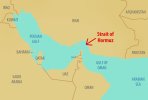
As the U.S.-Israeli war on Iran goes into its third week, the people of the United States are still figuring out what they think about the conflict. Since the war began, most polls show a majority of Americans disapprove of the war, something unseen in modern American history. A majority of Americans approved of World War II, the Korean War, and initially of the Vietnam War. After the terrorist attacks of September 11, 2000—the American government, anxious for revenge—was backed by huge majorities when it made war on Afghanistan in 2001. When in 2003 the George W. Bush administration wanted to make war on Iraq, it fabricated false evidence that Saddam Hussein had nuclear and biological weapons of mass destruction, and, bamboozled by Bush, nearly three-quarters of the American people supported the war.
read article...
The first round of the French local elections will take place on Sunday 15 March, the second on 22 March. There is a real possibility that the “traditional” right, which is increasingly radicalizing in a far right direction, will win in Paris, under Socialist Party government since 1995, and that the Rassemblement National could win in France’s second, and very multi-racial, city, Marseilles.
read article...
“This landmark ruling highlights the links between institutional politics, militias and economic interests in Rio de Janeiro.”
read article...
The upcoming mass No Kings! demonstrations planned for March 28 and ambitious plans for May Day mobilizations point to the growing convergence of anti-Trump forces. This convergence takes place against the backdrop of Trumps’ destructive assault on democratic rights in the US and the sovereignty of nations abroad, most recently his reckless aerial attack on Iran, and plummeting approval ratings in the polls.
read article...
“"Either their profits or our lives": the slogan is everywhere.”
read article...Feminist philosopher, political economist, and activist Silvia Federici on the transformation reproductive labor has experienced over the last 40 years, and in particular, with the post-2009 austerity. Originally published in Italian in Francesca Coin (ed.), Salari rubati. Economia politica e conflitto ai tempi del lavoro gratuito, Verona: Ombre Corte, 2017, pp. 99-106.
The "debt system" is gathering steam In Asia, Africa, Latin America and the Caribbean, just as in the highly industrialized countries, after going through several fundamental changes over the past 40 years. Mainly since the outbreak of the Third World debt crisis in the early 1980s.
Throughout human history, private debt has been used by the dominant classes to subjugate, despoil, expropriate, and dispossess the toiling classes (among whom women have always been the hardest-hit victims): small farmers, artisans, fishers, and on up to the salaried workers of today and the members of their households (students, who go into debt to pursue their education). [1] The process is simple: the lender requires that borrowers pledge their possessions as collateral. This can be, for example, the land held and cultivated by the farmer, or in the case of an artisan, the tools of his or her trade. Repayment of the loan must be made in cash or in kind. Since the interest rates are high, to repay the loan the borrower must transfer a large share of the fruits of his or her labour to the lender, and so becomes impoverished. If the borrower defaults on repayment, the borrower is dispossessed of the pledged collateral. In some societies, that can mean a loss of freedom for the debtor and/or the members of his or her family. This is called debt slavery. Under the laws of the United States and certain European countries, failure to repay a debt was punishable by physical mutilation until the early 19th century. And still today, in Europe and elsewhere, non-repayment of debts may be punishable by imprisonment.
Throughout human history, private debt has been used by the dominant classes to subjugate, despoil, expropriate, and dispossess the toiling classes (among whom women have always been the hardest-hit victims): small farmers, artisans, fishers, and on up to the salaried workers of today and the members of their households (students, who go into debt to pursue their education)
The first round of the local elections took place against a backdrop of widespread creeping fascism in France and comes after a brutal offensive by the far right, during which the traditional ‘Republican’ right has decisively broken from much of its historical framework and values.
- read article...The majority of the party votes to maintain its autonomy and a commitment to social change.
- read article...After 59 days of unjust imprisonment, Lyes Touati has finally been acquitted - 59 days of waiting, mobilization, solidarity and determination.
- read article...International Viewpoint is published under the responsibility of the Bureau of the Fourth International. Signed articles do not necessarily reflect editorial policy. Articles can be reprinted with acknowledgement, and a live link if possible.
We need your help to get our message across! Send donations payable to International Viewpoint 10b Windsor Rd N7 6JG, Britain - or why not donate online:
Site Map
| Log in |
Contact |
RSS 2.0